
How to Organize DMC Floss (Bobbins, Boxes & Spreadsheet)
Bobbins, boxes, binders or rings? How I organize DMC floss, track what I own with an inventory spreadsheet, and stop buying duplicate colors.
In this post
Every stitcher reaches the same moment. You open the drawer, and there’s a tangle of half-used skeins, loose bobbins and three unopened packets of DMC 310. This post is all about DMC floss organization: how to store it, which order to sort it in, and how a simple floss inventory spreadsheet stops the duplicate-buying habit for good.
The short answer: wind each color onto a labeled bobbin, store the bobbins in a divided box in DMC number order, and keep an inventory (a printed checklist or a spreadsheet on your phone) that you check before you buy. Then turn each new pattern key into a shopping list of only what you’re missing.
This is part of my bigger guide to cross stitch supplies, so pop over there if you’re still building your kit.
The floss chaos problem (and the duplicate-buying habit)
Floss is cheap, so it multiplies quietly. A skein for this pattern, two for that one, a few that just looked pretty. Then you’re in the craft store, staring at the wall of colors, with no idea whether you own 3865 or not. So you buy it. Again.
The fix isn’t buying fancy storage. It’s three small habits: one home for every color, one consistent order, and one list you can check from anywhere.
Bobbins vs floss drops vs bags vs rings
| Option | How it works | Good for | Watch out for |
|---|---|---|---|
| Bobbins (plastic or card) | Wind the skein flat onto a numbered card | Neat storage boxes, fast to find a number | Winding takes time; tight winding leaves kinks (they relax when stitched) |
| Floss drops / cards | Cut lengths hang on a card or ring | Pulling one length at a time; tangle-free | Easy to lose track of how much is left |
| Small zip bags | Whole skein plus its label in a bag | Keeping the original band and number | Bulky; bags pile up |
| Binder rings | Bobbins or drops clipped onto rings by color family | A project’s colors on one ring | Not great for a big stash |
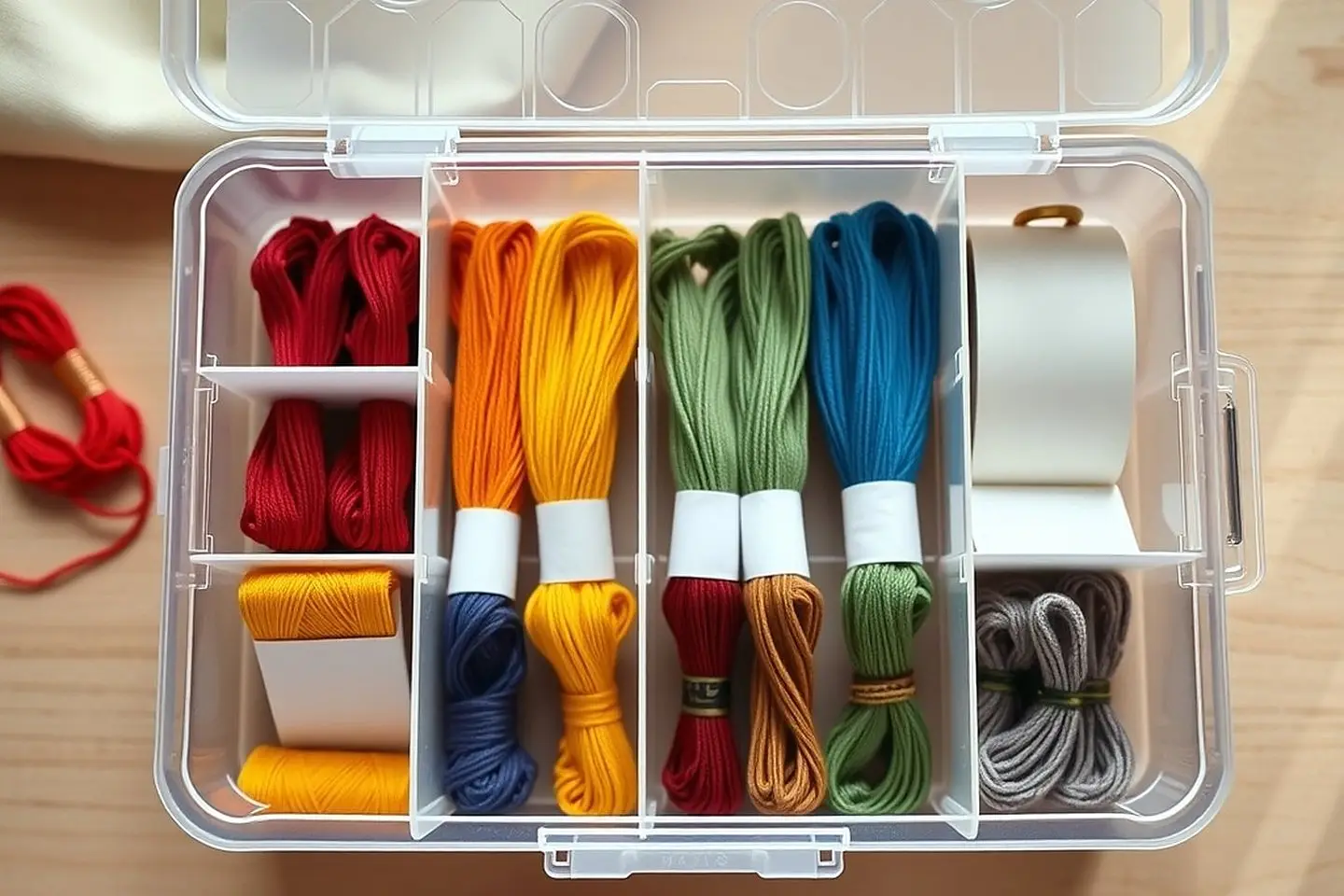
I use plastic bobbins for my main stash and a ring for the colors of whatever I’m stitching right now. Card bobbins are fine too. Label every one in pencil or permanent pen with the DMC number before you wind. Once the paper band is gone, near-identical shades are almost impossible to tell apart.
Storage boxes, binders and drawers
- Divided plastic boxes (the kind sold for floss or beads): the classic. Most hold around 100 to 150 bobbins depending on the dividers. Label the end of each box with its number range.
- Binders with pocket pages: bobbins slip into pockets, and you can flip through like a book. Good for small stashes.
- Shallow drawers or a craft cart: great for a big stash, since nothing gets squashed.
Keep floss away from direct sunlight, which can fade it over time, and out of damp places.
How I wind a bobbin without the mess
- Write the DMC number on the bobbin before anything else.
- Find the short tail sticking out of the skein. Hold the two paper bands and pull that tail gently: the floss should feed out without knotting. (If it starts to tangle, you’ve grabbed the wrong end. Try the other one.)
- Tuck the end into the bobbin’s slit and wind evenly around the card, not too tight.
- Tuck the last end into the slit so it can’t unravel.
Wound floss gets little kinks from the card edges. They relax as you stitch, or you can run a length through a slightly damp fingertip before threading.
A small starter stash
You don’t need all of DMC’s roughly 500 colors. If you’re building a stash from scratch, I’d start with the colors that turn up in pattern after pattern: 310 (black), Blanc (white), Ecru, a true red like 321, a mid brown like 433, a couple of greens (3347 and 3345 are a nice pair), a warm yellow like 726, a soft pink like 3326, and a blue like 798. Then add colors as your patterns ask for them, and let the stash grow with your projects.
a little gift for you
Get your free cross stitch patterns
Join The Hearth Letter and download every freebie instantly, plus 15% off your first order and cozy stitching tips from Sara.
We send about two letters a month. Unsubscribe with one click.
Number order vs color order
This is the great floss debate, and both sides have a point.
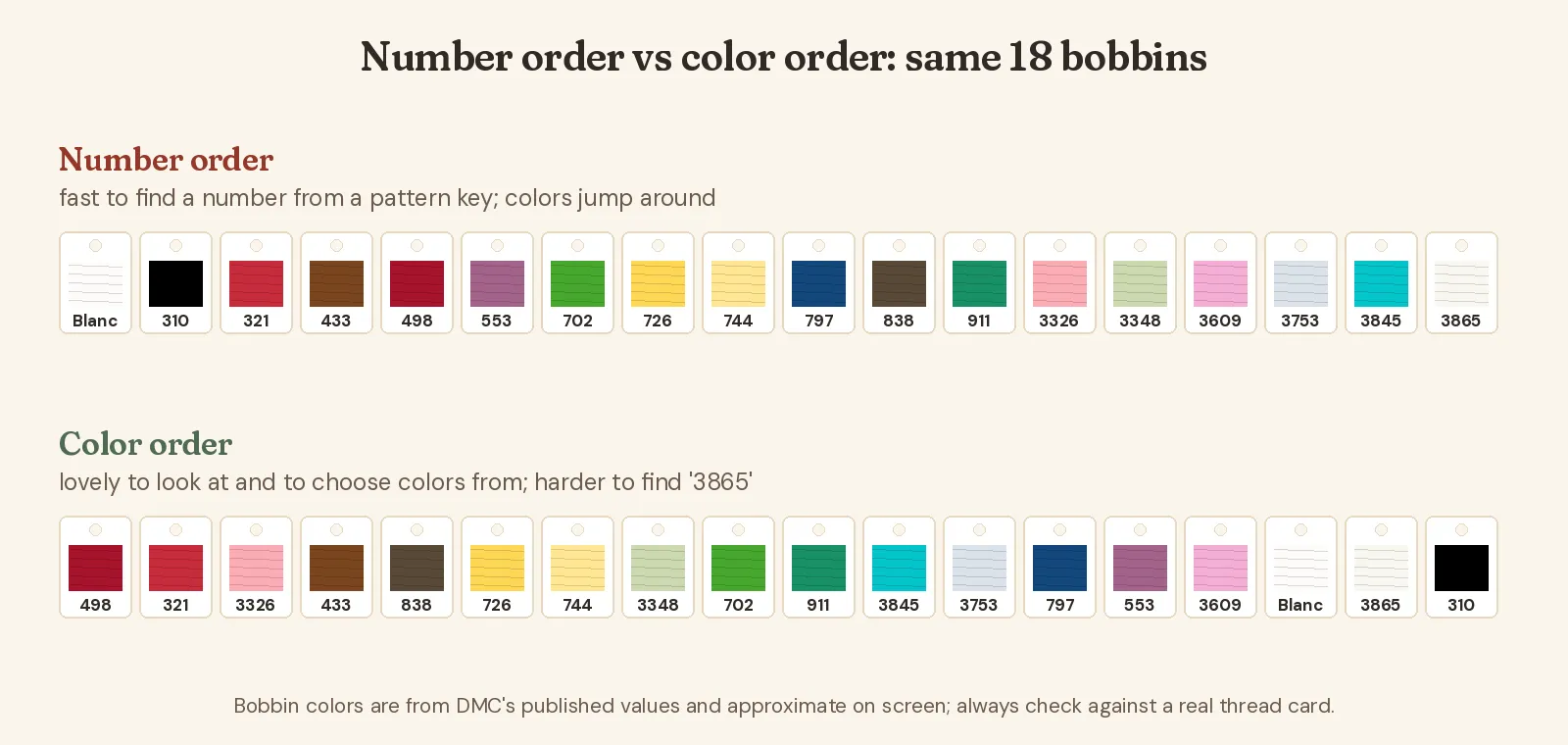
Number order is the practical choice if you stitch from patterns. Every key lists DMC numbers, so you can pull a whole palette in a minute. The downside: it doesn’t look as pretty, and similar colors end up far apart.
Color order is gorgeous, and it’s the better choice if you design your own pieces or choose colors by eye. The downside: finding “3865” means scanning the whole white section.
My compromise is the one many stitchers land on: the main stash in number order, and each project’s colors on a ring or in a small bag, arranged however I like.
Tracking your stash with a spreadsheet (demo)
A list of what you own is what actually ends duplicate buying. A paper checklist works, and a spreadsheet works even better because it does the maths for you.
The columns that matter are simple:
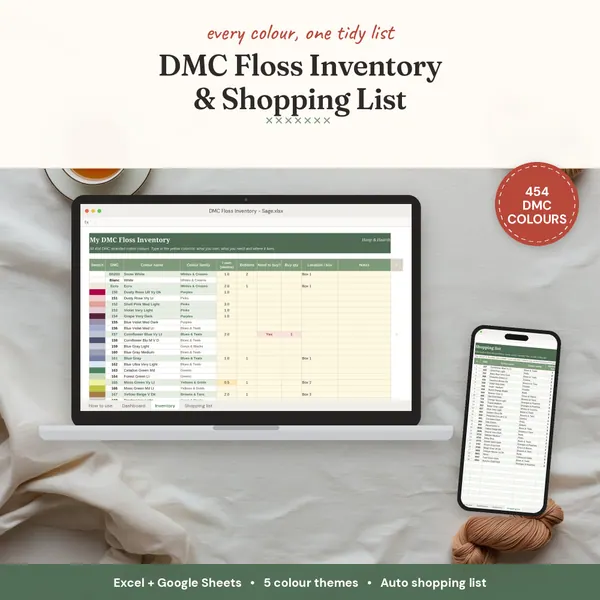
- DMC number and color name
- Skeins owned (count a mostly-full bobbin as one, a nearly empty one as zero)
- Pattern needs, filled in from the key of what you’re stitching next
- To buy, which is needs minus owned, never below zero
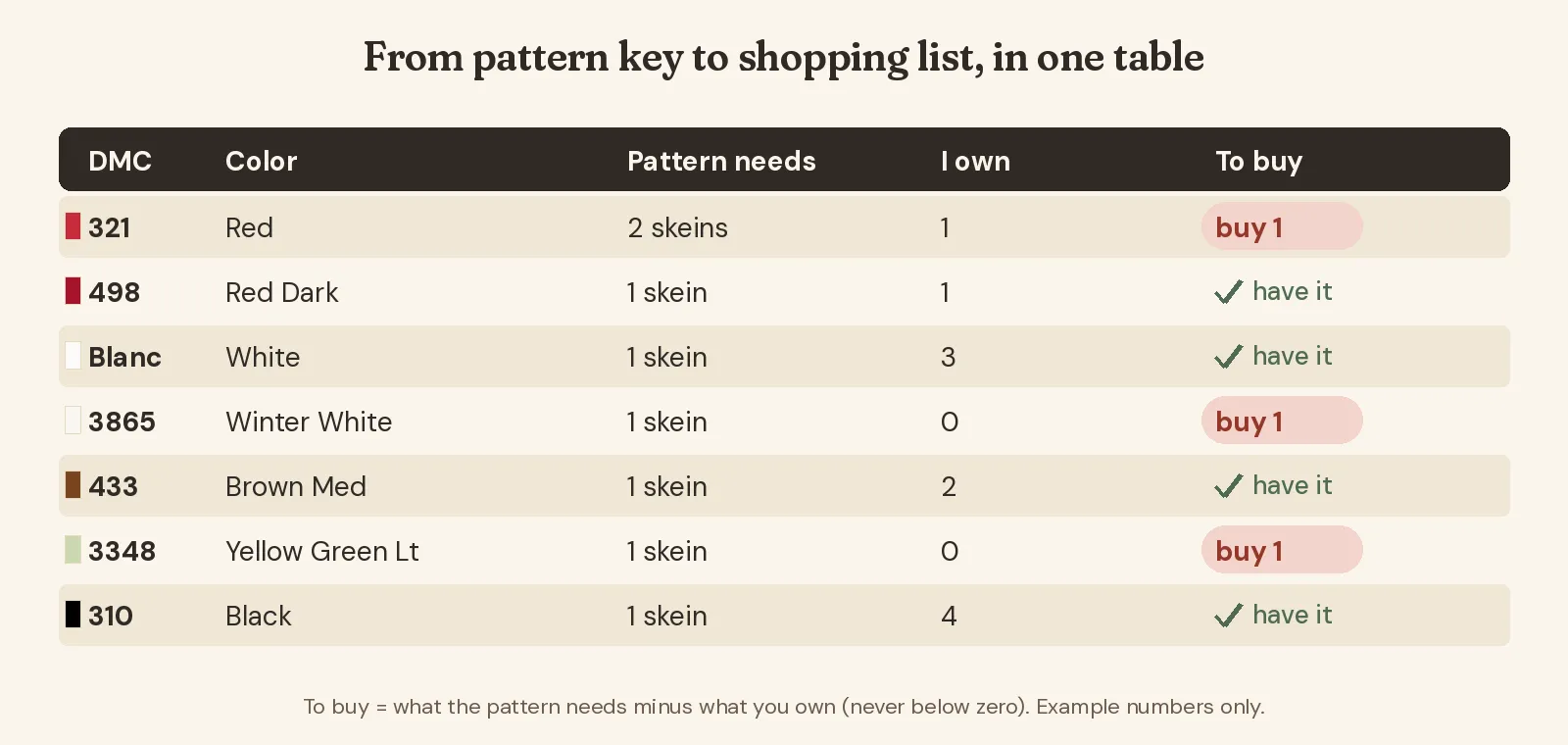
In a spreadsheet, “to buy” is one formula: =MAX(0, C2-D2). Copy it down the column, and your shopping list writes itself.
Making a shopping list from a pattern key
Most good pattern keys list each color’s DMC number, its stitch count, and an estimate of how many skeins you need. To turn that into a shopping list:
- Copy each DMC number and the skein estimate into your list.
- Check what you own against your inventory.
- Buy only the difference, plus one extra skein for any color you use a lot of, so dye lots match.
If a key doesn’t give skein numbers, you can estimate. A DMC skein is 8 meters of six strands, and a common rule of thumb is around 1,800 full crosses per skein on 14 count with 2 strands. That’s roughly what our pattern keys are based on, with a safety margin added. The fabric and floss calculator can help with the fabric side.
Taking your inventory on your phone to the craft store
The best inventory is the one you have with you when you’re standing at the floss wall:
- Spreadsheet apps (Google Sheets, Excel, Numbers) all open on a phone. Freeze the top row and sort by DMC number.
- A photo of your printed checklist works in a pinch. Retake it after each tidy-up.
- Filter “to buy” above zero before you leave the house, and that’s your list.
Free printable checklist + the full spreadsheet
If you’d like a head start, I made two things:
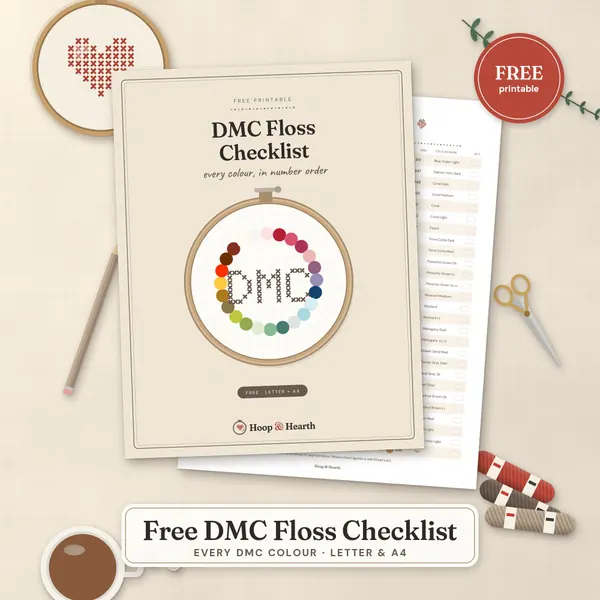
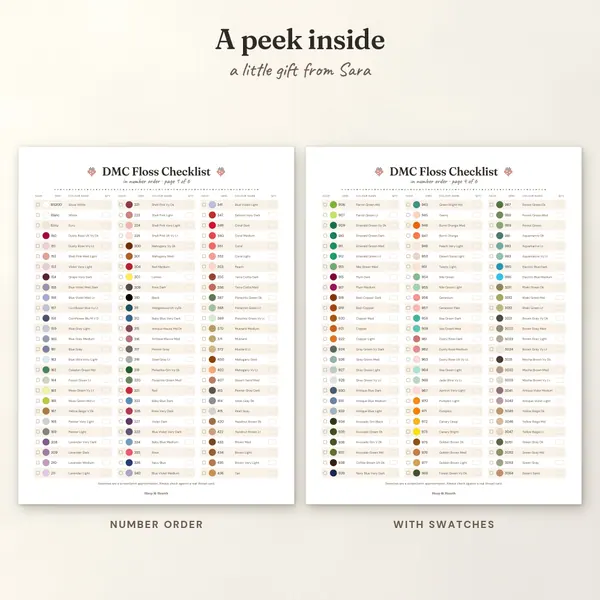
- The free DMC Floss Checklist lists DMC colors in number order, each with a color swatch, a tick box and a box for how many skeins you have. Print it, sit down with your floss box and a cup of tea, and tick away. It’s free on the free patterns page.
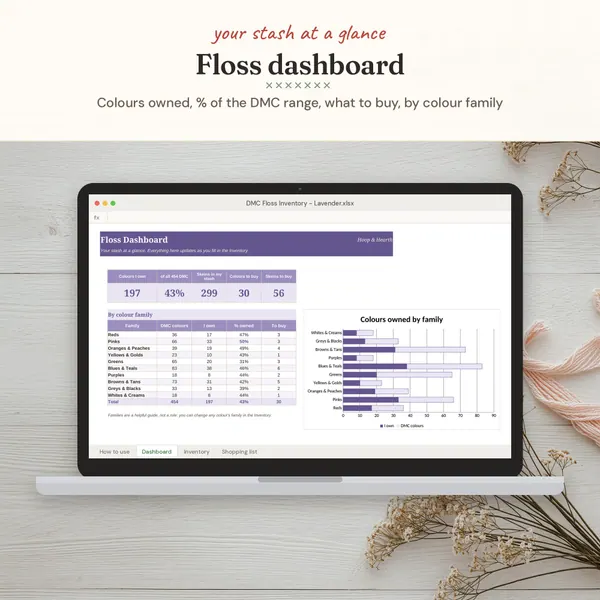
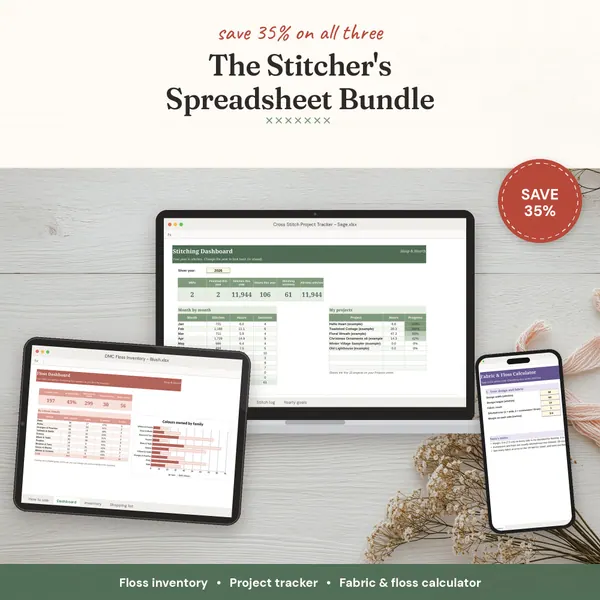
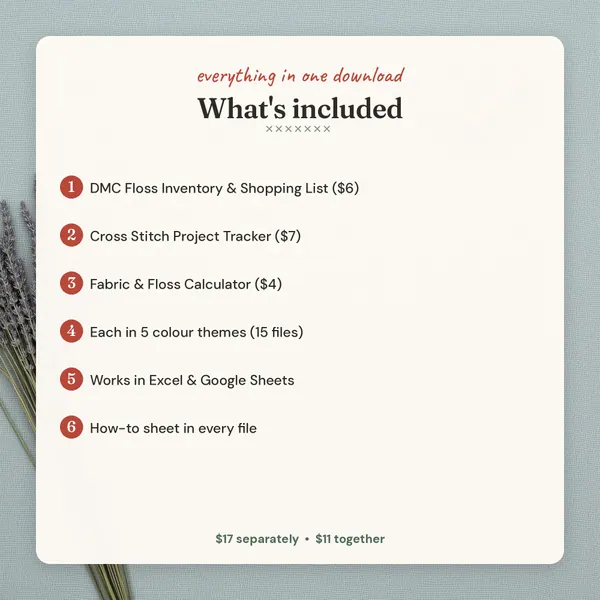
- The DMC Floss Inventory Spreadsheet does the counting and the shopping-list maths for you. It’s in the spreadsheets section of the shop.
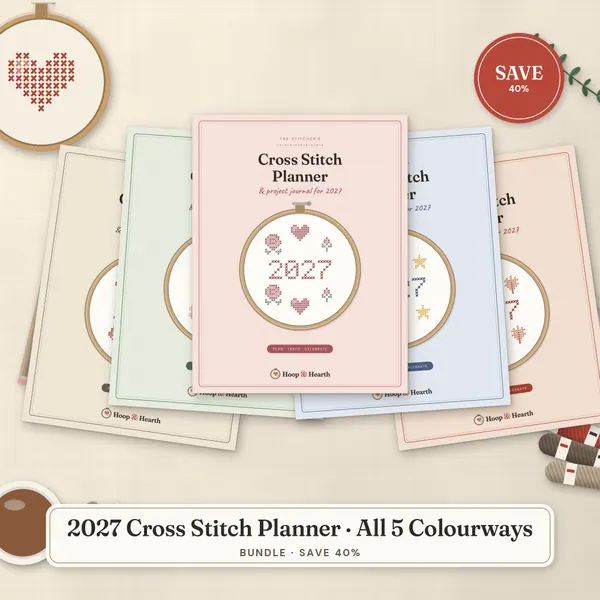
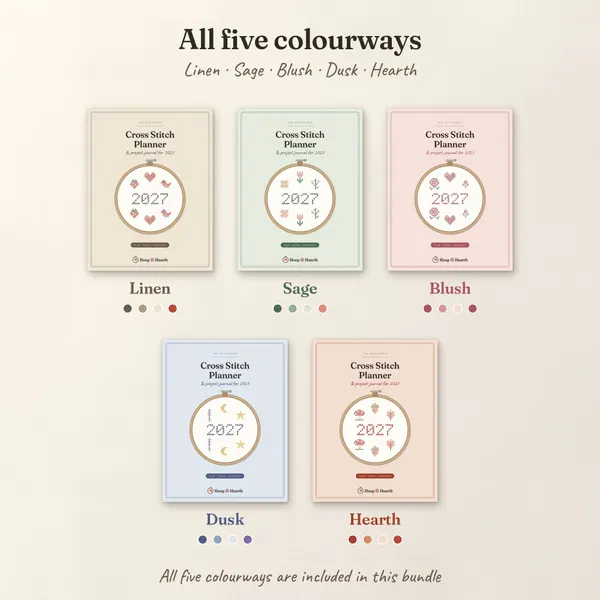
A tidy floss box also makes a lovely present for a stitcher. My list of gifts for cross stitchers has a few more ideas. And if you’re planning next year’s projects already, the 2027 stitching planner post pairs perfectly with a fresh inventory.
a little gift for you
Get the free floss checklist
Join The Hearth Letter to download the checklist, plus my free patterns and beginner cheat sheet.
We send about two letters a month. Unsubscribe with one click.
Frequently asked questions
What is the best way to organize DMC floss?
For most stitchers, plastic or card bobbins in a divided storage box, sorted by DMC number, with an inventory list or spreadsheet. Number order makes it quick to pull colors straight from a pattern key.
Should I sort floss by number or by color?
By number if you mostly stitch from patterns, because keys list DMC numbers. By color if you design your own pieces or love choosing colors by eye. Many people keep a big stash in number order and a small project bag by color.
How do I stop buying floss I already have?
Keep an inventory, either a printed checklist or a spreadsheet on your phone, and check it before every shop. Compare it with the pattern key to make a shopping list of only the colors you're missing.
How many stitches can you get from one skein of DMC floss?
A DMC skein is 8 meters of six strands. A common rule of thumb is around 1,800 full cross stitches on 14 count using 2 strands, depending on how you travel on the back and how long your tails are.
Patterns to try
Stitch along with this post
Keep reading
More from the blog
Cross Stitch Supplies: The Only List a Beginner Needs
The cross stitch supplies you actually need: fabric, floss, needles, hoops and handy extras, plus what to skip. A practical, budget-friendly list.
Gifts for Cross Stitchers: 20 Ideas They'll Actually Use
Thoughtful gifts for cross stitchers, chosen by a stitcher: lamps, needle minders, floss organizers, digital patterns and cozy extras at every budget.
Cross Stitch Fabric Count Guide: 14 vs 16 vs 18 Aida
What fabric count means, how it changes your finished size, and which aida, evenweave or linen to pick, with a size chart and a free calculator.