
Cross Stitch Supplies: The Only List a Beginner Needs
The cross stitch supplies you actually need: fabric, floss, needles, hoops and handy extras, plus what to skip. A practical, budget-friendly list.
In this post
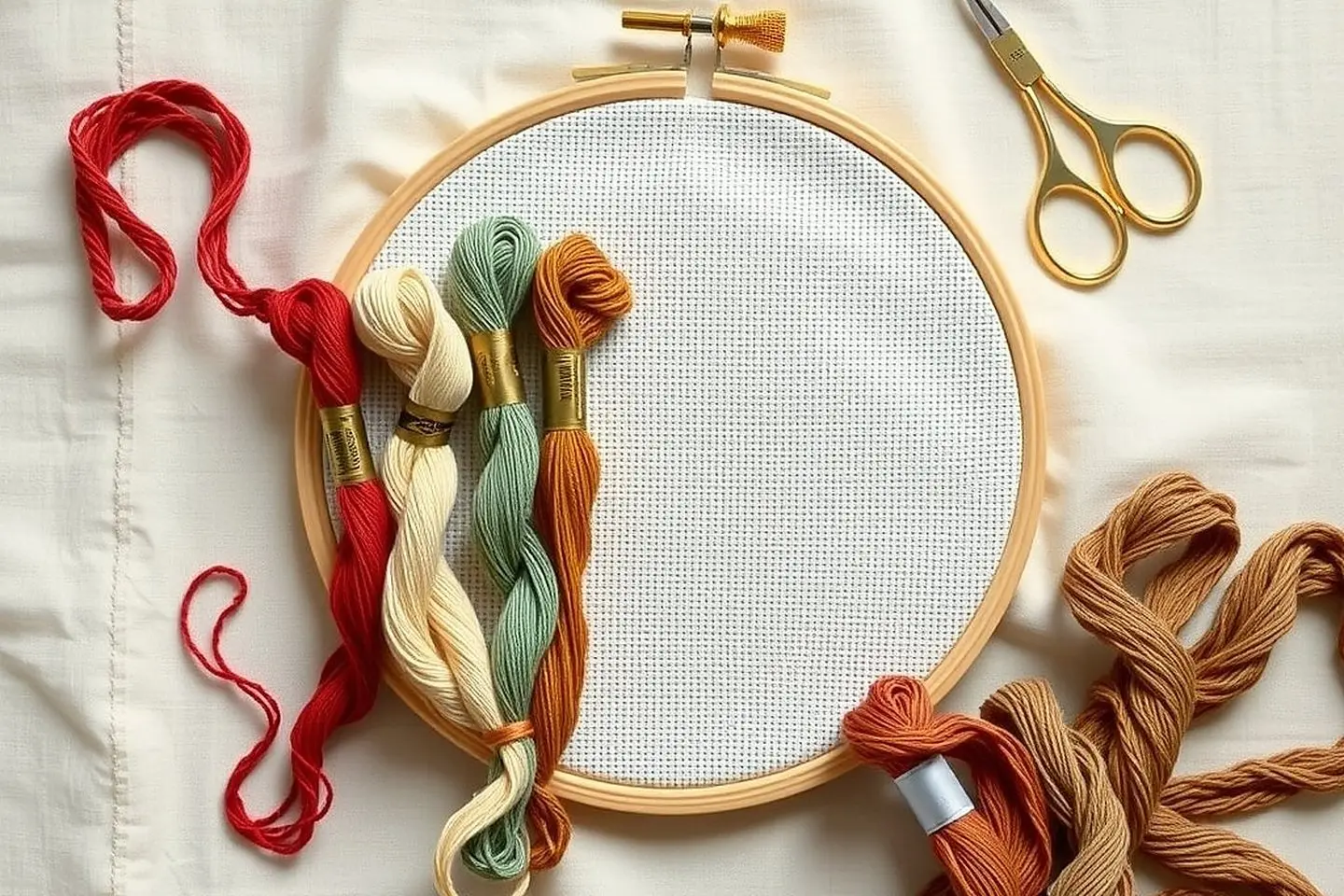
When I came back to stitching as a grown-up, I walked into a craft store and froze in front of a wall of floss. I didn’t need most of it. Cross stitch supplies for beginners fit in one small bag, and the list is short. Here’s what I’d buy again, what I’d skip, and the handful of extras that genuinely make evenings nicer.
The short answer: to start cross stitching you need five things: 14 count aida fabric, DMC six-strand embroidery floss in your pattern’s colors, a size 24 tapestry needle, small sharp scissors, and a pattern. A 5 or 6 inch embroidery hoop is optional but makes even stitches easier.
New to all of this? My complete beginner’s guide to cross stitch shows how these pieces come together, from cutting the fabric to your first X.
The five essentials
| Supply | Beginner pick | Rough guide |
|---|---|---|
| Fabric | 14 count aida, white or cream | Buy a piece at least 6 inches bigger than your design each way |
| Floss | DMC six-strand cotton (stranded cotton) | One skein per color is enough for most small designs |
| Needle | Tapestry needle, size 24 | Blunt tip, big eye. A pack lasts ages |
| Scissors | Small embroidery scissors | Sharp to the very tip |
| Pattern | A small chart with 4 to 10 colors | PDF or printed |
That’s genuinely it. Everything else is comfort, and you can add it as you go.
Fabric: aida, evenweave and linen in one minute
Aida is the beginner’s fabric. It’s woven in little blocks with clear holes at each corner, so you can see exactly where the needle goes. It’s sold by “count,” which is the number of squares per inch. On 14 count, 14 stitches fill one inch.
Evenweave (often 28 or 32 count) is smoother and finer. You usually stitch “over two,” across two threads each way, so 28 count evenweave gives you 14 stitches per inch, the same size as 14 count aida.
Linen is evenweave’s natural, slightly irregular cousin. It’s beautiful, but save it for your third or fourth project.
For a first project, choose 14 count aida in white, cream or antique white. The holes are big enough to see in lamplight and nearly every pattern quotes a 14 count finished size. My fabric count guide has a full size chart for 11, 14, 16 and 18 count, and the fabric size calculator tells you exactly how much to cut.
a little gift for you
Get my free beginner pattern + cheat sheet
A small, cozy first chart and a one-page cheat sheet with strands, needles and fabric sizes on it. Free when you join The Hearth Letter.
We send about two letters a month. Unsubscribe with one click.
Floss: why DMC numbers matter
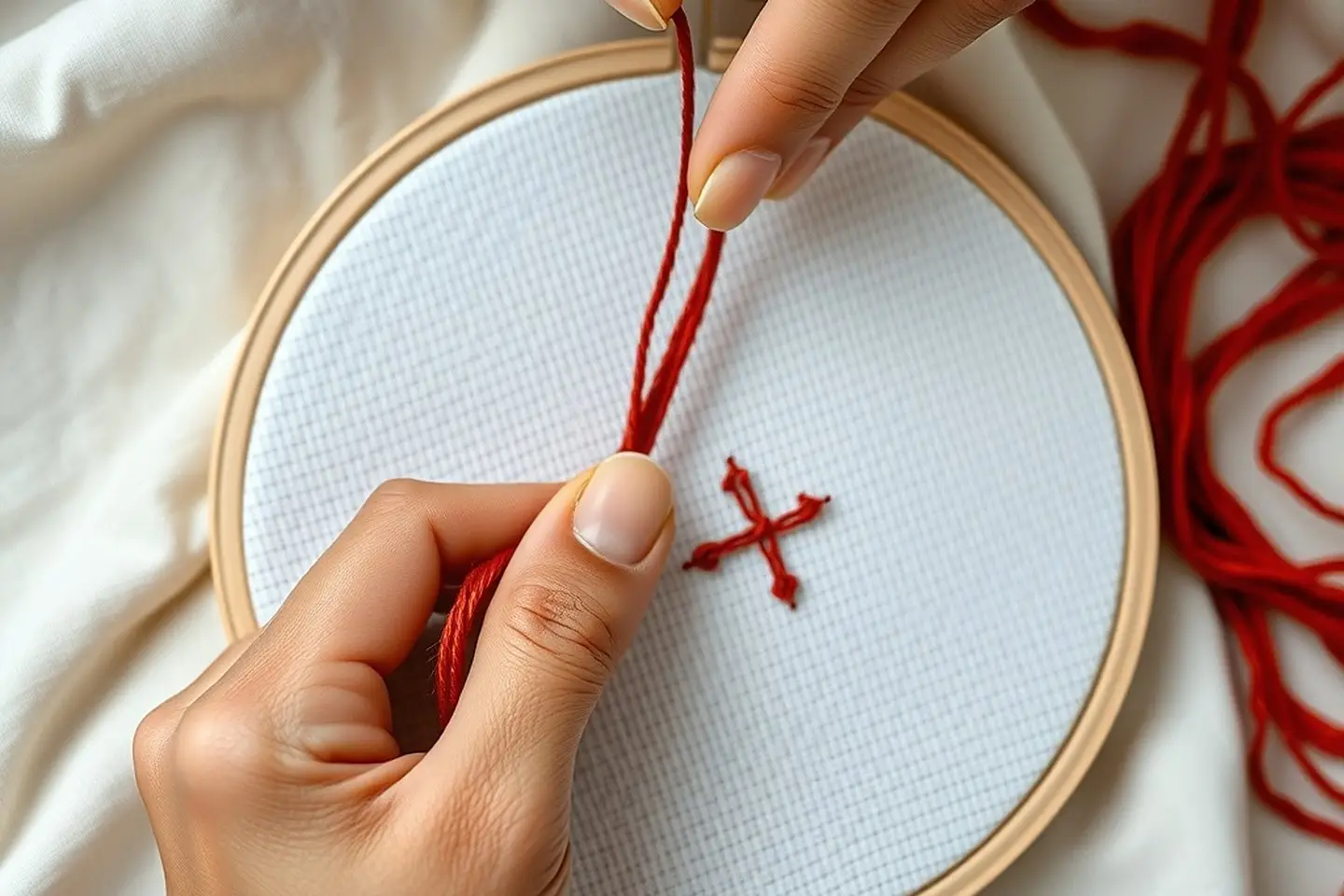
Embroidery floss is a loose twist of six thin strands. You separate it and stitch with fewer strands, usually two on 14 count aida. A standard DMC skein holds 8 meters (about 8.7 yards).
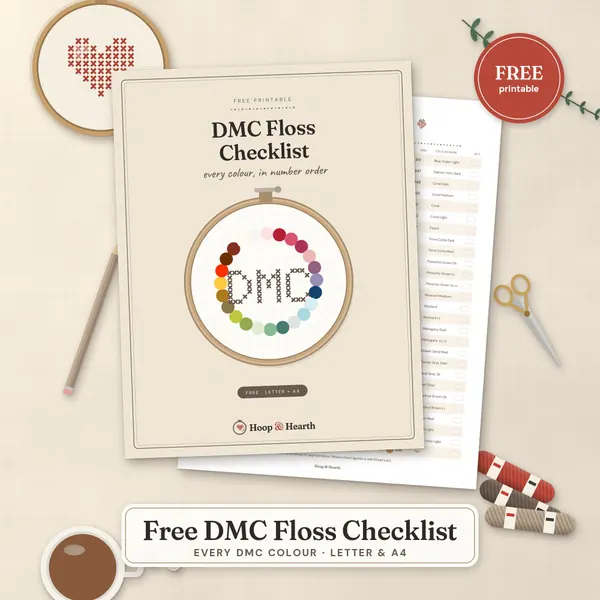
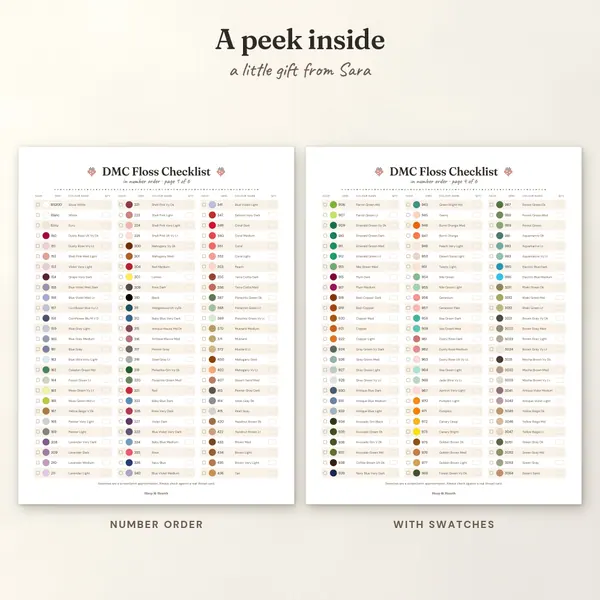
Almost every modern pattern lists colors by DMC number: 321 for a classic red, 310 for black, Blanc for white, 3865 for a soft winter white. The numbers are the whole point. They let you buy exactly the right shade anywhere, and they let you check your stash before you shop.
Other brands such as Anchor use their own numbers. Conversion charts exist, but the matches are close rather than identical, so for your first few projects stick with whatever brand the pattern uses.
How much do you need? For small and medium designs, one skein per color covers it. As a rough guide, one skein does around 1,500 or more full stitches on 14 count with two strands, so a color only needs a second skein when the chart uses a lot of it. Most good patterns, mine included, list how many skeins each color needs.
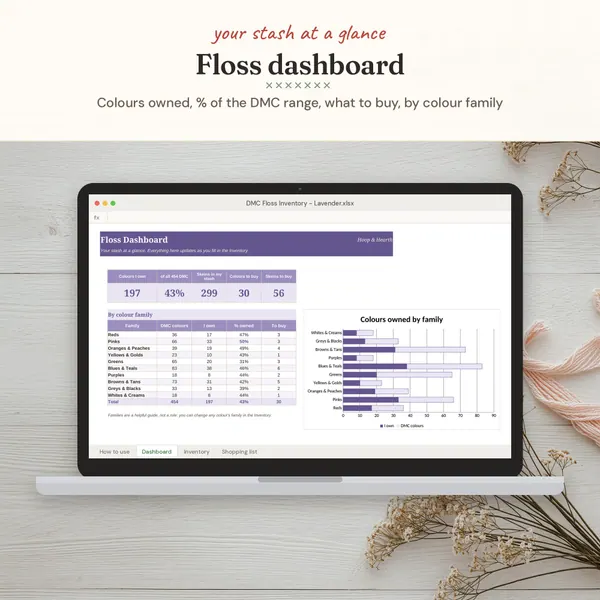
Once you have more than a couple of dozen colors, you’ll want a way to keep track. I’ve written about how I organize DMC floss, with bobbins, a box and a simple inventory spreadsheet.
Needles: tapestry sizes 24, 26 and 28
Cross stitch uses tapestry needles. They have a rounded, blunt tip that slips between the fabric threads instead of piercing them, and a long eye for easy threading.
Needle sizes run backwards: the bigger the number, the smaller the needle. You want a needle that passes through the hole without forcing it wider.
| Fabric | Needle size | Strands for cross stitch | Strands for backstitch |
|---|---|---|---|
| 11 count aida | 22 or 24 | 3 | 1 or 2 |
| 14 count aida | 24 (or 26) | 2 | 1 |
| 16 count aida | 24 or 26 | 2 | 1 |
| 18 count aida | 26 | 2 (or 1 for a lighter look) | 1 |
| 28 count evenweave, over two | 26 or 28 | 2 | 1 |
| 32 count linen, over two | 28 | 1 or 2 | 1 |
These are the usual starting points, not laws. If your stitches look thin and gappy, add a strand. If they look crowded, drop one. My post on how many strands to use for cross stitch explains when to break the rules.
Gold-plated tapestry needles cost a little more and glide nicely, which some people love. A plain nickel needle works just as well to start.
Hoops, Q-snaps, scroll frames, or stitching in hand
Holding the fabric taut is what keeps your stitches even. There are four common ways to do it.
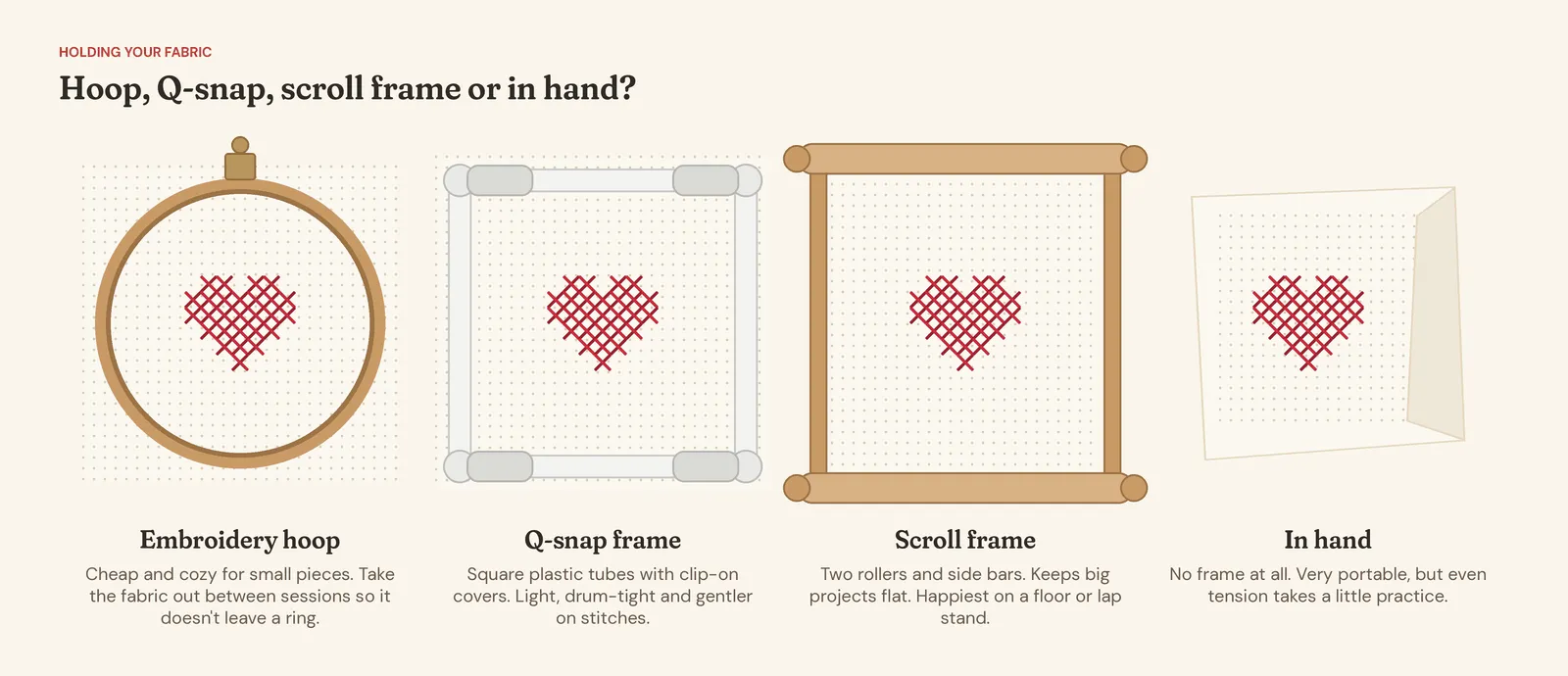
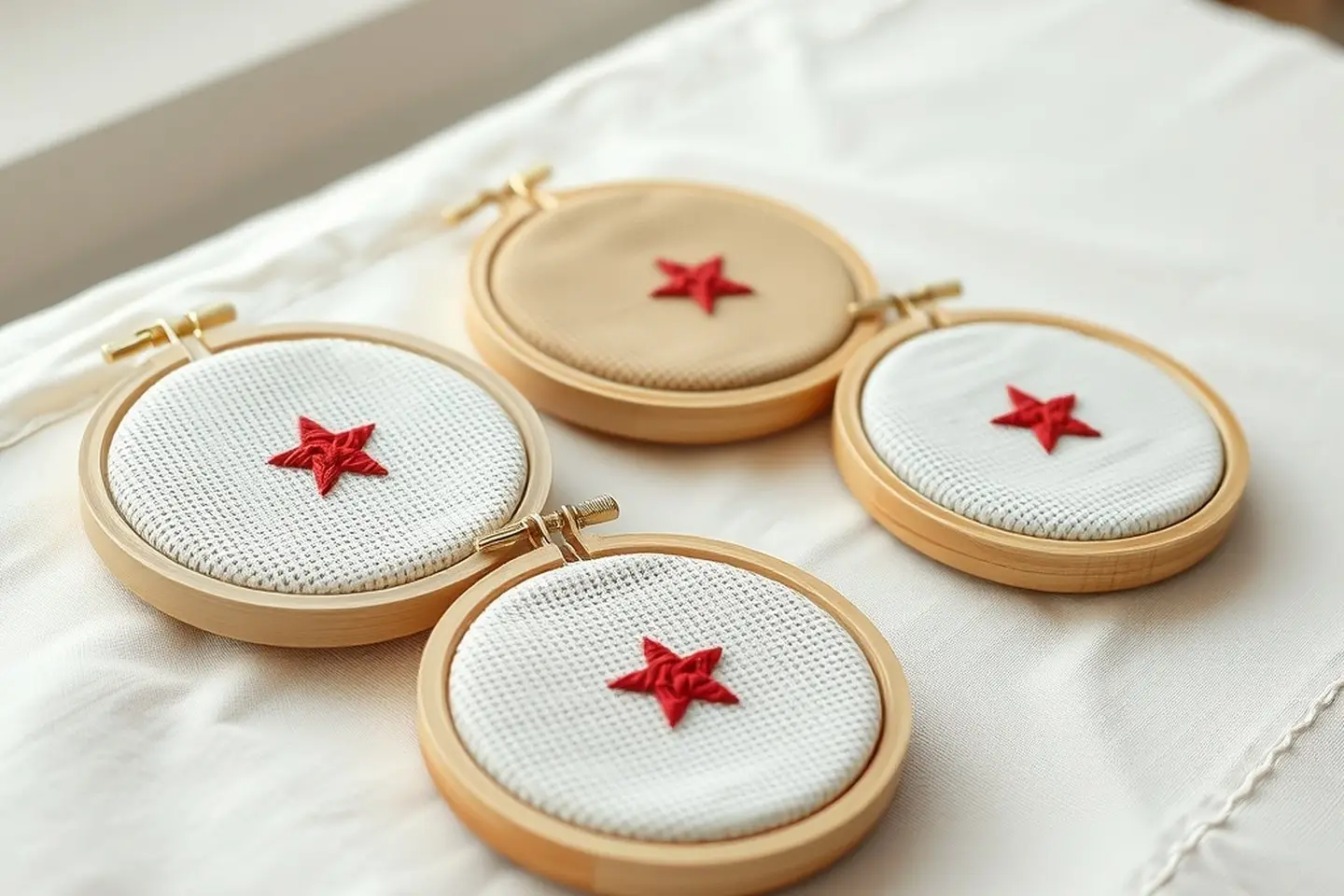
Embroidery hoops are cheap, light and cozy for small pieces. A 5 or 6 inch hoop is comfortable to hold. Wooden hoops with a brass screw grip well. Take your fabric out when you stop for the evening, or the hoop can leave a ring that needs washing out.
Q-snaps are square frames made of plastic tubes with clip-on covers. They hold fabric drum-tight, they’re light, and they grip more gently than a hoop. Many stitchers move to one for medium and large projects.
Scroll frames have two rollers with side bars. You roll the fabric on so the whole width stays flat. They’re best for big pieces, and happiest on a lap or floor stand so your hands are free.
Stitching in hand means no frame at all. It’s wonderfully portable and some people stitch faster this way, using a “sewing” motion. It takes a little practice to keep tension even, so I’d learn with a hoop first.
If you want to display your finish in a hoop, that’s a separate decision. Choose a display hoop at least an inch wider than the design on every side. My guide to finishing cross stitch in a hoop covers sizing and a neat back.
Nice-to-haves: needle minder, lamp, magnifier, floss bobbins
None of these are essential. All of them make evenings nicer, roughly in the order I’d buy them.
- A good lamp. Honestly the best upgrade there is. A daylight-style LED lamp that you can angle over your hoop makes symbols and holes so much easier to see, especially after dark.
- A needle minder. A pretty magnet that sits on your fabric and holds your needle when you stop. No more needles lost in the sofa.
- Floss bobbins or drops. Small cards to wind each color on, labelled with its DMC number. They keep a project’s colors tidy.
- A highlighter or pencil. For marking off finished stitches on a printed chart.
- A project bag. Anything with a zip. It keeps a project together, so you can pick it up in thirty seconds.
- A magnifier. Helpful for 18 count and evenweave, or simply tired eyes. Some lamps have one built in.
- A needle threader. Cheap and handy, especially with three strands.
If you’re shopping for someone else, I’ve put together a longer list of gifts for cross stitchers they’ll actually use.
Kit or pattern? Which to buy first
A kit includes fabric, pre-sorted floss, a needle and the chart, sometimes a hoop too. It’s lovely for a very first project because there’s no shopping list. The downside is that you’re limited to the designs sold as kits, and kits for smaller brands can be hard to find.
A pattern is just the chart, usually a PDF you download and print, or open on a tablet. You buy the fabric and floss yourself. Once you have needles, scissors, a hoop and a few common colors, each new project costs only the pattern plus a few skeins, and you can stitch it on any fabric color you like.
My honest advice: if a kit design makes you happy, start there. Otherwise, a small PDF pattern with a short floss list is a very gentle first project, and you’ll build up a little stash as you go.
My cozy stitching corner (Sara’s setup)
My setup is not fancy. It’s one corner of the sofa, after the kids are asleep.
- A lamp over my left shoulder (I’m right-handed, so my needle hand doesn’t shadow the fabric).
- A small basket on the floor with my current project bag, a pair of scissors that live there and nowhere else, and a tin of floss bobbins.
- A magnetic needle minder on the hoop.
- A mug of tea on the side table, safely out of elbow range.
What to skip when you’re starting out
A few things that are easy to buy early and regret:
- Giant “100 colors” floss sets. They’re often off-brand, they rarely match pattern numbers, and you’ll still need to buy the exact colors your chart lists. Buy floss per project instead.
- An expensive stand or frame system. Wait until you know you love stitching and which way you like to hold your work.
- Lots of fabric in every count. One or two pieces of 14 count aida will cover your first few projects.
- Huge, full-coverage charts. They’re amazing, but they’re a big commitment. Start small and finish something. A finish is the best motivation there is.
- Specialty threads. Metallics and variegated floss are fun, but fiddly. Save them for when the basics feel easy.
Looking after your supplies
A few small habits keep your supplies in good shape for years:
- Needles in a needle book or tin. Loose needles get lost, and damp needles can rust and mark your fabric.
- Floss out of the sun. Light fades floss over time, so keep it in a box or drawer rather than on a sunny windowsill.
- Fabric rolled, not folded. Hard creases in aida can be stubborn. Roll larger pieces around a cardboard tube, or store them flat.
- Scissors for floss only. Cutting paper dulls the tips quickly.
- Wash your hands before stitching. It sounds fussy, but hand cream and snack crumbs are the main reason a finished piece needs washing.
A simple shopping list
If you’d like to print a list and take it to the store:
- A fat quarter (or smaller piece) of 14 count aida in white or cream.
- The DMC colors on your pattern’s key, one skein each unless it says otherwise.
- A pack of size 24 tapestry needles.
- A 5 or 6 inch embroidery hoop.
- Small embroidery scissors.
That’s your whole starter kit. Pick a small pattern, and you’re ready for tonight. My free beginner pattern was designed with exactly this list in mind.
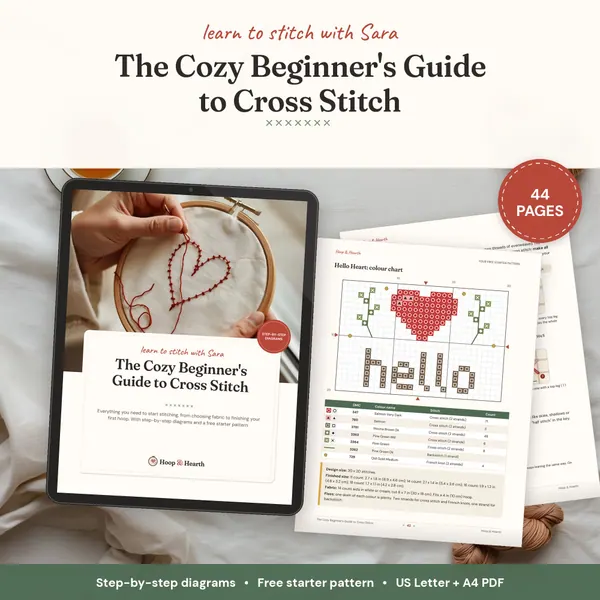
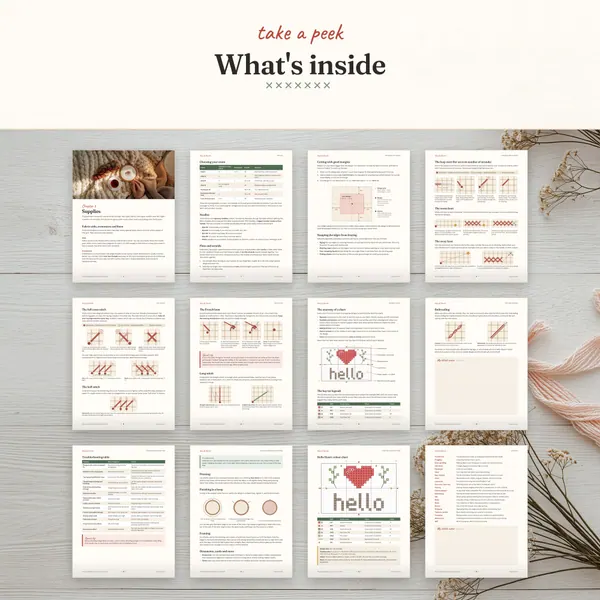
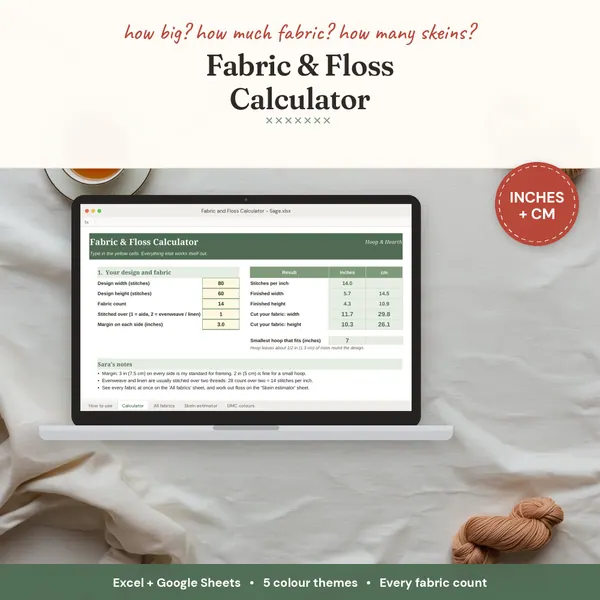
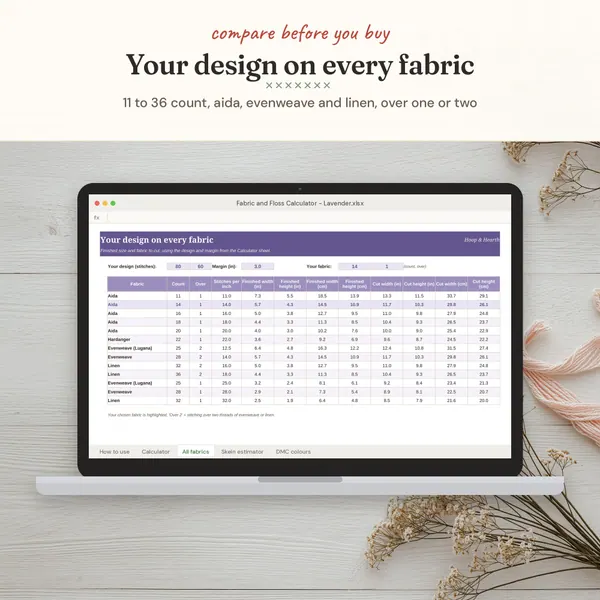
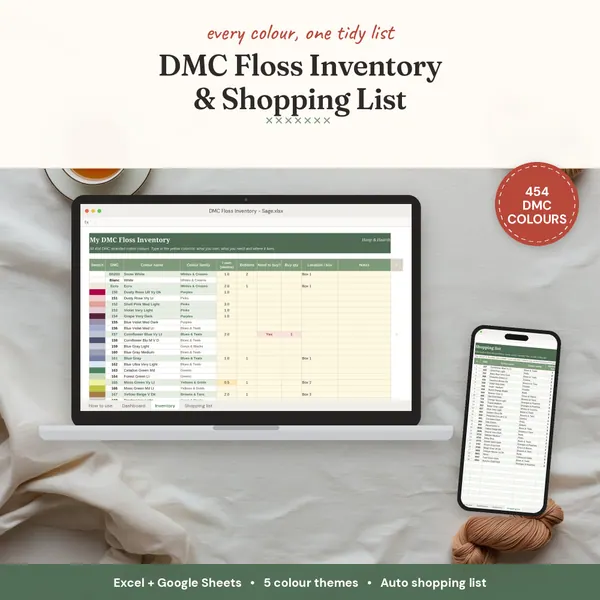
When you’re ready for more, my beginner’s guide to cross stitch walks through every step, and the beginner-friendly patterns in the shop all list their floss colors, skeins and finished sizes up front.
a little gift for you
Get your free cross stitch patterns
Join The Hearth Letter and download every freebie instantly, plus 15% off your first order and cozy stitching tips from Sara.
We send about two letters a month. Unsubscribe with one click.
Frequently asked questions
What size needle do I need for cross stitch?
A blunt tapestry needle. Size 24 suits 14 count aida, size 22 or 24 suits 11 count, and size 26 suits 16 and 18 count aida and 28 count evenweave. The bigger the number, the smaller the needle.
Do you need a hoop to cross stitch?
No, but a hoop or frame keeps the fabric taut, which makes even stitches much easier for beginners. Some experienced stitchers prefer to stitch in hand for portability.
What size hoop should I buy for cross stitch?
A 5 or 6 inch hoop is comfortable to hold for most projects. If you plan to display the finished piece in the hoop, choose one at least an inch wider than the design on every side.
Is it cheaper to buy a kit or a pattern?
A kit is convenient for a first project. After that, a PDF pattern is usually cheaper, because you reuse your fabric, needles, scissors and many floss colors from one project to the next.
Patterns to try
Stitch along with this post
Keep reading
More from the blog
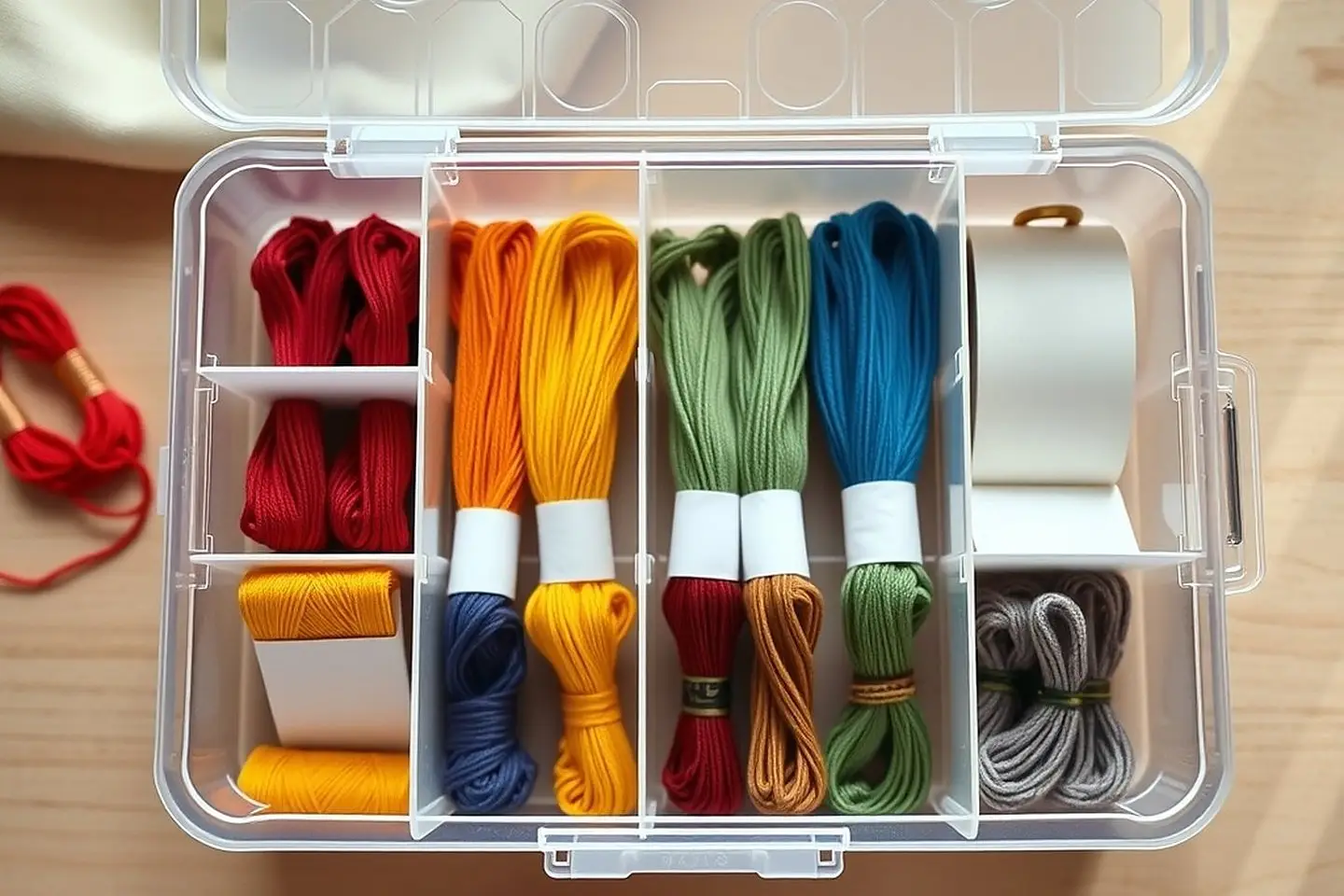
How to Organize DMC Floss (Bobbins, Boxes & Spreadsheet)
Bobbins, boxes, binders or rings? How I organize DMC floss, track what I own with an inventory spreadsheet, and stop buying duplicate colors.
Cross Stitch Fabric Count Guide: 14 vs 16 vs 18 Aida
What fabric count means, how it changes your finished size, and which aida, evenweave or linen to pick, with a size chart and a free calculator.
How Many Strands for Cross Stitch? A Simple Chart
How many strands of floss to use on 11, 14, 16 and 18 count aida or evenweave: a simple chart, how to separate floss, and when to break the rules.