
Temperature Chart for Cross Stitch 2027 (+ Free Color Key)
Make a 2027 temperature chart in cross stitch: how a temperature pattern works, a free DMC color key in °F and °C, layouts and tips to stay on track.
In this post
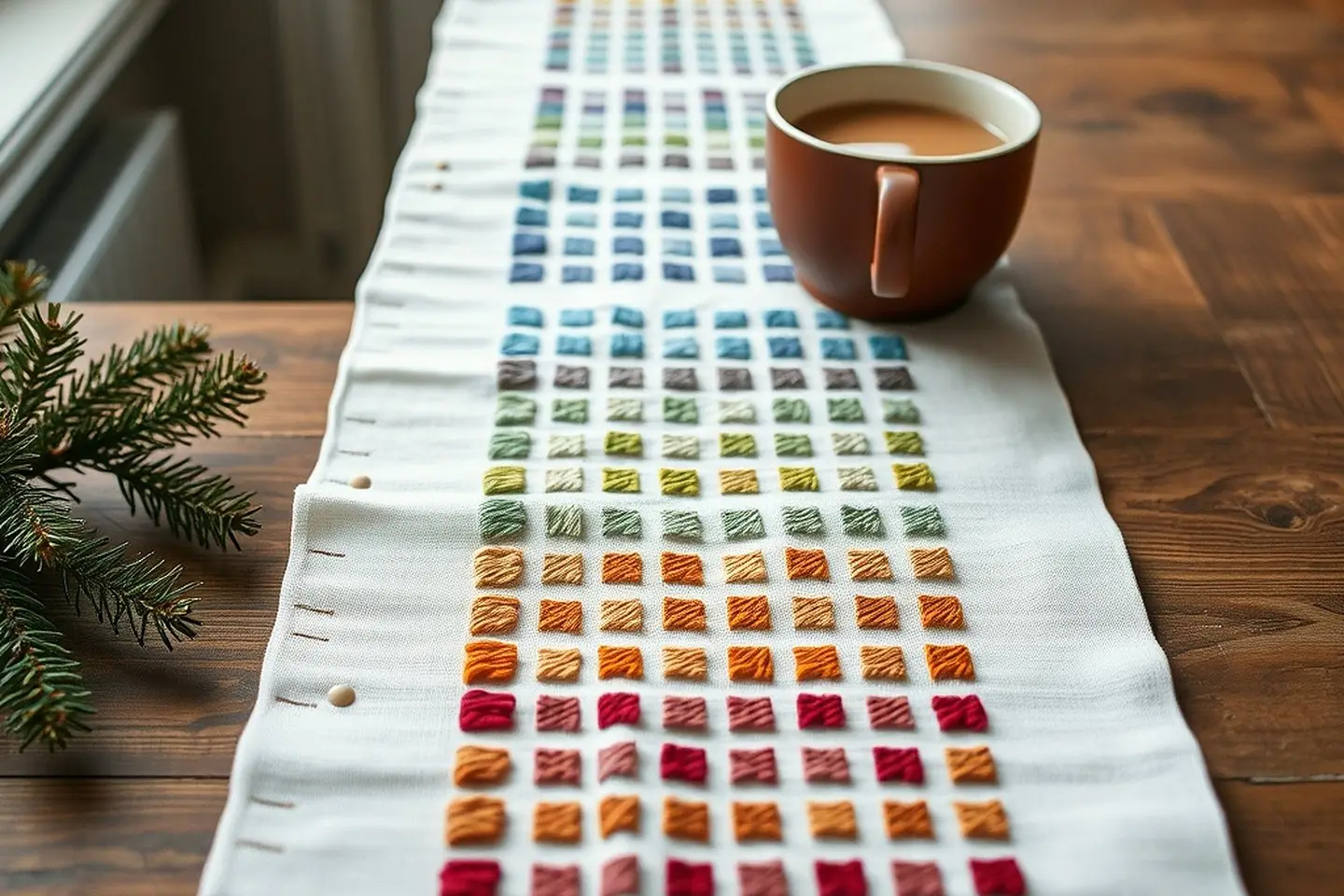
A temperature cross stitch is my favorite way to remember a year. You note the temperature each day, stitch a little block in the matching color, and by December you have a one-of-a-kind sampler of your own weather. If you’ve seen these and wondered how to start a temperature cross stitch pattern for 2027, here’s everything you need, including a free color key you can use straight away.
The short answer: choose a color key that matches temperature ranges to DMC floss colors, pick a layout (for example one row per month, one stitch or small block per day), then record the daily temperature where you live and stitch that day’s color. Most people stitch in a weekly catch-up, so missing a day is no problem.
You only need basic stitching skills. If you’re new, my beginner’s guide to cross stitch has you covered.
What is a temperature cross stitch?
It’s a year-long project where the design is drawn by the weather. Each day gets its own stitch, block or little motif, and its color comes from that day’s temperature.
Cold days might be deep blues, mild days greens and yellows, and hot days oranges and reds. By the end of the year you can see your winter, the first warm week of spring and that heatwave in July, all in floss.
It’s sometimes called a temperature tracker or a temperature sampler, and many stitchers do one as a stitch-along (SAL) with friends or online groups, starting on January 1.
How it works: one stitch (or block) per day
The basic routine is simple:
- Pick a key. Decide which floss color means which temperature range.
- Pick a layout. Decide where each day’s stitches go on the fabric.
- Record the temperature. Every day, write down the temperature (high, low or average, your choice) in a log.
- Stitch it. Stitch that day’s block in the matching color, daily or in a weekly batch.
Some stitchers use one stitch per day, which is quick and tiny. Others use a 2 x 2 block (four stitches), which makes the colors read more clearly. Fancier designs give each day a little motif, like a patchwork square, a flower stem or a tiny mug.
Choosing a temperature color key (°F and °C)
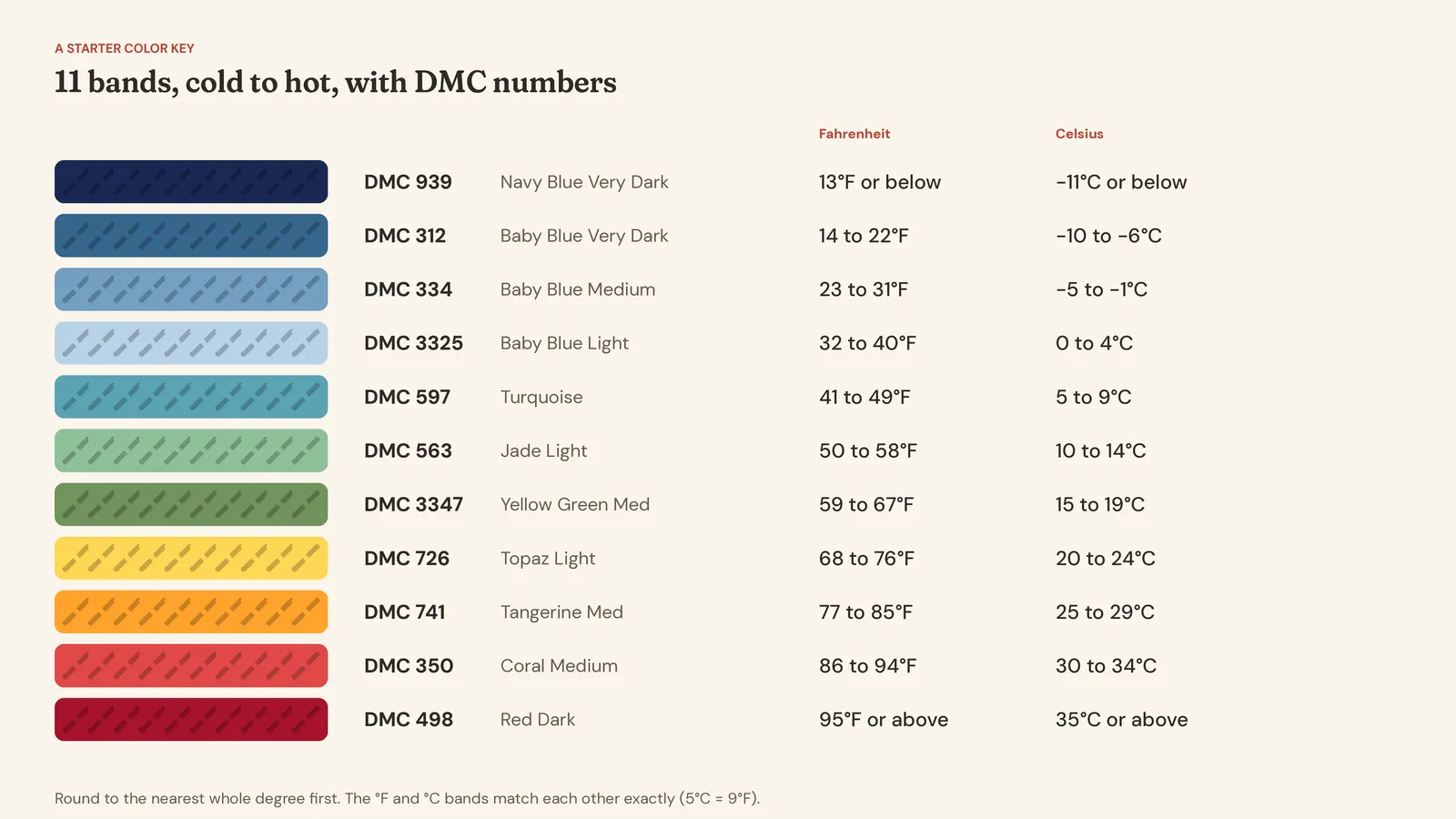
Your key is the heart of the project. Here’s a starter key I put together: eleven bands, cold to hot, all in standard DMC colors. You’re welcome to use it.
| DMC | Color | Fahrenheit | Celsius |
|---|---|---|---|
| 939 | Navy Blue Very Dark | 13°F or below | -11°C or below |
| 312 | Baby Blue Very Dark | 14 to 22°F | -10 to -6°C |
| 334 | Baby Blue Medium | 23 to 31°F | -5 to -1°C |
| 3325 | Baby Blue Light | 32 to 40°F | 0 to 4°C |
| 597 | Turquoise | 41 to 49°F | 5 to 9°C |
| 563 | Jade Light | 50 to 58°F | 10 to 14°C |
| 3347 | Yellow Green Medium | 59 to 67°F | 15 to 19°C |
| 726 | Topaz Light | 68 to 76°F | 20 to 24°C |
| 741 | Tangerine Medium | 77 to 85°F | 25 to 29°C |
| 350 | Coral Medium | 86 to 94°F | 30 to 34°C |
| 498 | Red Dark | 95°F or above | 35°C or above |
The Fahrenheit and Celsius bands line up exactly, because 5°C steps are the same as 9°F steps. Round each day’s temperature to the nearest whole degree before you look it up.
Adjust it to your climate. This key spans a wide range. If you live somewhere mild, half the colors may never appear. Look up last year’s lowest and highest temperatures where you live, and spread your colors across that range instead. Narrower bands (say 5°F or 3°C) show more variety in a mild climate.
A few tips for choosing your own colors:
- Keep neighbouring colors easy to tell apart, especially under a lamp at night.
- Avoid a color that matches your fabric (white floss on white aida disappears).
- Use 8 to 12 colors. Fewer looks bold and graphic, more looks like a smooth gradient.
- Write the key down once and stick to it all year.
a little gift for you
Free: my starter key + free patterns
Join The Hearth Letter and I'll send you my free patterns, plus tips and check-ins for stitching a 2027 temperature chart alongside me.
We send about two letters a month. Unsubscribe with one click.
Where to find your daily temperatures
You don’t need a thermometer in the garden (though it’s fun if you have one).
- Your weather app. Many apps show yesterday’s high and low, and some show a full history.
- Your national weather service. In the US, the National Weather Service’s local office pages have daily climate data. In the UK, the Met Office publishes observations, Environment and Climate Change Canada has historical climate data, and Australia’s Bureau of Meteorology has Climate Data Online.
- Historical weather websites that list each day’s high and low for your nearest weather station.
Whichever you use, stick to the same source and the same station all year, so the numbers are consistent.
High, low or average? The daily high is simplest and easiest to find, so it’s what I’d suggest for a first year. If you’d like both, some layouts use two stitches per day, one for the high and one for the low.
2027 has 365 days: choosing a chart layout
2027 isn’t a leap year, so you need 365 days. January 1, 2027 falls on a Friday, which matters if you choose a calendar-style layout.
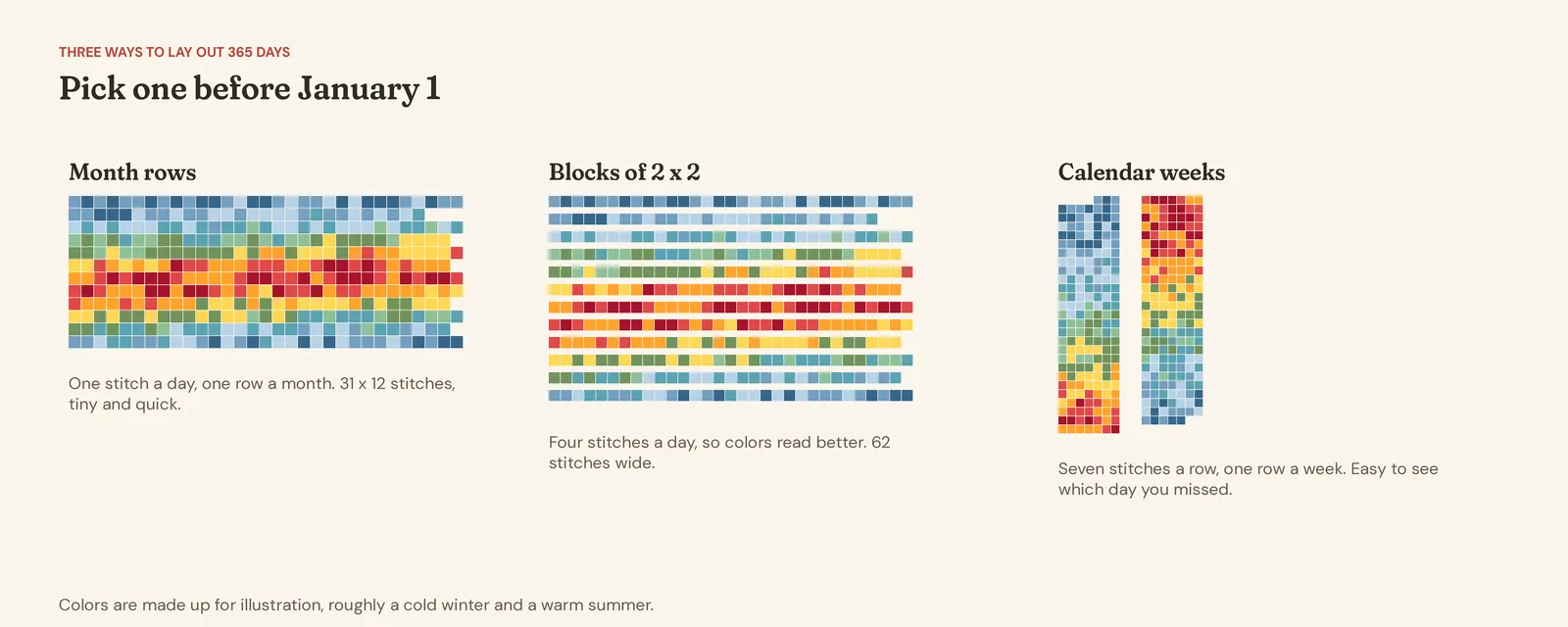
Here are three layouts that are easy to chart yourself on graph paper:
| Layout | How it works | Size in stitches | On 14 count |
|---|---|---|---|
| Month rows | One stitch per day, one row per month | 31 x 12 | 2.2 x 0.9 in |
| Blocks of 2 x 2 | Four stitches per day, a row of blocks per month, a one-stitch gap between months | 62 x 35 | 4.4 x 2.5 in |
| Calendar weeks | One stitch per day, seven per row, one row per week | 7 x 53 (or split into columns) | 0.5 x 3.8 in |
These are compact on purpose. To make one bigger, use 3 x 3 blocks per day, add a border or a stitched “2027,” or stitch on 11 count. Remember to add 3 inches of fabric on every side for framing. The fabric size calculator will work out your fabric for any layout.
If a month has fewer than 31 days, leave the extra squares empty, or fill them with a neutral color.
How much floss? Less than you’d think. The 2 x 2 layout is 4 stitches x 365 days, about 1,460 stitches across all your colors. One skein of each color is plenty for any of these layouts.
Make it yours: borders, labels and special days
The basic grid is lovely on its own, but small touches make it feel like your year.
- Add the year. Stitch “2027” above or below the grid in a simple alphabet, in a neutral color like DMC 3371 or 3865.
- Add a border. A one-stitch line in a single color, or a little row of hearts, frames the whole thing.
- Label the months. A tiny initial (J, F, M) at the start of each row helps you find dates later.
- Mark special days. A French knot or a single backstitch on a birthday, a first snow or the day you moved house turns a weather chart into a diary.
- Try high and low. Use two stitches a day, one above the other: the top one for the day’s high, the bottom one for the low. It doubles the stitching but shows how much each day swung.
Decide on these before January 1 if you can, so you leave the right amount of space on your fabric.
Staying on track (the weekly catch-up habit)
The secret of finishing a temperature project in December is not stitching every single day. It’s recording every day and stitching once a week.
- Log daily. Keep a simple list or a printed tracker by the kettle, and jot down the temperature each evening. It takes ten seconds.
- Stitch weekly. Pick a regular slot, like Sunday evening, and stitch the week’s seven blocks. It’s about 20 minutes.
- Mark it off. Highlight each finished day on your log, so you always know where you are.
- Missed a week? Look the days up in your weather app’s history or your weather service’s records and catch up. No harm done.
Stitch along in 2027
A temperature chart is lovely to do with others. Find a friend, a family member in a different town (comparing your two years in December is fun), or one of the many online temperature stitch-along groups.
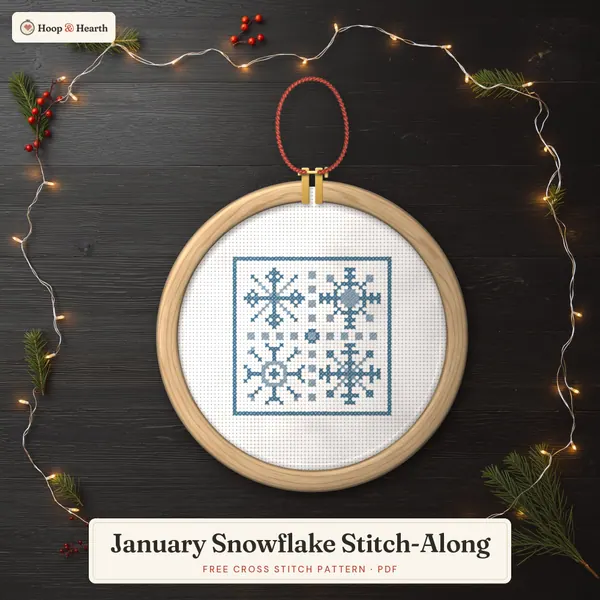
If you’d like company from me, join The Hearth Letter. I’m planning to stitch a 2027 temperature chart myself and share how it’s going there, along with tips for keeping up. And if you want a small, free warm-up project for January, the free January Snowflake Stitch-Along on the free patterns page is four little 20 x 20 snowflake blocks that join into one sampler.
If you share your progress online, tag it #hoopandhearth so we can all cheer each other on.
Optional extras: the tracker kit and ready-made charts
Everything above is free, and you can do the whole project with graph paper and a pencil. If you’d like it done for you, I’ve made two kinds of extras.
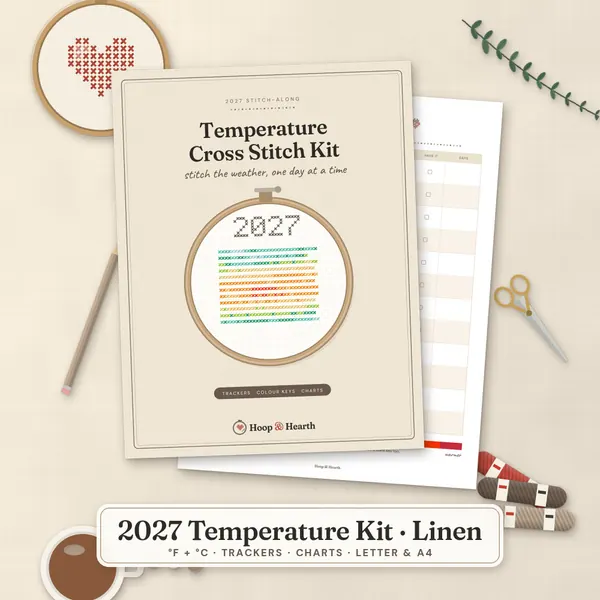
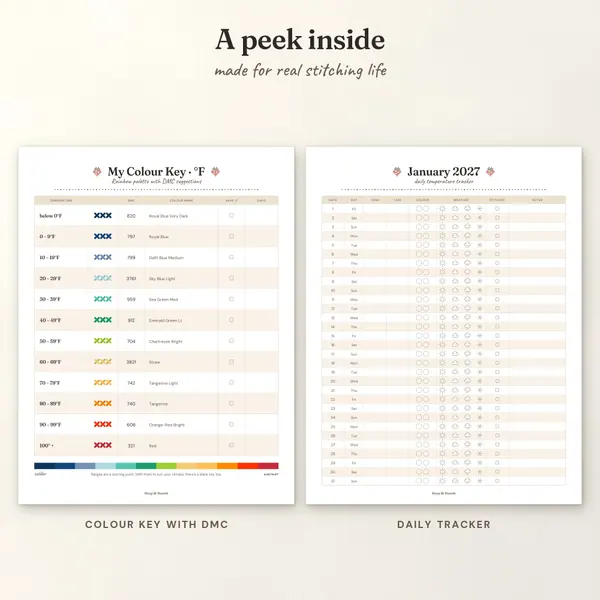
The 2027 Temperature Cross Stitch Kit is a printable with 12 dated monthly trackers, color keys in °F and °C with DMC numbers, five palette presets plus a blank key for your own colors, a floss and fabric planner, and two full charts: a Simple layout (62 x 35 stitches) and a High & Low layout (62 x 59 stitches). There’s also an any-year version if you’re starting late.
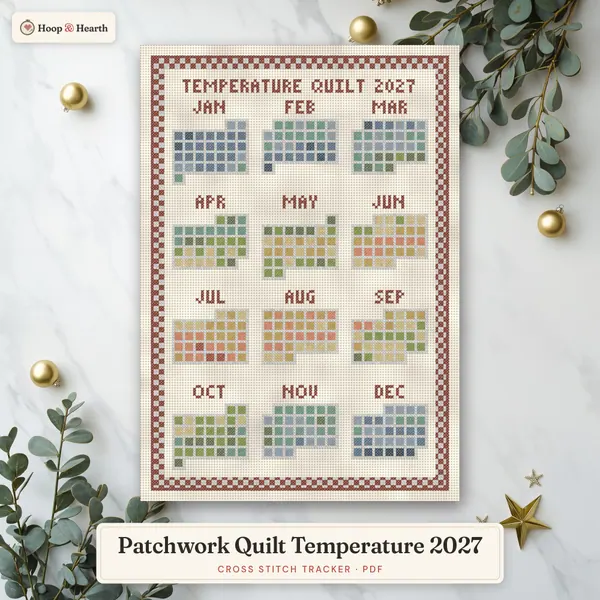
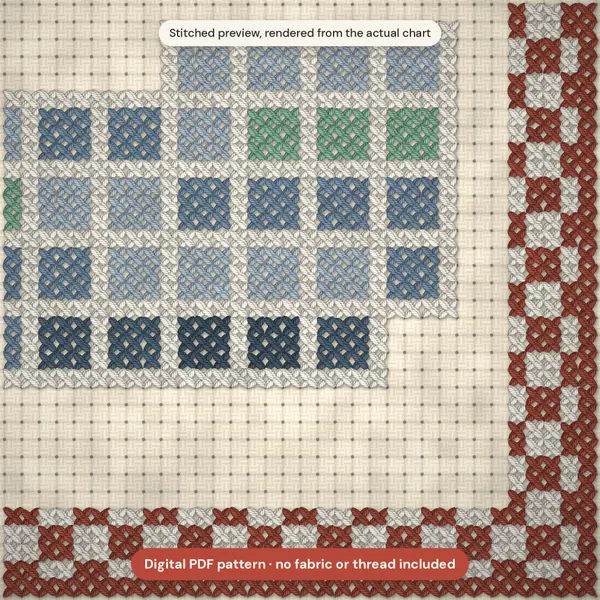
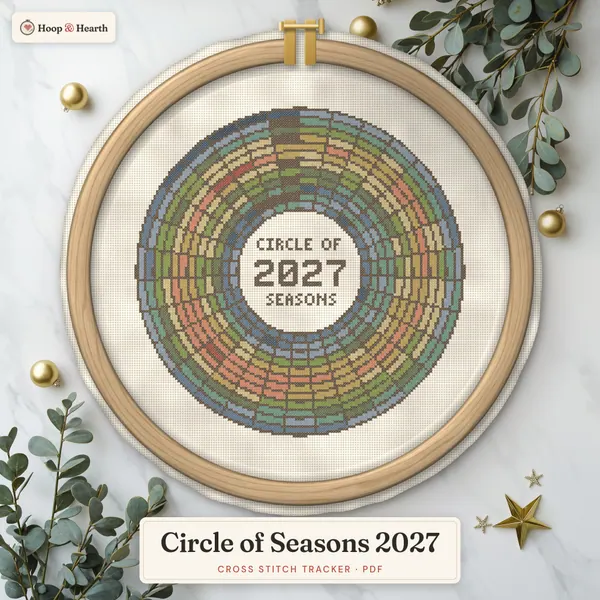
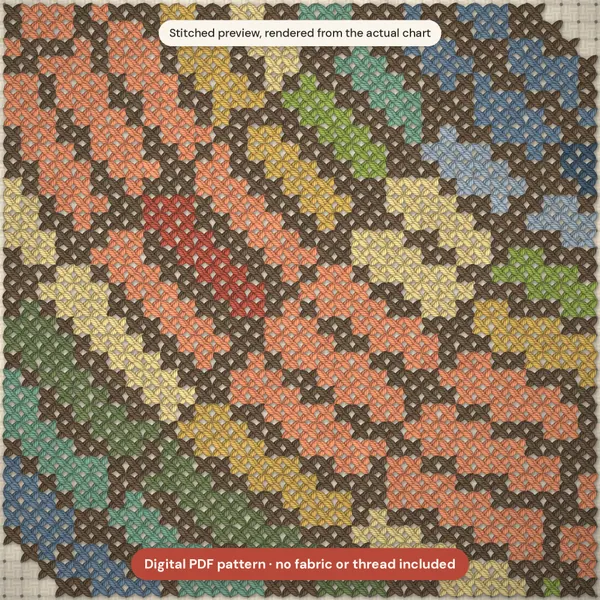
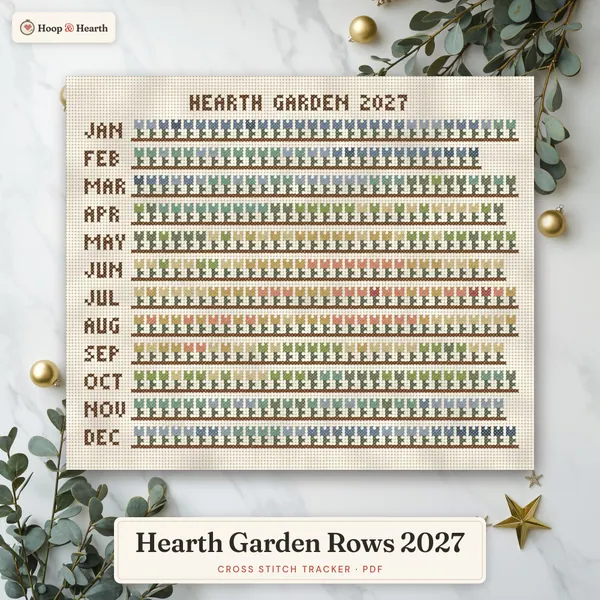
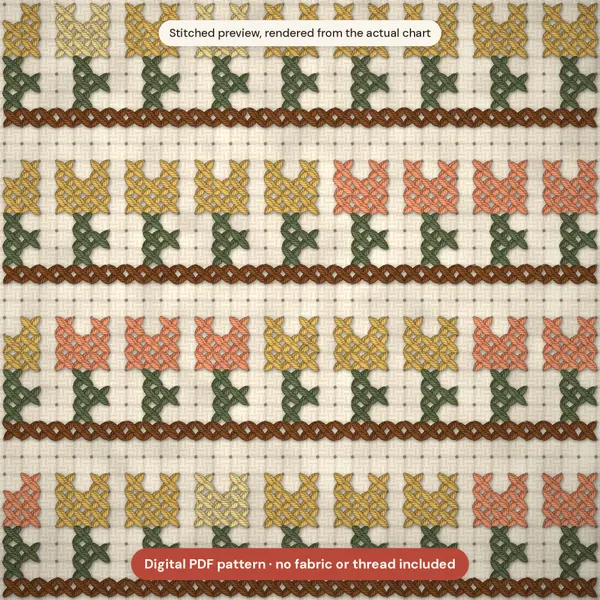
Year in Stitches 2027 is a collection of decorative yearly patterns: a patchwork quilt where every day is a patch, a garden with a flower stem per day, a radial “circle of seasons” mandala, a mood tracker made of tiny mugs and a reading shelf for every book you finish.
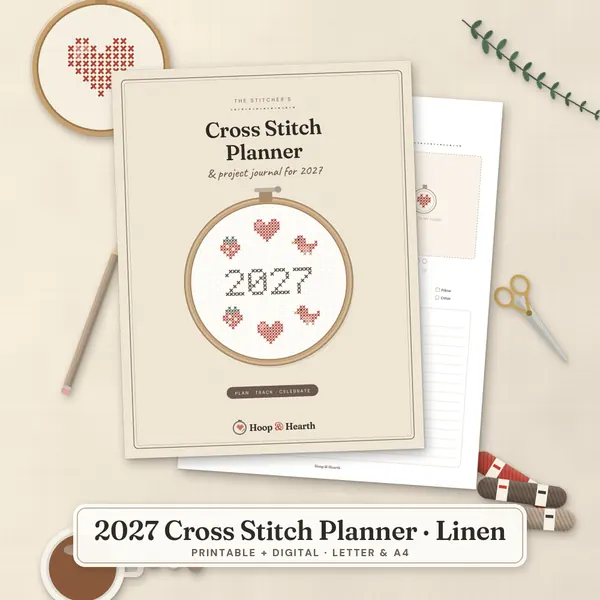
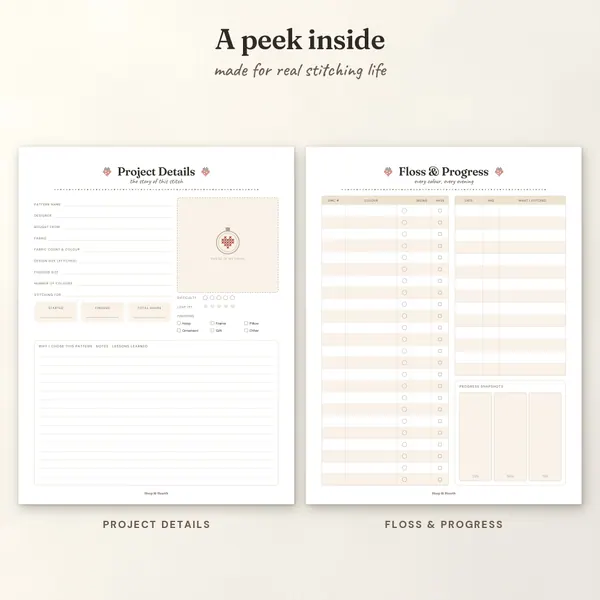
Planning more than one yearly project? My post on planning your 2027 stitching year has gentle goal-setting ideas and a free WIP tracker, and the 2027 Cross Stitch Planner has room for every project, a stitch log and a year-in-stitches page.
Your 2027 temperature checklist
- Choose your key (use mine, or adjust it to your climate).
- Choose your layout and chart it on graph paper.
- Work out your fabric size and cut it with 3 inches extra each side.
- Wind each color onto a labelled bobbin with its temperature range.
- Choose your weather source and station.
- Put your log somewhere you’ll see it every evening.
- Stitch January 1. Then just keep going, one week at a time.
There’s still time to gather everything before New Year. Browse the Year in Stitches 2027 collection, or if you’re still building your basic kit, my cross stitch supplies list has the essentials.
a little gift for you
Get your free cross stitch patterns
Join The Hearth Letter and download every freebie instantly, plus 15% off your first order and cozy stitching tips from Sara.
We send about two letters a month. Unsubscribe with one click.
Frequently asked questions
What if I miss a day of my temperature cross stitch?
Nothing is lost. Write the temperature down every day, or look it up later in your weather app's history or your national weather service's records, and stitch the missing days at the weekend. Most people stitch in a weekly batch anyway.
Should I use the high, low or average temperature?
Any of them, as long as you use the same one all year. The daily high is the simplest and easiest to find. Some charts use two stitches a day, one for the high and one for the low.
What fabric is best for a temperature cross stitch?
14 count aida in white, cream or a pale grey is easiest, because the colors read clearly and the holes are easy to count. Measure your chart first: a 62 x 35 stitch layout is about 4.5 x 2.5 inches on 14 count, before margins.
How much floss do I need for a temperature cross stitch?
For the simple layouts in this post, one skein of each color is plenty, because each color is only used on some days of the year. A 2 x 2 block per day uses about 1,460 stitches in total, spread across all your colors.
Can I start a temperature cross stitch after January 1?
Yes. Start on any date and run it for twelve months, or start late and fill in the earlier days from your weather history. Nobody will know but you.
Patterns to try
Stitch along with this post
Keep reading
More from the blog
Plan Your 2027 Cross Stitch Year (Free WIP Tracker)
Set gentle stitching goals for 2027, tame your WIP pile with a tracker and WIPGO, and plan seasonal finishes. Free printable included.
15 Last-Minute Cross Stitch Gift Ideas You Can Still Finish
Quick cross stitch gift ideas you can make in an evening or a weekend: ornaments, tags, cards, bookmarks and mini hoops, with stitch times for each.
Cozy Winter Cross Stitch Patterns (+ a Free Snowflake)
Cozy winter cross stitch patterns for long evenings: snowy cottages, mittens, snowmen and stars. Plus a free snowflake pattern to stitch tonight.