
How Many Strands for Cross Stitch? A Simple Chart
How many strands of floss to use on 11, 14, 16 and 18 count aida or evenweave: a simple chart, how to separate floss, and when to break the rules.
In this post
The very first question on almost every beginner’s list: how many strands for cross stitch? Embroidery floss comes as six thin strands twisted together, and you almost never stitch with all six. The right number depends on your fabric count.
The quick answer: use 3 strands on 11 count aida, 2 strands on 14, 16 and 18 count, and 2 strands on 28 or 32 count evenweave or linen stitched over two. For backstitch, use 1 strand on almost everything. These are starting points, so test a few stitches and adjust to the look you like.
For the bigger picture of how fabric count works, see my fabric count guide. And if you’re brand new, start with the beginner’s guide to cross stitch.
The quick chart: how many strands for cross stitch (by count)
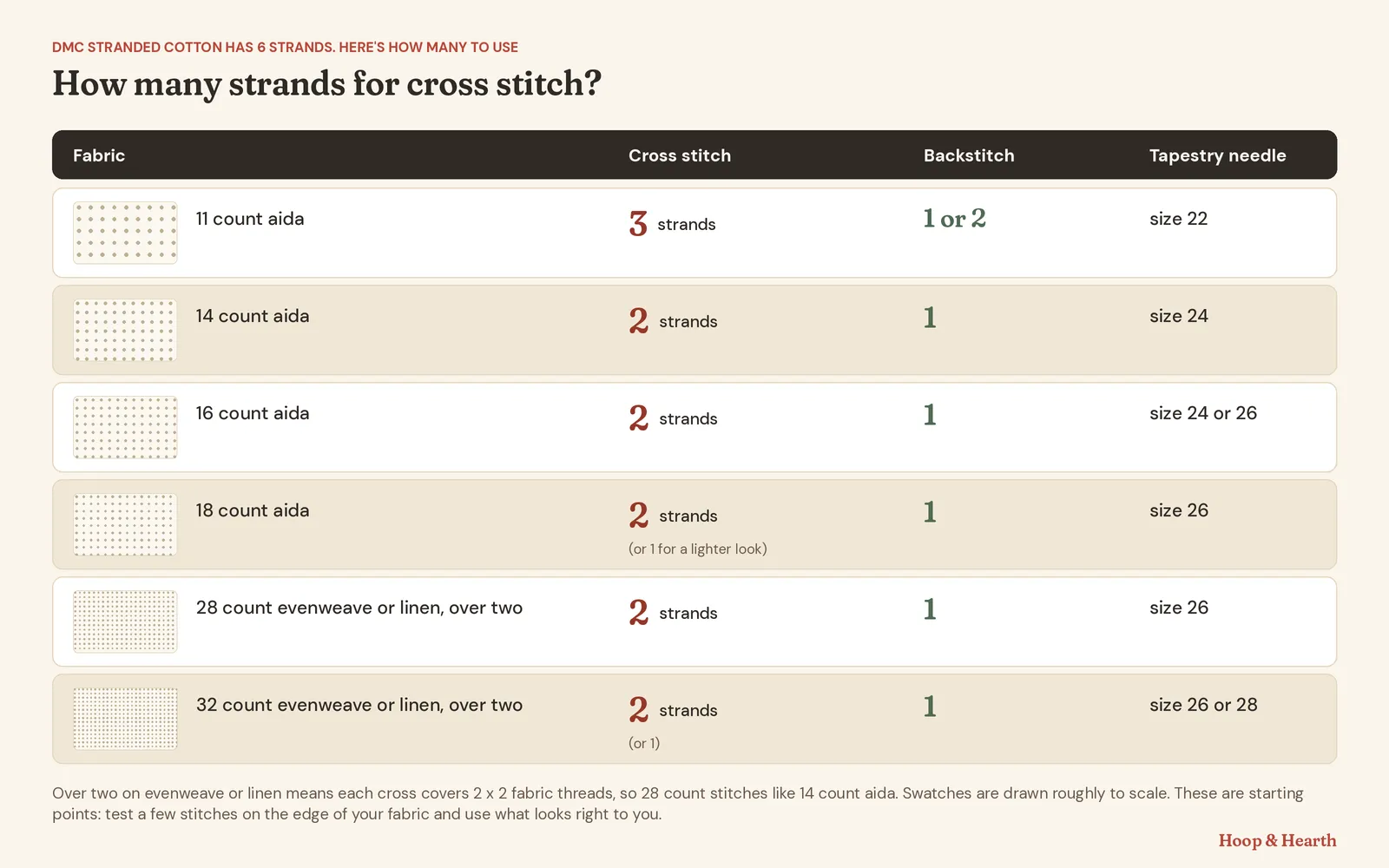
| Fabric | Cross stitch | Backstitch | Tapestry needle |
|---|---|---|---|
| 11 count aida | 3 strands | 1 or 2 | 22 |
| 14 count aida | 2 strands | 1 | 24 |
| 16 count aida | 2 strands | 1 | 24 or 26 |
| 18 count aida | 2 (or 1 for a lighter look) | 1 | 26 |
| 28 count evenweave or linen, over two | 2 strands | 1 | 26 |
| 32 count evenweave or linen, over two | 2 (or 1) | 1 | 26 or 28 |
| 6-count Binca or 7-count plastic canvas | all 6 strands (or pearl cotton) | 2 to 3 | 18 or 20 |
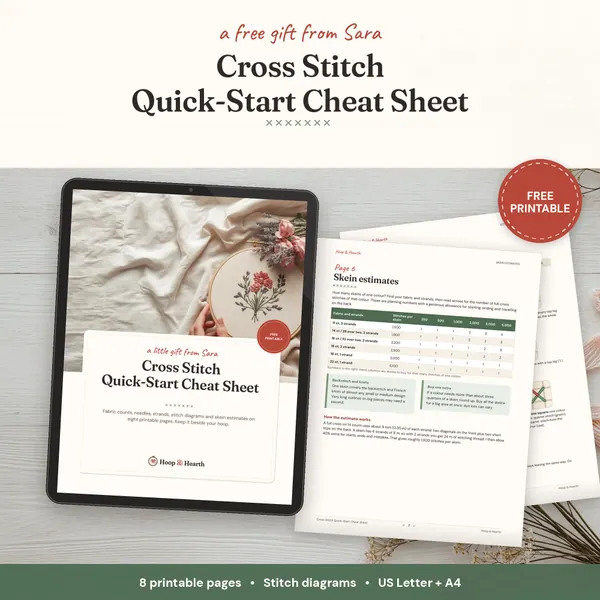
Every Hoop & Hearth pattern lists the strand count on the floss key, so you don’t have to guess. My beginner cheat sheet puts this chart on one printable page too.
What a “strand” is (6 strands in DMC floss)
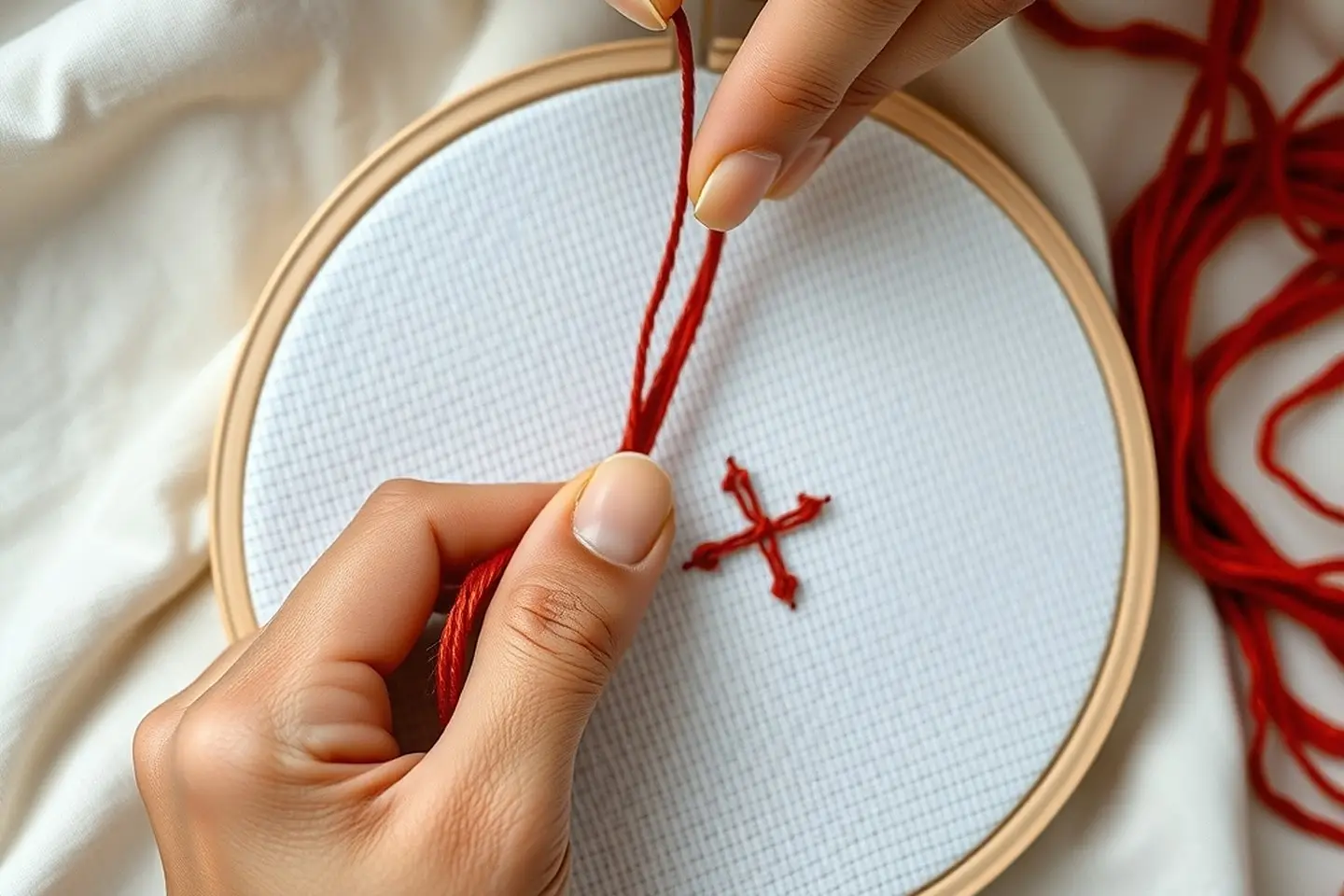
A skein of DMC stranded cotton holds 8 meters (about 8.7 yards) of floss. Look closely at the end and you’ll see it’s made of six thin strands loosely twisted together. Anchor and most other brands are the same.
So when a pattern says “2 strands”, it means: take two of those six single strands and thread them through your needle together. One skein gives you lots of 2-strand lengths, which is why a single skein covers a surprising amount of stitching.
a little gift for you
Get your free cross stitch patterns
Join The Hearth Letter and download every freebie instantly, plus 15% off your first order and cozy stitching tips from Sara.
We send about two letters a month. Unsubscribe with one click.
How to separate floss without tangles
This is the trick that changed everything for me as a beginner:
- Cut a length of about 18 inches (45 cm) from the skein.
- Hold it near the top between your finger and thumb, and let it hang.
- Pinch one single strand at the top and pull it straight up, slowly. The other five will bunch up below your fingers. That’s fine.
- Let the bunched strands relax and untwist by themselves.
- Pull out the next strand the same way.
- Lay the strands you need side by side, smooth them, and thread them together.
Always pull out strands one at a time, even if you need two. Pulling two out together twists them around each other, and they won’t lie as flat. Separating them first and putting them back together gives fuller, smoother stitches.
How long to cut your thread
About 18 inches (45 cm), which is roughly the length from your elbow to your fingertips.
- Longer than that and the floss rubs through the fabric too many times. It gets fuzzy, thin and tangly.
- Shorter means re-threading all the time.
- For the loop start, cut a single strand twice as long (about 36 inches) and fold it. It’s explained in how to start cross stitch without a knot.
When to use more (or fewer) strands
The chart is a starting point, not a law. Here’s when I change it:
| Use more strands when… | Use fewer strands when… |
|---|---|
| You want full, plump coverage with no fabric showing | You want a soft, delicate, airy look |
| You’re stitching on dark fabric and the color looks thin | You’re stitching on high-count linen for fine detail |
| Your floss is a pale color on a darker background | The stitches look crowded or the holes are stuffed |
| It’s a kids’ project on Binca or plastic canvas | You’re doing backstitch details or fine lettering |
Test first. Stitch three or four crosses in the margin of your fabric with 2 strands and with 3, and pick the one you like. It takes two minutes and saves a lot of unpicking.
You can also blend colors by threading one strand each of two different colors together. It’s a nice way to make a softer, in-between shade.
Over-two stitching on evenweave and linen
Evenweave and linen don’t have the clear blocks that aida has. Instead, you usually stitch over two threads in each direction. That halves the stitch count:
- 28 count over two = 14 stitches per inch, the same size as 14 count aida, so use 2 strands.
- 32 count over two = 16 stitches per inch, like 16 count aida, so 2 strands, or 1 for a lighter look.
- Over one on 28 or 32 count (tiny stitches) usually means 1 strand.
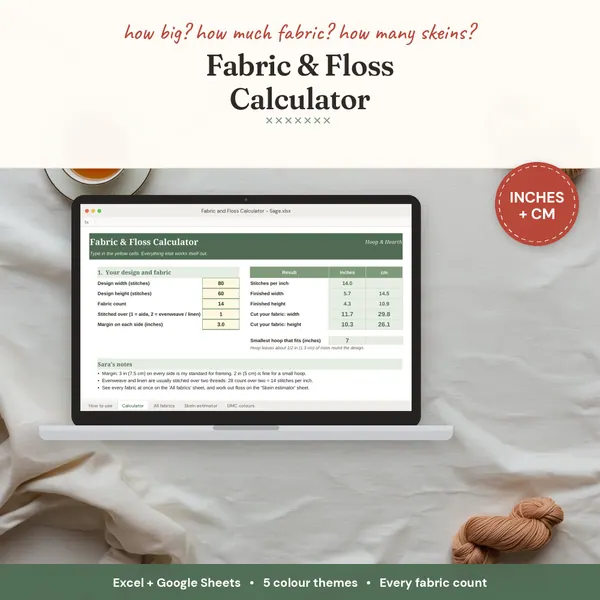
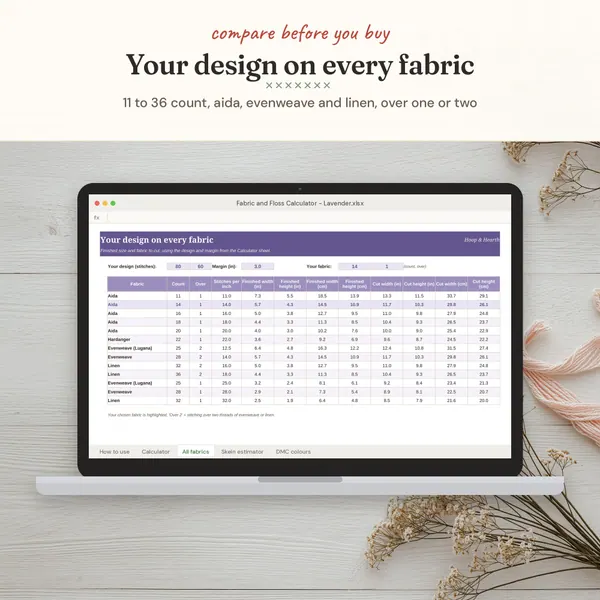
My fabric count guide explains over one and over two with pictures, and you can check finished sizes for any count in the fabric size calculator.
Keeping strands from twisting
Every stitch twists your thread a tiny bit. After a while, it kinks, knots, or the strands lie on top of each other instead of side by side.
- Let the needle dangle every few stitches. Hold the hoop up, let the needle hang, and it’ll spin back the right way.
- Give the needle a small turn in the opposite direction as you stitch, if you notice you always twist one way.
- Use shorter lengths. Shorter thread has less to twist.
- Separate the strands properly (see above). Pre-twisted pairs twist more.
- Don’t pull too tight. Snug, not squeezed. Tight stitches twist and pucker the fabric.
If your stitches still look messy, there’s more help in how to fix cross stitch mistakes.
Practice with a small pattern
The easiest way to get a feel for strands is a small design on 14 count with 2 strands. My free beginner heart is 3 colors and takes an evening or two. When you’re ready for more, these beginner patterns all list the strand count on the floss key:
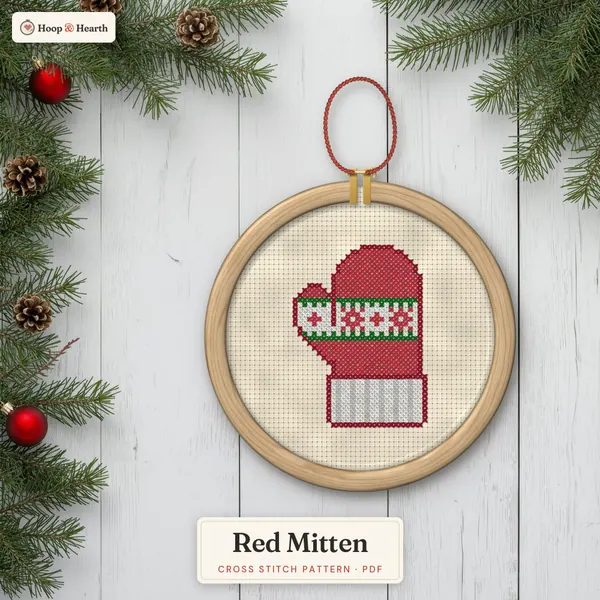
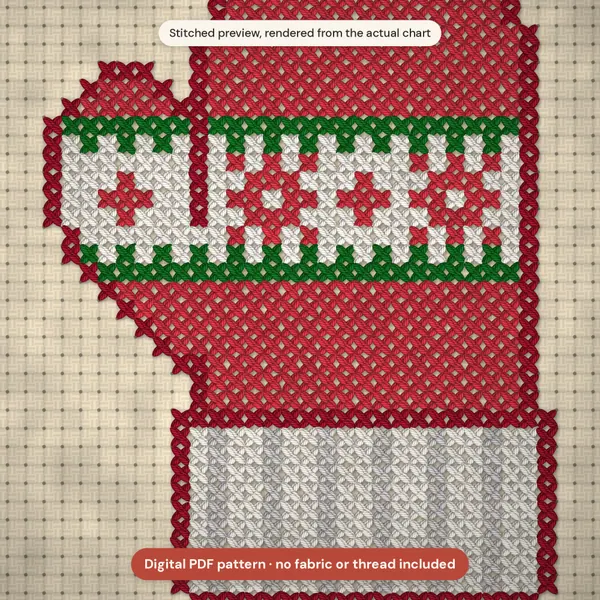
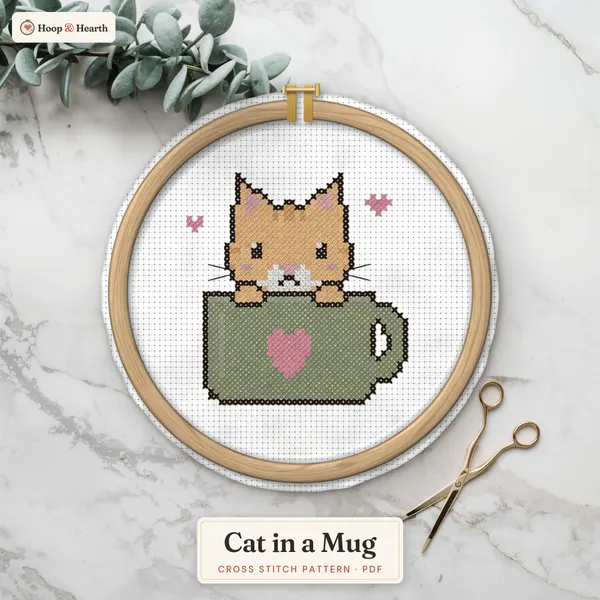
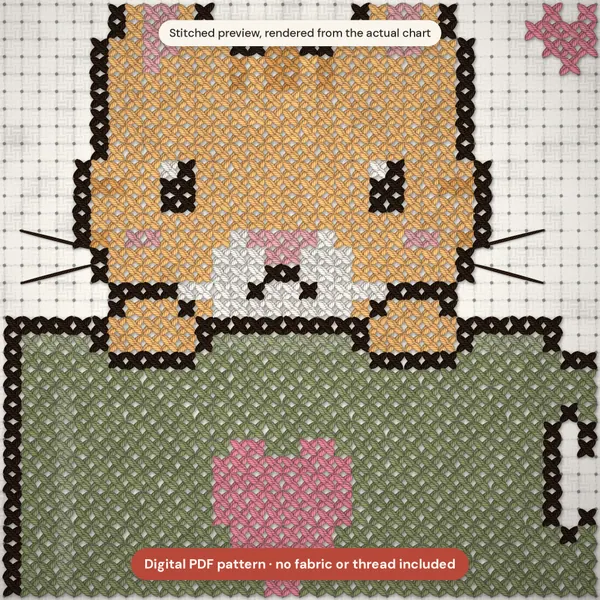
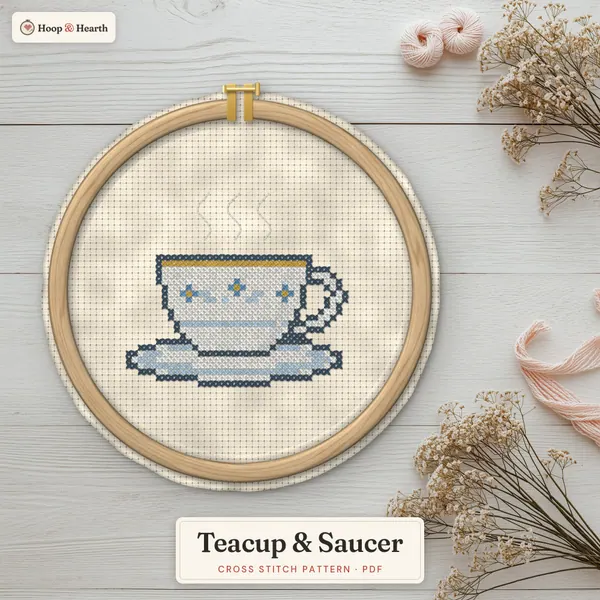
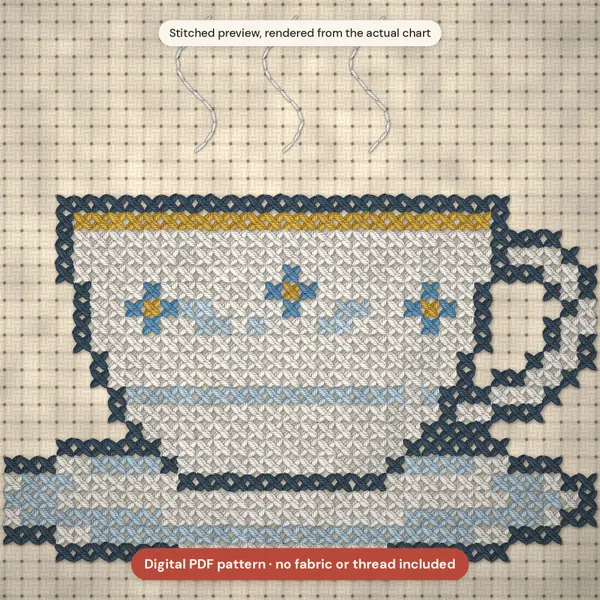
You’ll find more in the beginner-friendly patterns, and everything else about getting started in the complete beginner guide.
a little gift for you
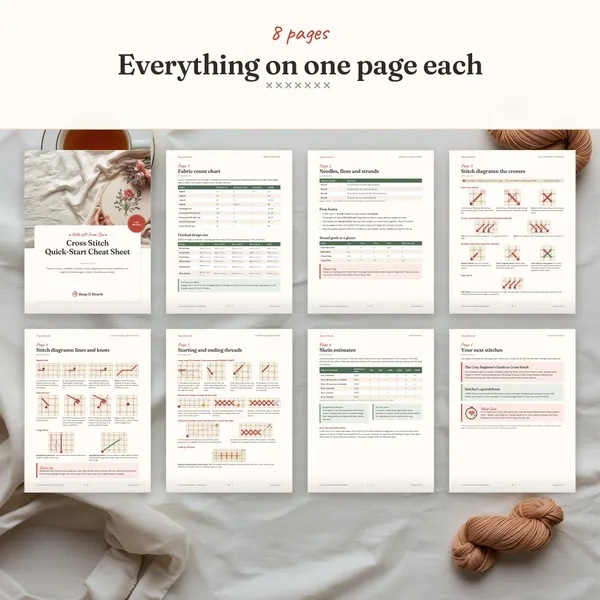
Get the one-page beginner cheat sheet
Strands, needles and fabric counts on one page. Join The Hearth Letter to download it with my free pattern.
We send about two letters a month. Unsubscribe with one click.
Frequently asked questions
How many strands do you use for 14 count aida?
Two strands for cross stitch and one strand for backstitch. Some stitchers use three strands on 14 count for a fuller, more textured look.
How many strands for 18 count aida?
Usually two strands, which gives good coverage. One strand gives a lighter, more delicate look where the fabric shows through.
What does 2 strands mean in cross stitch?
Embroidery floss is made of six thin strands twisted together. Two strands means you separate two of those single strands and thread them through the needle together.
How do you separate embroidery floss without tangling?
Cut a length of about 18 inches, hold it near the top, and pull one strand straight up and out slowly while the rest bunches below. Let the bunched strands relax, then pull out the next one. Put the strands you need back together side by side.
How many strands for backstitch?
One strand on most fabrics. Use two strands on 11 or 14 count when you want a bold outline or chunky lettering.
Patterns to try
Stitch along with this post
Keep reading
More from the blog
Cross Stitch Glossary: WIP, FFO, SAL, Frogging & More
What do WIP, FO, FFO, SAL, HAED, PK, frogging and confetti mean? A friendly A-Z cross stitch glossary of terms and abbreviations for new stitchers.
How to Fix Cross Stitch Mistakes (Frogging Made Easy)
Miscounted? Wrong color? How to unpick cross stitch safely, fix tension and messy backs, and stop thread tangling, without damaging your fabric.
How to Read a Cross Stitch Pattern (Step by Step)
Symbols, grids, keys and backstitch lines explained simply, with a free practice chart so you can learn how to read a cross stitch pattern tonight.