
What Is Confetti in Cross Stitch? (+ How to Tame It)
Confetti stitches explained: what they are, why they slow you down, tips like parking for confetti-heavy patterns, and how to spot low-confetti charts.
In this post
If you’ve spent any time in stitching groups, you’ve seen someone joking about being stuck in “confetti purgatory”. Cross stitch confetti is the name for those lonely single stitches of one color, scattered across a chart like sprinkles. A few are charming. Hundreds can turn a relaxing evening into a slow, fiddly one.
The short answer: confetti is a single stitch (or a tiny group of two or three) in a color that touches no other stitch of the same color. Each one means starting and ending a thread for almost nothing. Charts converted straight from photos tend to be full of it. Well-designed charts keep it to deliberate details.
Below I’ll explain why it’s tiring, how to spot a confetti-heavy chart before you buy, how to cope if you’re already in the middle of one, and how I design my own patterns to avoid it. If you’re new to charts, my guide to reading a cross stitch pattern is a good place to start first.
What confetti stitches are
Picture a chart where most colors sit in tidy shapes: a red cap, a cream stem, a green patch of grass. Now picture the same chart where every few squares there’s a single stitch of a slightly different red, a slightly different cream, a slightly different green. Those single stitches are confetti.
Stitchers usually count something as confetti when:
- it’s one to three stitches of a color,
- not touching any other stitch of that color, and
- it’s not a deliberate detail like an eye or a flower center.
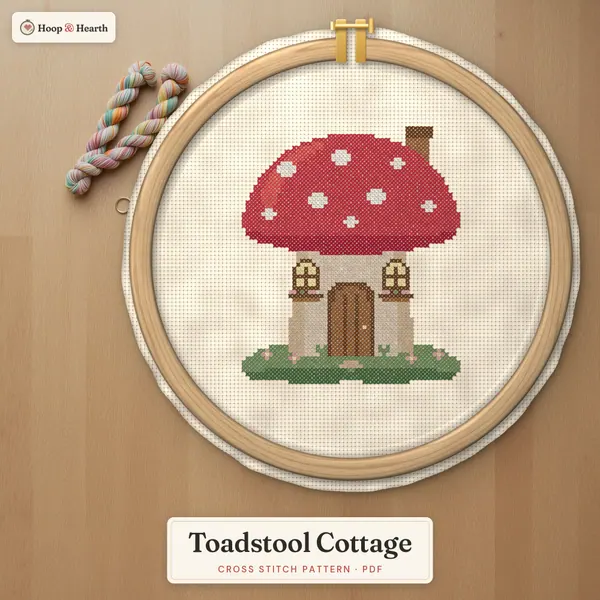
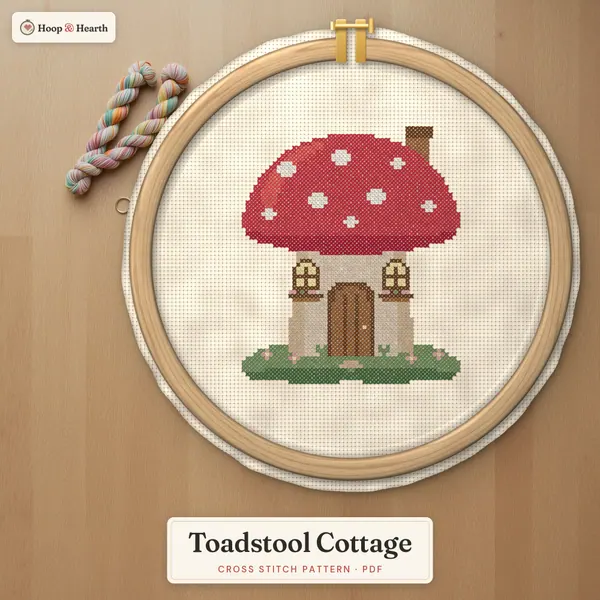
Here’s a real comparison I made for this post. On the left is a 60 x 72 chart generated automatically from a photo of a toadstool. On the right is my Toadstool Cottage chart at the same size. I outlined every stitch that has no neighbor of the same color, not even diagonally:
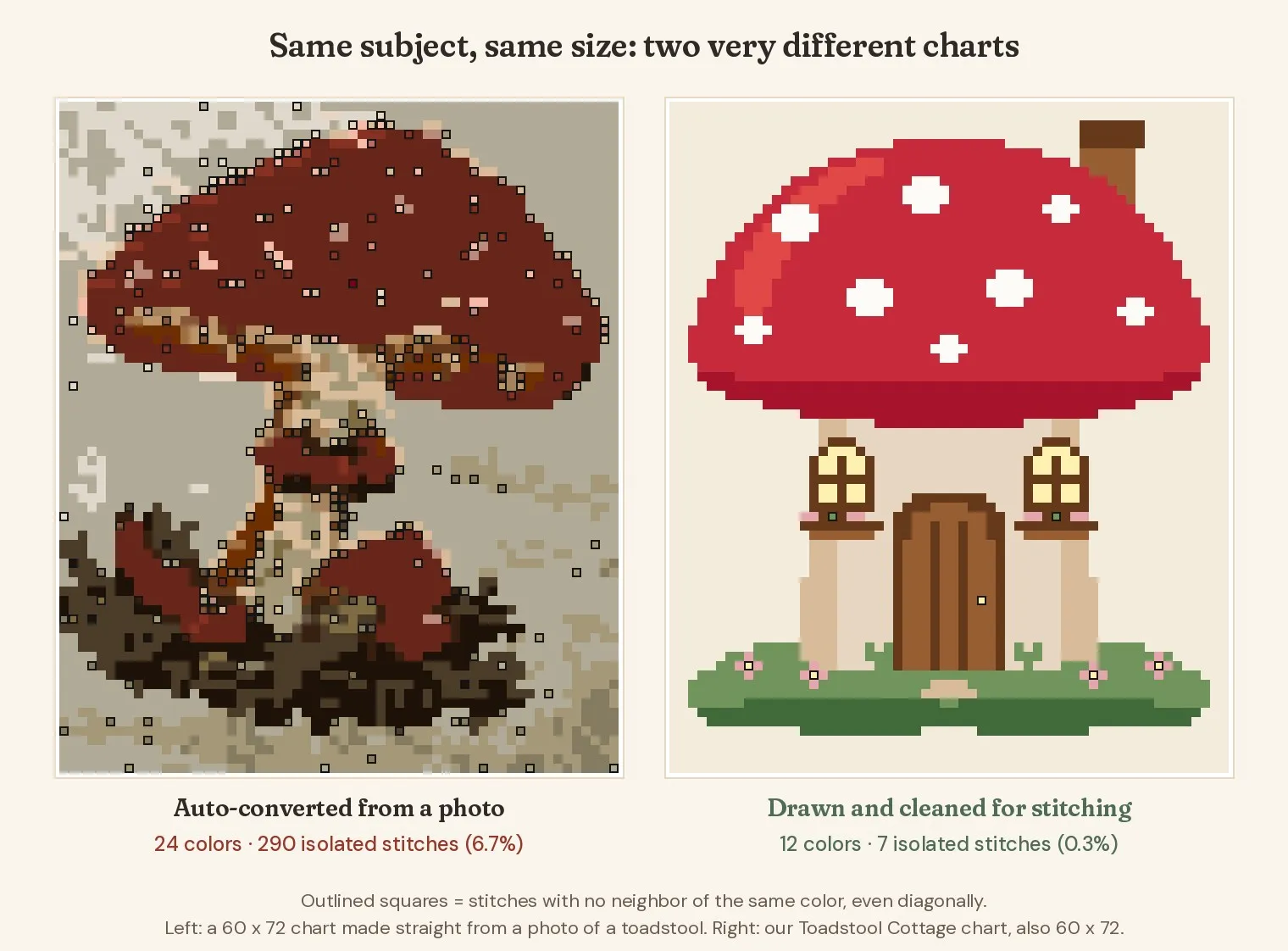
The left chart has 24 colors and 290 isolated stitches. The right one has 12 colors and 7, and those 7 are on purpose: tiny flower centers, two window-box sprouts and a door knob.
Why stitchers love to hate them
Confetti isn’t hard. It’s just slow, and it’s slow in a way that doesn’t feel like progress.
| What happens | Why it’s annoying |
|---|---|
| You start and end a thread for one or two crosses | Most of your time goes into threading and securing, not stitching |
| Your eyes jump around the chart | Easy to miscount, and mistakes are hard to spot |
| You use more floss | Every start and finish needs a tail |
| The back gets lumpy | Lots of ends tucked in a small area can show as bumps on the front |
| Similar shades sit side by side | Hard to tell 3 near-identical beiges apart late at night |
None of this matters much for a big, slow, full-coverage project you choose for the challenge. Plenty of stitchers love those. It matters a lot when you were hoping for a calm little project to finish in a couple of weeks.
How to spot a confetti-heavy chart before you buy
You can usually tell from the listing, if you know where to look:
- Zoom into the chart preview. Clean charts look like flat shapes. Confetti charts look speckled or grainy, like a photo.
- Check the color count against the size. A 60 x 60 design with 40+ colors almost always has lots of confetti. Most cozy designs that size need roughly 6 to 15.
- Look for lots of near-identical shades. Five greys, six skin tones and four creams in the floss key mean the chart is shading with single stitches.
- Read the words “full coverage” and “from a photo” carefully. Neither is bad. Both usually mean more confetti.
- Look for a stitched photo, or at least an honest preview. A preview that looks like a blurred painting rather than stitches is a warning sign.
a little gift for you
Get your free cross stitch patterns
Join The Hearth Letter and download every freebie instantly, plus 15% off your first order and cozy stitching tips from Sara.
We send about two letters a month. Unsubscribe with one click.
Tips if you’re already in confetti purgatory
Already started? Don’t give up on it. These habits make confetti much less painful:
- Work in small blocks. Stitch a 10 x 10 area completely before moving on. You’ll see real progress and lose your place less.
- Thread several needles at once. Keep one needle per color in the block, parked on a needle minder or in the margin of your fabric.
- Travel on the back, a little. It’s fine to carry a thread two or three squares under already-stitched areas to reach the next stitch of that color. Don’t carry dark threads across bare fabric, because they show through.
- Use a highlighter or an app. On paper, highlight one symbol at a time. In Pattern Keeper, tap a symbol to highlight it across the chart.
- Good light and a magnifier. Confetti is far easier with a daylight lamp.
The parking method in plain English
Parking is the big one. It’s how full-coverage stitchers handle hundreds of colors without losing their minds.
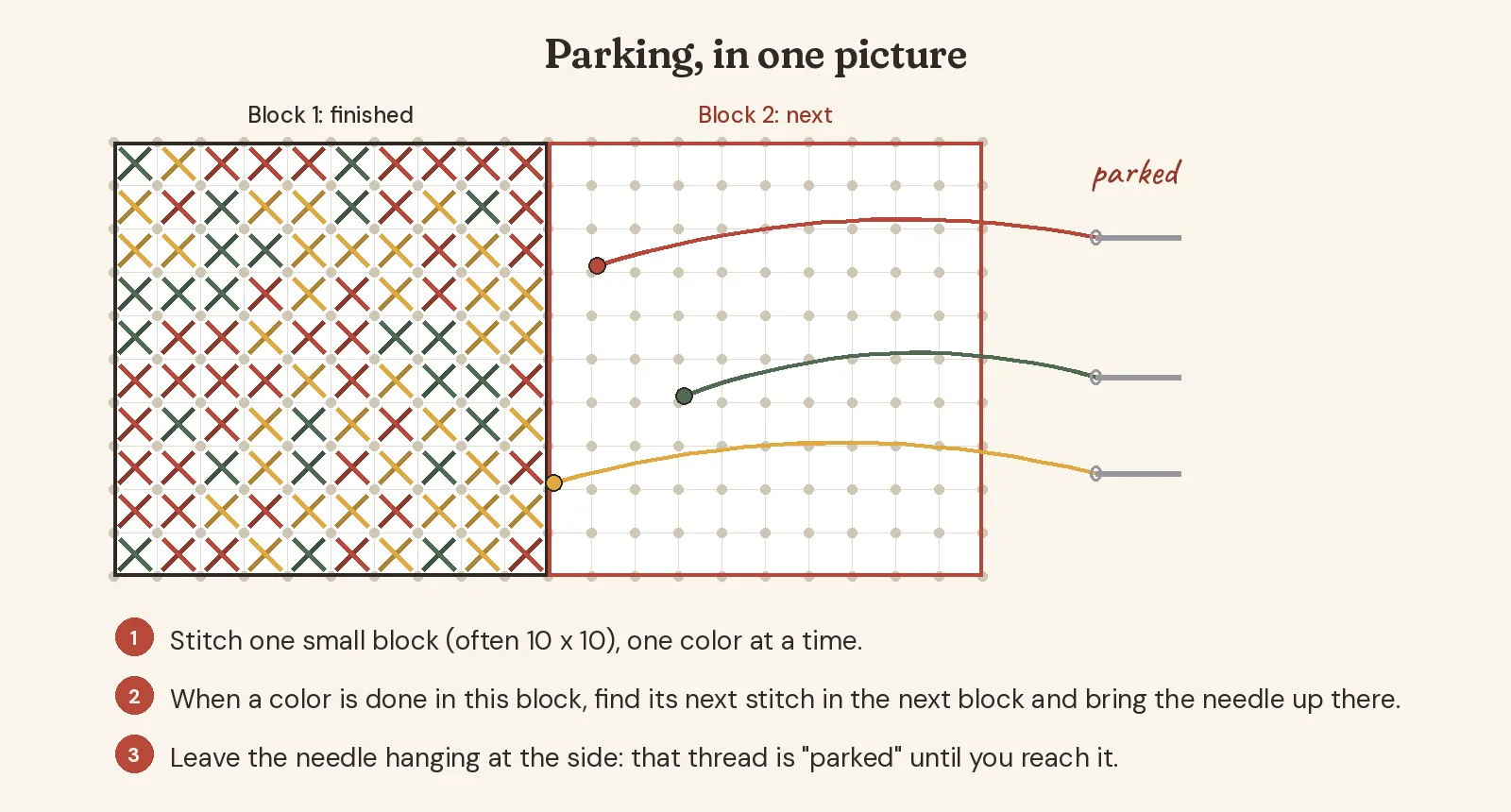
- Pick a small block, usually 10 x 10 squares (one grid square on most charts).
- Stitch every color in that block. One color at a time, all of its stitches in the block.
- When a color is done in the block, don’t end it. Look at the next block, find the nearest stitch of that color, and bring your needle up there.
- Leave it waiting. The needle hangs at the side, or you unthread it and leave the floss tail. That color is “parked”.
- Move to the next block and start with the parked threads that are already waiting.
Some people park across rows, others in columns. Some use cross-country (one color at a time across a bigger area) instead. If you’re curious, try a small area each way and see which feels calmer. There’s no single right method.
How I design for low confetti (our promise)
Here’s what actually happens to every Hoop & Hearth chart before it’s released:
- Each design is drawn as flat color shapes, not traced from a photo. A cap is one red with one highlight and one shadow, not twelve reds.
- The palette stays tight. Most of my designs use 15 colors or fewer, and every color on the key is used in real areas, not sprinkled in ones and twos.
- Every chart is cleaned up before release. Stray single stitches get merged into their neighbors unless they’re a deliberate detail: an eye, a flower center, a sparkle.
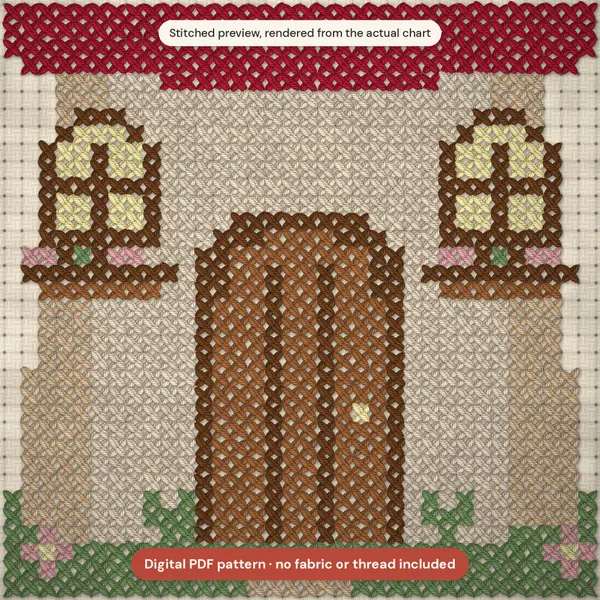
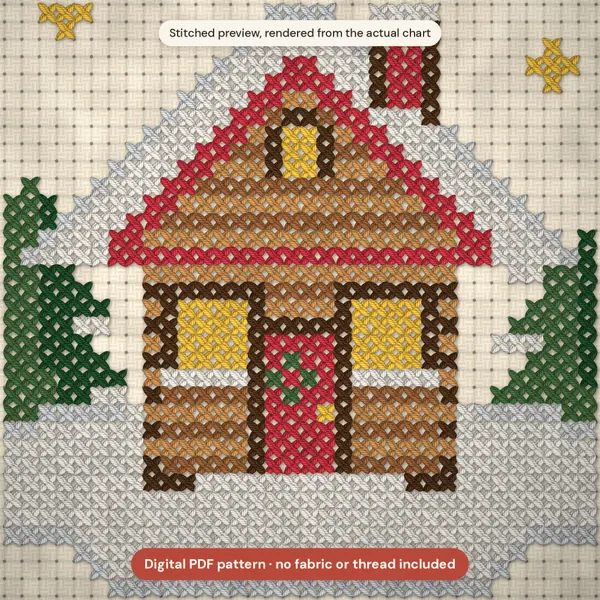
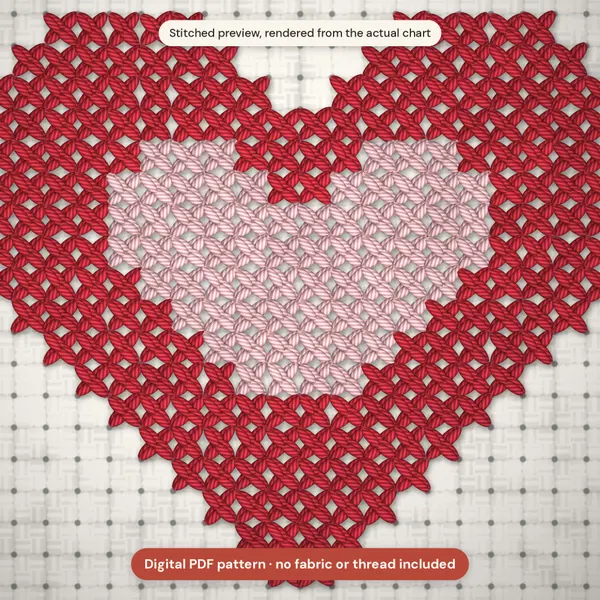
- The preview you see is rendered from the chart itself, the same grid you’ll stitch. It’s always labeled as a digital preview, never passed off as a stitched photo.
You can read more on the how I make my patterns page. And if you’ve just started out, the beginner-friendly patterns are the calmest place to begin.
Spotting poorly made or auto-generated patterns
Confetti is often a symptom of a bigger problem: shops that churn out thousands of charts by running pictures (sometimes other people’s art) through a converter. Stitchers call them pattern mills. Common red flags:
- A brand-new shop with hundreds or thousands of patterns, in completely different styles.
- Only digital previews, often with fabric texture that looks wrong, and never a single stitched photo.
- Huge color counts on small designs, with lots of near-identical shades.
- Famous artwork or photos you’ve seen elsewhere, turned into charts.
- Prices that seem too good for very large charts.
A small catalog in one consistent style, clear color counts, and honest previews are good signs. If you’re new to all of this, my complete beginner guide explains what a good chart should include, and the cross stitch glossary covers words like full coverage, parking and HAED.
a little gift for you
Try a low-confetti pattern for free
Join The Hearth Letter and get my free beginner patterns, all made the same calm way.
We send about two letters a month. Unsubscribe with one click.
Frequently asked questions
What does confetti mean in cross stitch?
Confetti is a single stitch, or a tiny cluster of two or three, in a color that doesn't touch any other stitch of the same color. You have to start and finish the thread for just one or two crosses, which is slow.
Is confetti bad in a cross stitch pattern?
Not always. A few single stitches for an eye, a flower center or a sparkle are fine and often necessary. It becomes a problem when a chart is covered in them, usually because it was converted automatically from a photo.
What is the parking method in cross stitch?
You work one small block at a time. When a color is finished in that block, you bring the needle up at that color's next stitch in the following block and leave it waiting there, parked, until you reach it.
How can I tell if a pattern has a lot of confetti before buying?
Zoom in on the chart preview. If areas look speckled like a photo, if the pattern has many near-identical shades, or if a small design uses dozens of colors, expect lots of confetti.
Patterns to try
Stitch along with this post
Keep reading
More from the blog
Pattern Keeper Guide: Stitch PDF Patterns on a Tablet
How to use PDF cross stitch patterns on paper, tablet or phone, a beginner's guide to the Pattern Keeper app, and what makes a PDF PK-compatible.
How to Start Cross Stitch Without a Knot (3 Methods)
The loop method, the waste knot and the away knot explained simply, plus how to end a thread neatly so the back of your cross stitch stays flat.
Backstitch & French Knots in Cross Stitch (Easy Guide)
How to do backstitch and French knots in cross stitch, read them on a chart, and get neat outlines and knots that don't pull through.