
Cross Stitch Glossary: WIP, FFO, SAL, Frogging & More
What do WIP, FO, FFO, SAL, HAED, PK, frogging and confetti mean? A friendly A-Z cross stitch glossary of terms and abbreviations for new stitchers.
In this post
The first time I read a stitching forum, I felt like I’d stumbled into a secret club. Someone had three new WIPs and a UFO, someone else was frogging a BAP, and everyone was excited about an SAL. It’s all friendly, it’s just a lot of shorthand. This cross stitch glossary explains the terms and definitions you’ll meet most, in plain English.
The short answer: the abbreviations you’ll see most are WIP (work in progress), FO (finished object), FFO (fully finished object), SAL (stitch-along), PK (Pattern Keeper) and frogging (unpicking mistakes). Below you’ll find those and many more, grouped so they’re easy to scan.
If you’re brand new, my complete beginner guide to cross stitch is the best place to start. Keep this page open in another tab for the jargon.
The abbreviations everyone uses (WIP, FO, FFO, UFO, SAL, PK, LNS, HAED)
| Term | Stands for | What it means |
|---|---|---|
| WIP | Work in progress | A project you’ve started and not finished |
| FO | Finished object | All the stitching is done |
| FFO | Fully finished object | Stitched and made into something: framed, an ornament, a pillow |
| UFO | Unfinished object | A WIP that’s been abandoned or forgotten for a long time |
| SAL | Stitch-along | A pattern released in parts on a schedule, stitched together by a group |
| PK | Pattern Keeper | An Android app for tracking progress on PDF charts |
| LNS | Local needlework shop | An independent shop that sells stitching supplies |
| HAED | Heaven and Earth Designs | A company known for very large, full-coverage charts; often used as shorthand for that style |
| BAP | Big a** project | A huge chart that takes months or years |
| TUSAL | Totally useless stitch-along | A fun monthly ritual of photographing your jar of thread scraps |
A few more you’ll bump into: DMC is the most widely used brand of six-strand embroidery floss, and its color numbers are used in most pattern keys. Q-snap is a brand of square plastic frame many stitchers use instead of a hoop.
My guide to Pattern Keeper and PDF patterns explains PK properly, and if an SAL sounds fun, the 2027 temperature cross stitch is a gentle year-long one.
Stitch types (full, half, quarter, three-quarter, backstitch, French knot)
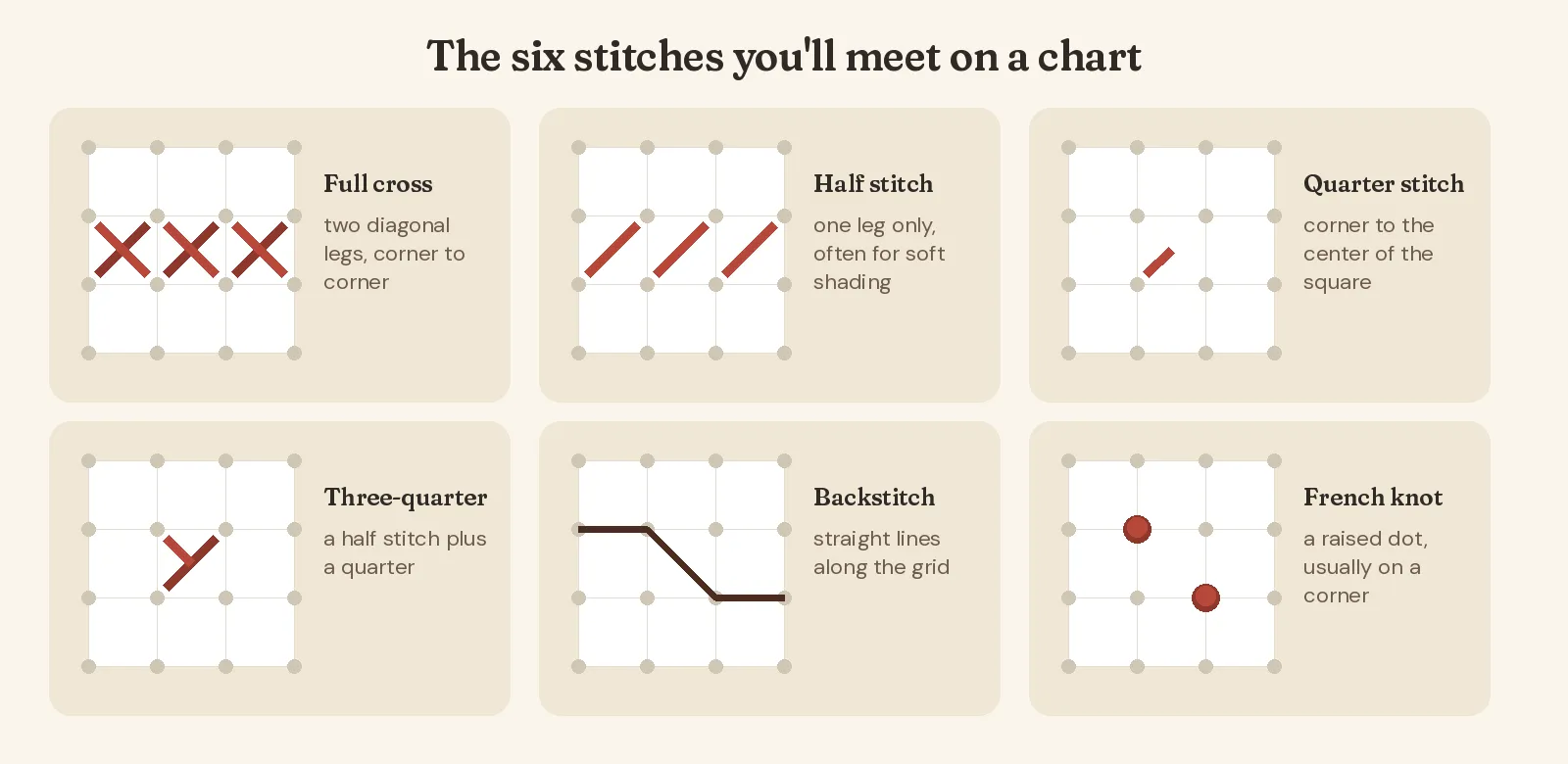
- Full cross stitch: the classic X, two diagonal legs from corner to corner of one square. Most charts are almost all full crosses.
- Half stitch: just one diagonal leg. Used for soft shading or backgrounds that look lighter.
- Quarter stitch: a short leg from one corner to the center of the square.
- Three-quarter stitch: a half stitch plus a quarter stitch in the same square. Used to make smoother curves and points.
- Fractionals: the general name for quarter and three-quarter stitches.
- Backstitch: straight lines worked hole to hole, used for outlines, details and lettering. Usually 1 strand.
- French knot: a little raised dot made by wrapping floss around the needle. Used for eyes, centers and sparkle.
- Long stitch: a single straight stitch spanning several squares, often for whiskers or rays.
My guide to backstitch and French knots shows how to do both, step by step.
a little gift for you
Get your free cross stitch patterns
Join The Hearth Letter and download every freebie instantly, plus 15% off your first order and cozy stitching tips from Sara.
We send about two letters a month. Unsubscribe with one click.
Fabric words (count, aida, evenweave, over one/over two)
- Aida: the most common cross stitch fabric. Its threads are woven in little blocks with clear holes, so it’s easy to count.
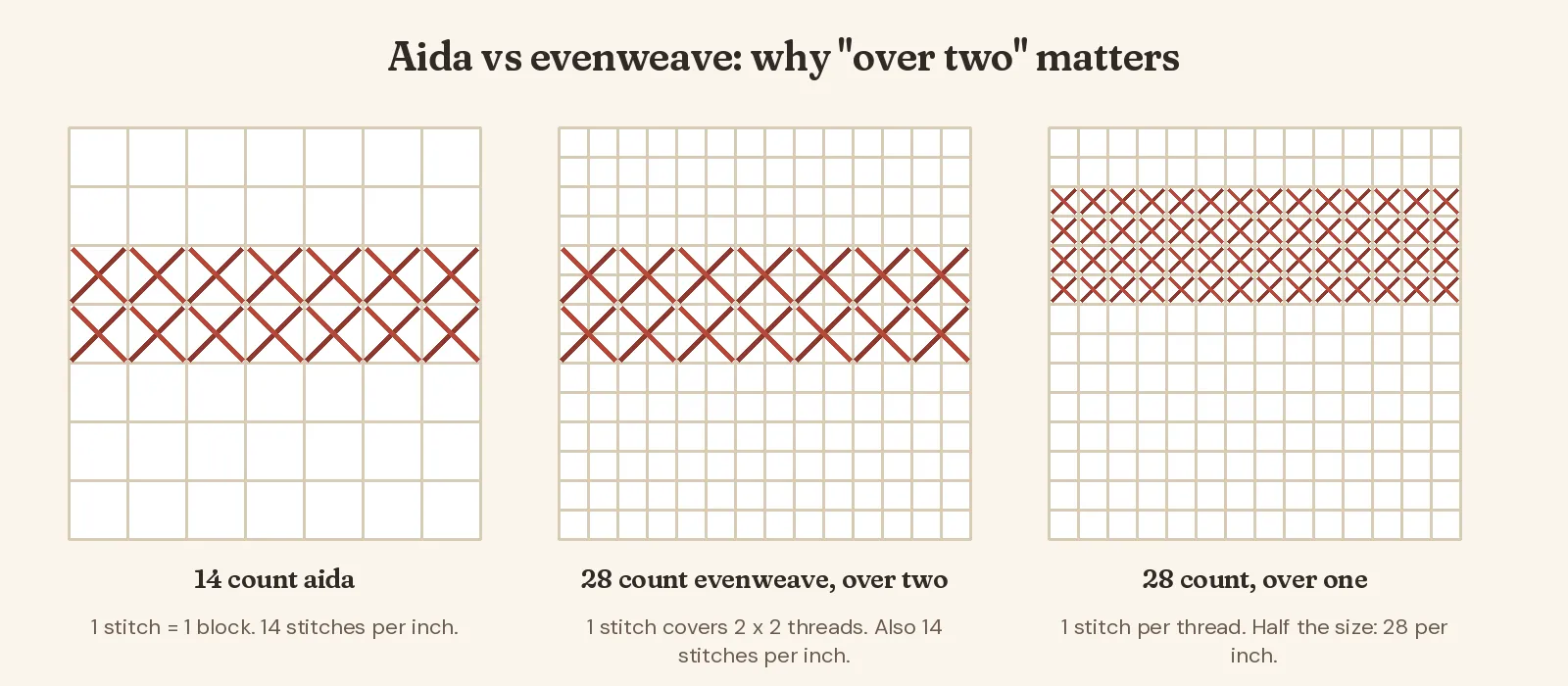
- Count: how many stitches fit in one inch. 14 count aida gives 14 stitches per inch. Higher count = smaller stitches.
- Evenweave: a fabric with single, evenly spaced threads (no blocks). Smoother look, usually stitched over two threads.
- Linen: like evenweave but woven from linen fibers, with natural slubs and character.
- Over two: each stitch covers 2 x 2 threads. 28 count evenweave over two gives 14 stitches per inch, the same size as 14 count aida.
- Over one: each stitch covers a single thread. Twice as small, very fine and detailed.
- Full coverage: every square of the design is stitched, so no fabric shows through.
- Partial coverage: only the motif is stitched, and the fabric is part of the design.
The aida fabric count guide goes deeper, with a size table and my picks for beginners.
Technique words (loop start, parking, frogging, railroading)
- Loop start: a neat way to start without a knot, using one strand folded in half. Here’s how to start cross stitch without a knot.
- Waste knot / away knot: two more knotless starts. The knot sits on the front, away from the stitching, and is snipped off later.
- Frogging: unpicking mistakes. “Rip it, rip it.” See how to fix cross stitch mistakes.
- Parking: for charts with lots of colors, you bring each thread up at its next stitch outside the area you’re working, and leave it waiting.
- Cross-country: stitching one color across a bigger area before switching. The opposite approach to parking.
- Confetti: single, isolated stitches of a color. Slow to stitch. Read what confetti is in cross stitch.
- Railroading: passing the needle between your two strands as you stitch, so they lie flat and parallel. It gives a smoother, shinier finish.
- Danish method: stitching a row of half stitches one way, then crossing them all on the way back.
- English method: completing each X before moving to the next.
- Gridding: drawing a 10 x 10 grid on your fabric with removable thread or a wash-out pen, to match the chart.
- Kitting up: gathering fabric, floss and chart for a new project in one bag.
Community words (stash, haul, rotation, start-itis, orts, WIPGO)
- Stash: your collection of supplies and patterns. Usually larger than you’d admit.
- Haul: a show-and-tell of new supplies you’ve bought.
- Rotation: a system for switching between WIPs, for example a week each.
- Start-itis: the irresistible urge to start a new project instead of finishing one.
- Orts: the little thread scraps you trim off. Many stitchers keep an ort jar.
- WIPGO: a bingo-style game for choosing which WIP to work on. My 2027 stitching planner post explains how to play.
- Needle minder: a decorative magnet that holds your needle on the fabric.
- Pattern mill: a shop selling huge numbers of auto-generated or copied charts, usually with lots of confetti and no stitched photos.
- Comfort stitch: an easy, relaxing project for tired evenings.
FlossTube 101
FlossTube is the community of stitchers sharing their hobby on YouTube. If you like a chatty, cozy video while you stitch, it’s a lovely rabbit hole. Common video types:
- WIP updates: progress on current projects since the last video.
- Finishes: new FOs and FFOs.
- Hauls: new patterns, fabric and floss.
- Stitch with me: a long, relaxed video of someone stitching and chatting.
- SAL check-ins: progress on a stitch-along.
You’ll hear all the words on this page used in FlossTube videos, and after a few episodes they’ll feel completely natural.
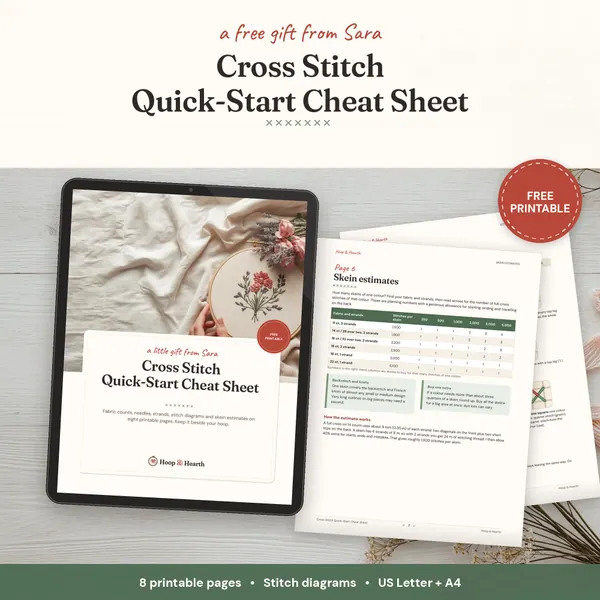
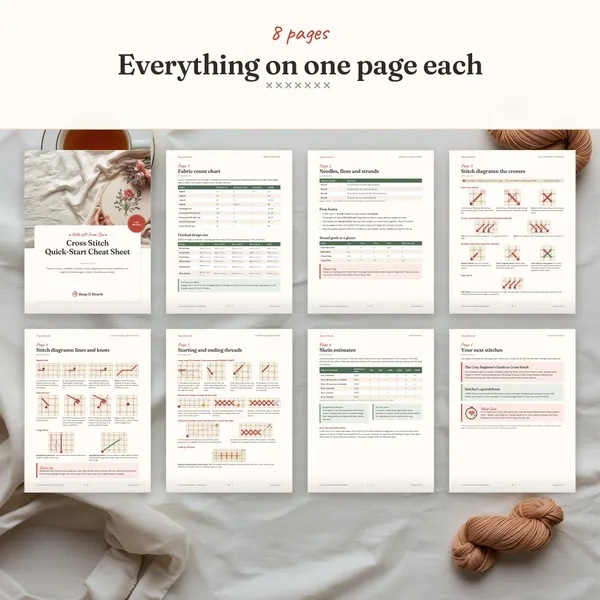
Ready to put the vocabulary to use? The beginner patterns are a good first step, and my quick-start cheat sheet keeps the basics on one page.
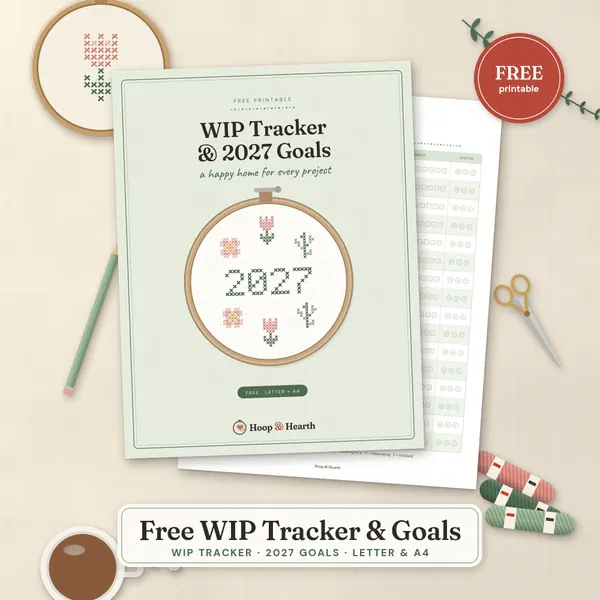
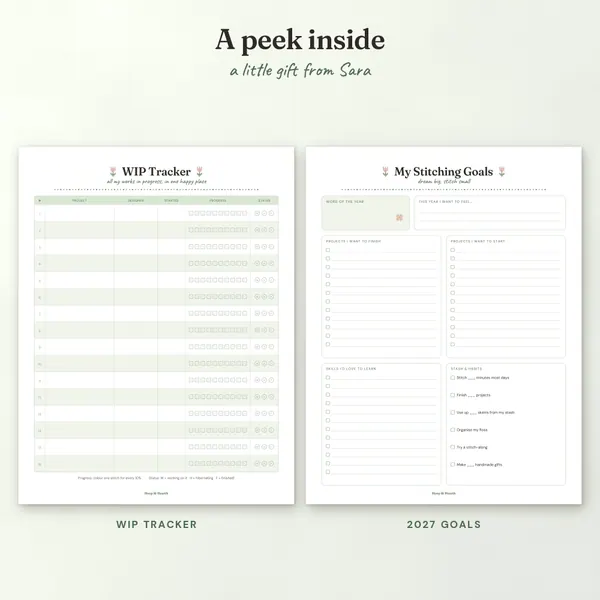
a little gift for you
Start with a free pattern
Join The Hearth Letter and download my free beginner patterns and cheat sheet.
We send about two letters a month. Unsubscribe with one click.
Frequently asked questions
What does WIP mean in cross stitch?
WIP means work in progress: any project you've started and not finished yet. Stitchers often talk about their WIP pile or share WIP photos and updates.
What is the difference between an FO and an FFO?
An FO is a finished object: all the stitching is done. An FFO is a fully finished object: it's also been made into something, like a framed piece, an ornament, a pillow or a bookmark.
What does SAL stand for?
SAL means stitch-along. A designer or group releases a pattern in parts on a schedule, and everyone stitches the same part at the same time, often sharing progress online.
What is frogging in cross stitch?
Frogging means unpicking stitches to fix a mistake. The name is a joke: rip it, rip it, which sounds like a frog's croak.
What is FlossTube?
FlossTube is the community of stitchers who make YouTube videos about their stitching: works in progress, finishes, new supplies and chatty stitch-with-me sessions.
Patterns to try
Stitch along with this post
Keep reading
More from the blog
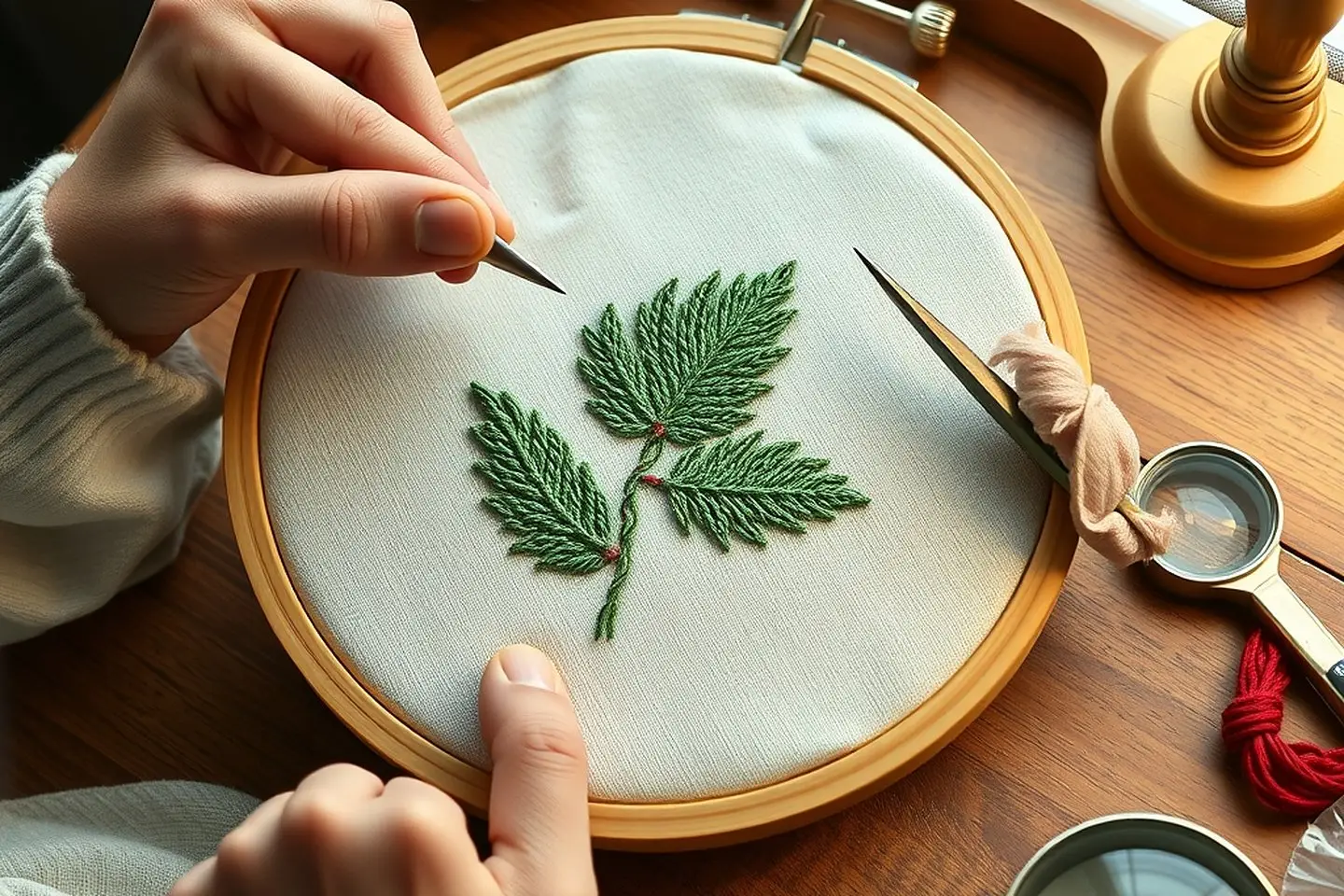
How to Fix Cross Stitch Mistakes (Frogging Made Easy)
Miscounted? Wrong color? How to unpick cross stitch safely, fix tension and messy backs, and stop thread tangling, without damaging your fabric.
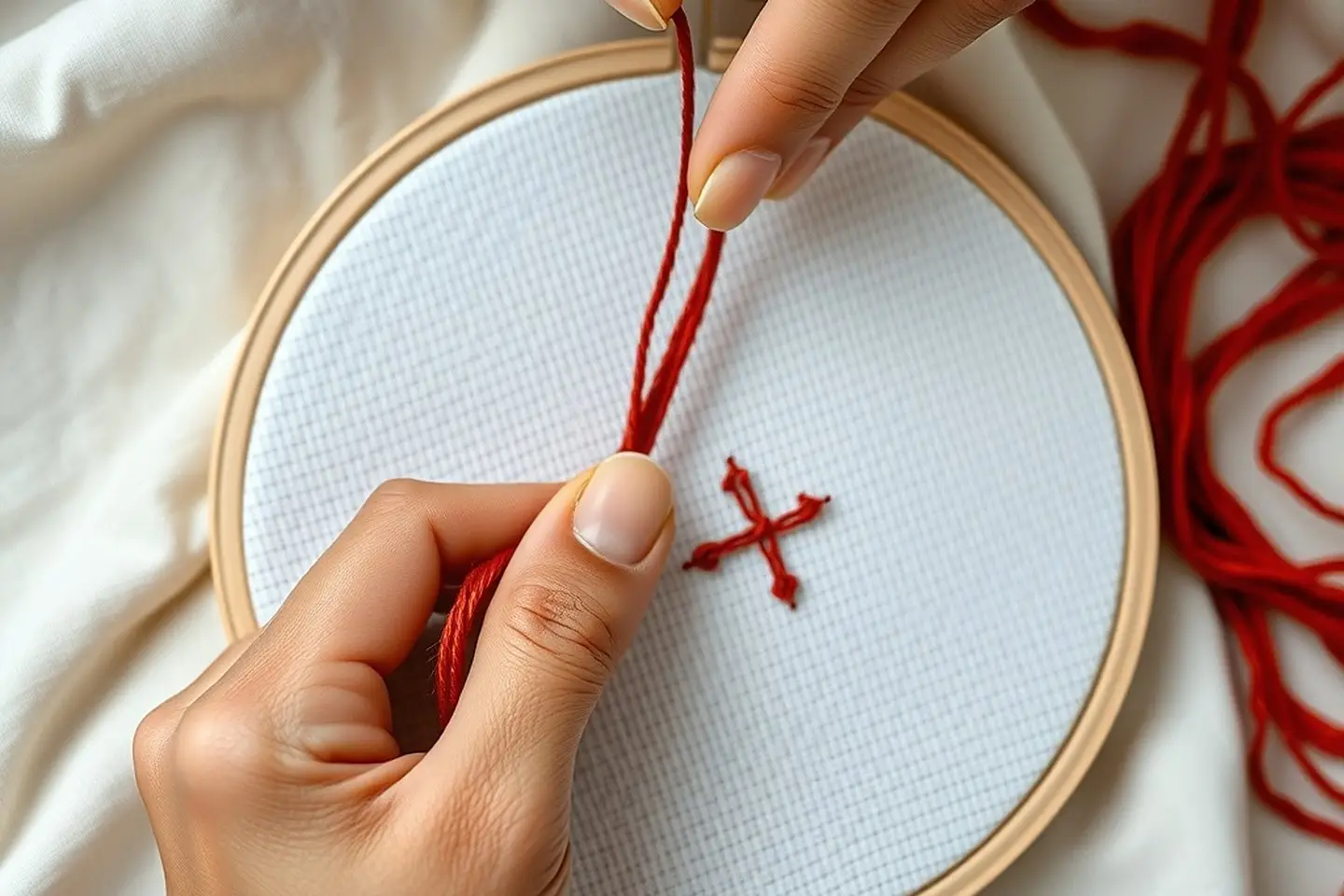
How Many Strands for Cross Stitch? A Simple Chart
How many strands of floss to use on 11, 14, 16 and 18 count aida or evenweave: a simple chart, how to separate floss, and when to break the rules.
How to Read a Cross Stitch Pattern (Step by Step)
Symbols, grids, keys and backstitch lines explained simply, with a free practice chart so you can learn how to read a cross stitch pattern tonight.