
Cross Stitch Benefits: Why Stitching Calms the Mind
Why cross stitch feels so calming, what research on crafts and fiber arts actually suggests, and simple ways to make stitching a gentle, screen-free ritual.
In this post
Some evenings I sit down with my hoop feeling like my head is full of tabs: lunchboxes, emails, the dentist, that thing I forgot to sign. Twenty minutes later, something has quietened. I’m not thinking about any of it. I’m thinking about the next X.
I’m not a doctor or a researcher, just a mom who stitches. But I’ve wondered for years why cross stitch feels this calming, so in this post I share the cross stitch benefits I’ve noticed, what research on crafts and fiber arts honestly suggests (and doesn’t), and how to turn stitching into a small, gentle ritual.
The short answer: cross stitch is repetitive, hands-on and just absorbing enough to crowd out worries, and you can see your progress. Surveys of crafters link regular crafting with feeling happier and calmer, but they can’t prove crafting causes it. Treat it as a comfort that helps, not a cure.
If you haven’t started yet, my beginner’s guide to cross stitch will have you stitching tonight.
Why repetitive stitching feels soothing
When I try to explain it, it comes down to a few things:
- A steady rhythm. Up, down, up, down. The same small movement, over and over, at your own pace. A lot of soothing things work this way: rocking, walking, knitting, kneading bread.
- Busy hands. It’s hard to scroll or fidget when both hands are holding a hoop and a needle.
- Just enough focus. Cross stitch needs a little attention (which square, which color) but not a lot. That middle zone is where many people describe losing track of time.
- Visible progress. Every stitch is a tiny finished thing. After half an hour, you can see what you did. Not much else in a busy day works like that.
- Something just for you. For a lot of us, it’s one of the only things in the day that has no other purpose.
What research says about cross stitch benefits (honest, no miracle claims)
There isn’t much research on cross stitch specifically. There is some on crafts in general and on related fiber arts like knitting and quilting. Here’s a fair summary of three studies I’ve read:
| Study | Who | What it found | Keep in mind |
|---|---|---|---|
| Keyes and colleagues, 2024, Frontiers in Public Health | 7,182 adults in England (Taking Part survey, 2019-20) | People who did arts and crafts reported more happiness, more life satisfaction and a stronger sense that life is worthwhile, even after accounting for age, health, deprivation and employment | A cross-sectional survey: it shows a link, not cause and effect |
| Riley, Corkhill and Morris, 2013, British Journal of Occupational Therapy | An online survey of over 3,500 knitters | Knitters who knitted more often were more likely to report feeling calm and happy | Self-selected knitters who already love their craft; self-reported |
| Hermann, 2023, Aisthesis | An online survey of 97 fiber artists | Happiness and self-esteem were higher among people with more experience who crafted more often | A small student study, correlational |
So, what can we honestly say? People who craft regularly tend to report feeling better, and many crafters say their craft helps them relax. What the research can’t tell us yet is how much of that is the craft itself and how much is that happier, healthier people have more time and energy for hobbies.
That’s fine by me. I don’t need a study to know that I feel better after twenty minutes with a hoop. But I’d never tell you that cross stitch lowers blood pressure or cures anxiety. You’ll see claims like that online, and I haven’t found good evidence behind them.
a little gift for you
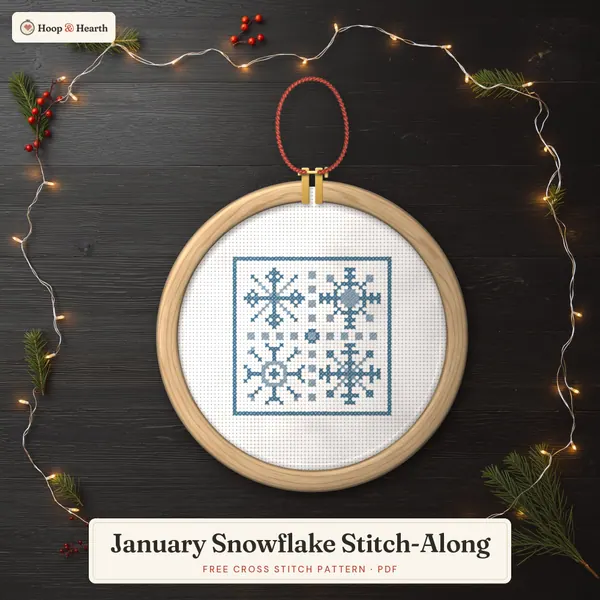
Get your free cross stitch patterns
Join The Hearth Letter and download every freebie instantly, plus 15% off your first order and cozy stitching tips from Sara.
We send about two letters a month. Unsubscribe with one click.
Counting stitches, not worries
There’s a line from a thread on r/CrossStitch about stitching and anxiety that stuck with me: “I can’t count my stressors if I’m busy counting stitches.”
That’s my experience too. Counting is the part of cross stitch that people sometimes find fiddly, but it’s also what makes it calming. Three stitches of blue. Skip one. Five of white. It’s a small, simple job for your mind, and while it’s doing that, it isn’t writing tomorrow’s to-do list.
If counting feels stressful rather than soothing, the chart may be the problem. Charts with look-alike symbols or no clear 10 x 10 grid make you count everything twice. My guide to reading a cross stitch pattern has tips that help.
Creating a stitching ritual (light, tea, music, phone away)
A ritual is just a few small things you do the same way each time, so your brain knows what’s coming. Mine looks like this:
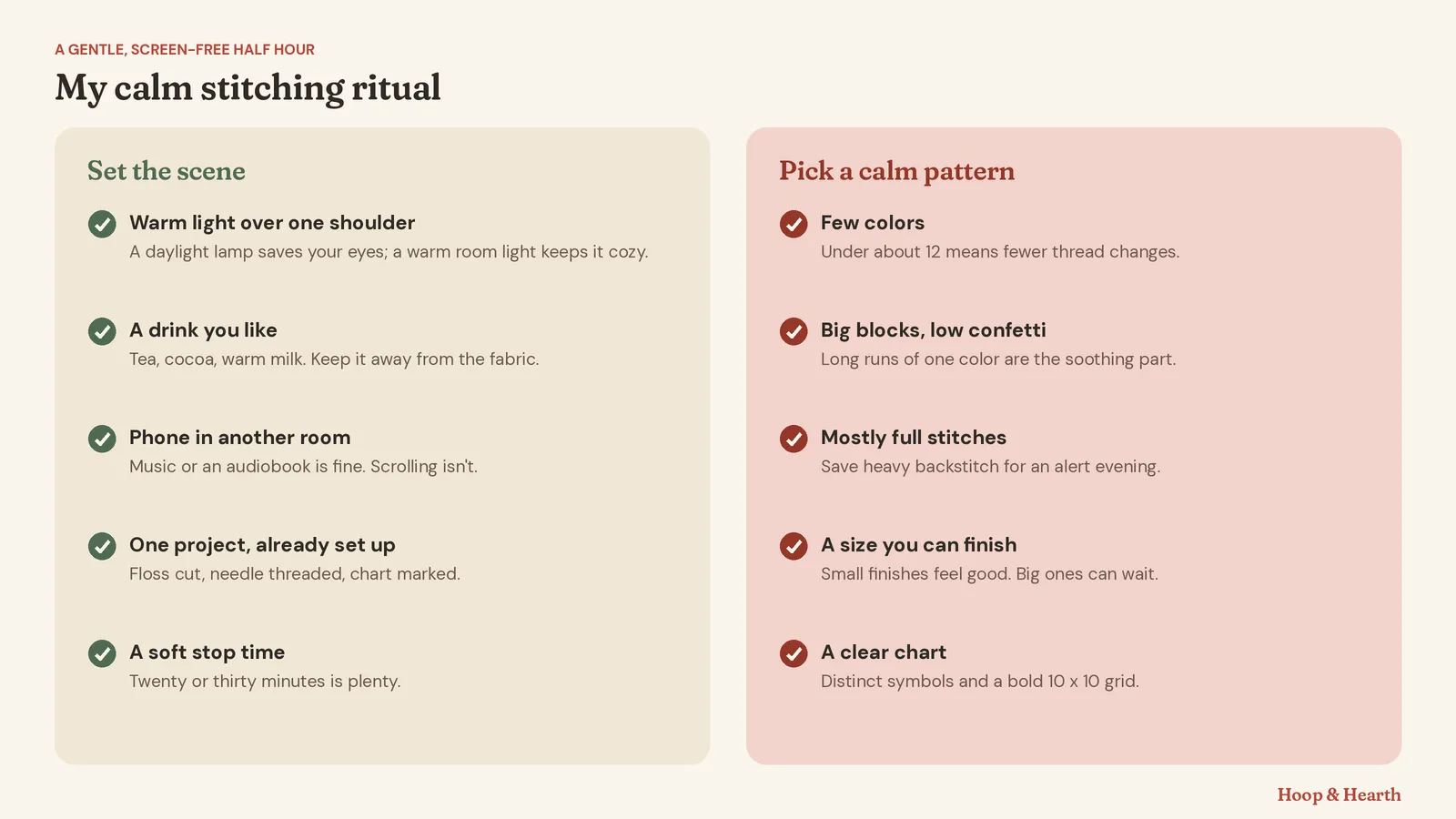
- Same spot. My corner of the sofa, a cushion behind my back.
- Light. A daylight lamp over my shoulder for the stitching, a warm lamp in the room for the mood.
- A drink. Usually tea. Placed well away from the fabric.
- Sound, or not. Quiet music, an audiobook, or nothing. Not a show I have to watch.
- Phone in another room. This is the one that matters most for me.
- A soft stop. Twenty or thirty minutes. Stopping while it still feels nice makes me want to come back tomorrow.
Choosing calm patterns (low confetti, few colors)
Not every pattern is relaxing. Some are wonderful challenges, and that’s a different kind of joy. For calm evenings, look for:
- Few colors, ideally under about 12, so you rarely change thread.
- Big blocks of color. Long runs of the same color are the most soothing part of cross stitch.
- Low confetti. Scattered single stitches mean constant stopping and starting. Here’s what confetti is and why my patterns avoid it.
- Mostly full stitches. Save heavy backstitch for when you’re alert.
- A size you can finish. See my small cross stitch projects for ideas.
- Monochrome designs. A one-color redwork sampler or a two-color Quaker motif is wonderfully meditative.
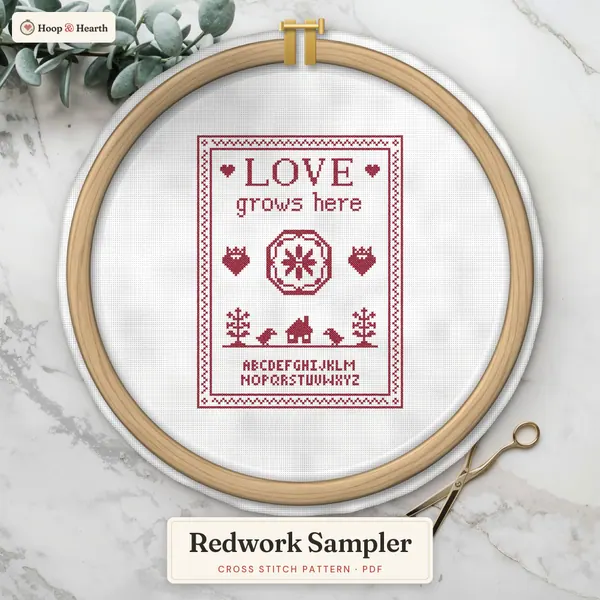
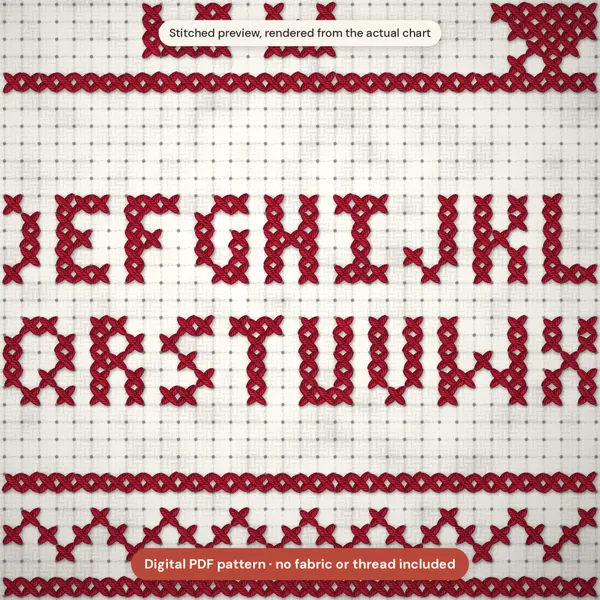
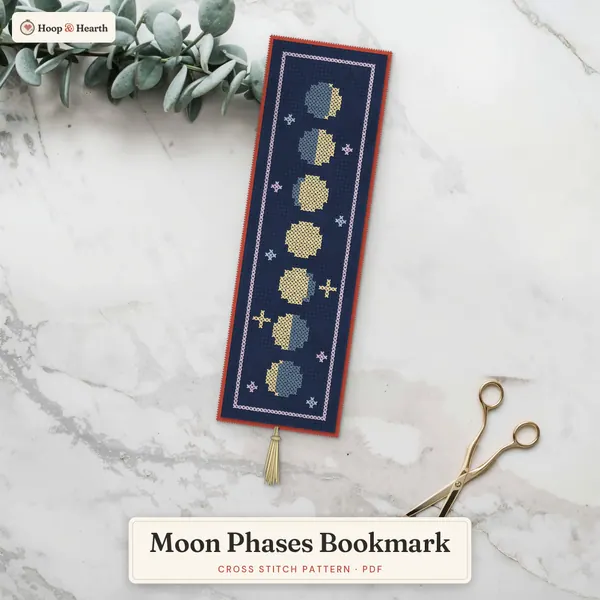
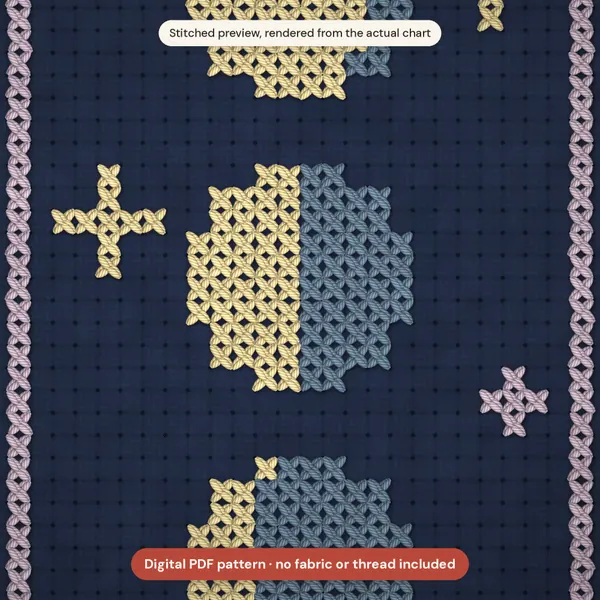
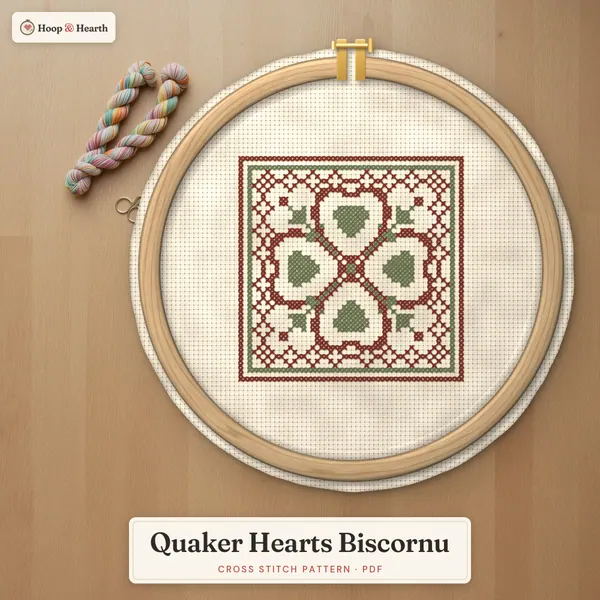
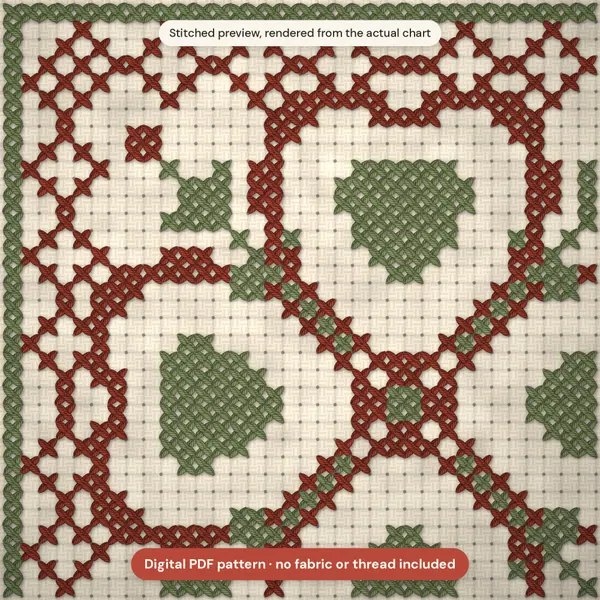
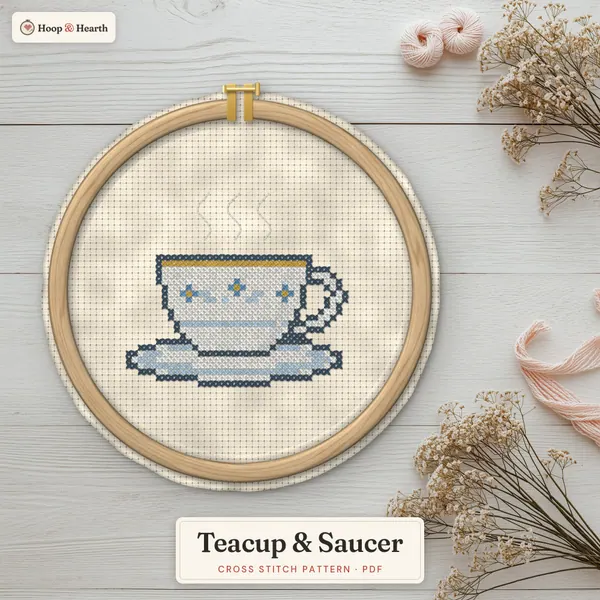
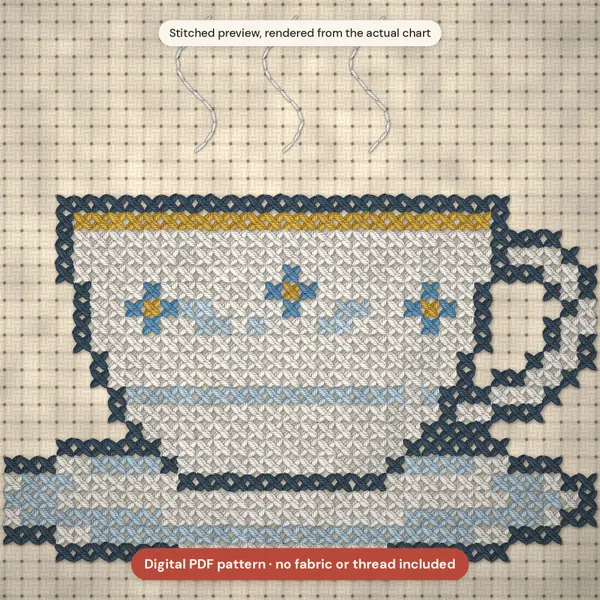
You can also browse all my beginner-friendly patterns, which are the calmest ones in the shop.
When stitching stops being relaxing (and what to do)
It happens. A deadline, a mistake you have to unpick, a project you’ve fallen out of love with. Signs it’s time to change something:
| What’s happening | What helps |
|---|---|
| You’re stitching to a deadline and dreading it | Choose a smaller gift, or give a “promise” card and finish it later |
| A mistake is bothering you | Decide if it really needs fixing (often it doesn’t). See how to fix cross stitch mistakes |
| Your eyes or shoulders hurt | Better light, a break every 20 minutes, a lower count fabric next time |
| You’ve lost interest in a big project | Put it away guilt-free and start something small |
| You feel you “should” stitch | Then don’t. It’s a hobby, not homework |
A gentle note: stitching is a comfort, not a substitute for care
Cross stitch can be a lovely part of looking after yourself. It can’t replace talking to someone, and it isn’t a treatment for anxiety, depression or anything else. If you’re struggling, please reach out to your doctor or a mental health professional, and to the people who love you. Your hoop will still be there when you come back to it.
If you’d like a small, calm project to begin with, my free beginner pattern is designed to be exactly that: few colors, no confetti and a clear chart. Join The Hearth Letter below, and for everything else about starting, go back to the beginner’s guide.
a little gift for you
A calm little pattern for tonight
Join The Hearth Letter and get my free beginner pattern and cheat sheet straight away.
We send about two letters a month. Unsubscribe with one click.
Frequently asked questions
Is cross stitch good for mental health?
Many stitchers say it helps them feel calmer and happier, and studies of crafters have found links between crafting and better wellbeing. Those studies are mostly surveys, so they show an association, not proof that crafting causes the benefit. It can be a lovely support, but it is not a treatment.
Why is cross stitch so relaxing?
It is repetitive, it keeps your hands and eyes busy, it asks for just enough focus to crowd out other thoughts, and you can see steady progress. Counting stitches also gives your mind something simple to hold on to.
Is cross stitch good for your brain?
It uses counting, pattern reading, planning and fine hand movements, and some crafters report feeling sharper. There isn't strong evidence that cross stitch itself protects the brain, so enjoy it for the calm and the creativity rather than as brain training.
What kind of cross stitch pattern is most relaxing?
One with few colors, big blocks of each color, little or no confetti, mostly full stitches and a clear chart. Small designs you can finish also help, because the finish is part of the reward.
Patterns to try
Stitch along with this post
Keep reading
More from the blog
Welcome to Hoop & Hearth: Cozy Cross Stitch for Slow Evenings
Hi, I'm Sara. Here's what Hoop & Hearth is, what you'll find in the shop and on the blog, and how to grab your first free cross stitch pattern.
My Cozy Evening Stitching Routine (In 20 Minutes or Less)
How I fit cross stitch into busy evenings as a mom of two: a simple setup, small projects and a few habits that make twenty quiet minutes feel like a treat.
Small Cross Stitch Projects for Busy Evenings
No time to stitch? Small cross stitch projects you can finish in a few weeks of evenings, plus how I fit stitching around two kids and a busy house.