
Teaching Kids to Cross Stitch: A Mom's Gentle Guide
How I teach my kids to cross stitch: the right age, safe needles, plastic canvas and big aida, tiny first projects, and how to keep it fun.
In this post
My grandmother taught me to cross stitch when I was small, sitting next to her with a wobbly little heart. Now my own two kids pull up a chair next to me in the evenings, and teaching them has become one of my favorite parts of stitching.
This is how to cross stitch for kids, step by step, the way I teach mine: when to start, which supplies make it easy, a cardboard trick that makes the X “click”, a tiny first project, and how to keep it fun when the thread tangles (it will).
The short version: start with plastic canvas or 11 count aida, a blunt needle and two bold colors. Show the stitch on a big cardboard card first. Pick a tiny design they can finish in a few sessions, stitch side by side for 10 to 20 minutes, and celebrate every finish.
If you’re new to cross stitch yourself, my complete beginner guide will get you ready to teach in an evening.
What age can kids start? (and signs they’re ready)
There’s no magic age. Some five-year-olds love it, some ten-year-olds don’t, and that’s okay. As a rough guide:
| Age (roughly) | What usually works |
|---|---|
| 4 to 5 | Lacing cards, plastic canvas with a plastic needle and a thick thread. Mostly “in and out”, not counting |
| 5 to 7 | Plastic canvas or Binca, real X stitches, 2 colors, very small designs |
| 7 to 9 | 11 count aida in a hoop, simple charts, 2 to 4 colors |
| 9 and up | 14 count aida, slightly bigger patterns, starting without knots |
Signs a child is ready:
- they can sit with a craft (drawing, beads, Lego) for about 10 minutes,
- they can count to ten and point to squares on a grid,
- they’ve watched you stitch and asked to try,
- they can pull a thread through a hole without yanking (lacing cards are good practice).
If they’re not ready yet, let them sort your floss by color or choose the colors for your next project. They’re still part of it.
Kid-friendly supplies: plastic canvas, 11-count aida, blunt needles
Kids’ supplies should be big, blunt and forgiving.
- Plastic canvas (7 count). Stiff, so no hoop needed, with big holes that are easy to find. Perfect for the very first tries.
- Binca (6 count). A soft, chunky cotton fabric with very visible holes. It’s been used in school sewing lessons for generations.
- 11 count aida. The step up. Holes are still easy to see, and the finished piece looks like “real” cross stitch.
- A blunt tapestry needle with a big eye: size 18 or 20 for plastic canvas and Binca, size 22 for 11 count. Plastic needles are lovely for little ones on plastic canvas.
- Thread: stranded cotton is fine. Use all 6 strands (or pearl cotton) on Binca and plastic canvas, and 3 strands on 11 count.
- A small plastic or wooden hoop for fabric (4 to 6 inches). Tighten it for them.
- Child-safe scissors for cutting thread, and a needle threader.
Not sure about the fabric? My fabric count guide explains what “11 count” and “14 count” mean, and the supplies guide covers the grown-up kit.
a little gift for you
Get your free cross stitch patterns
Join The Hearth Letter and download every freebie instantly, plus 15% off your first order and cozy stitching tips from Sara.
We send about two letters a month. Unsubscribe with one click.
Demonstrate first: the cardboard “punch card” trick
The cross stitch itself is the hardest part to explain with words. So I don’t. I show it on a big piece of cardboard first.
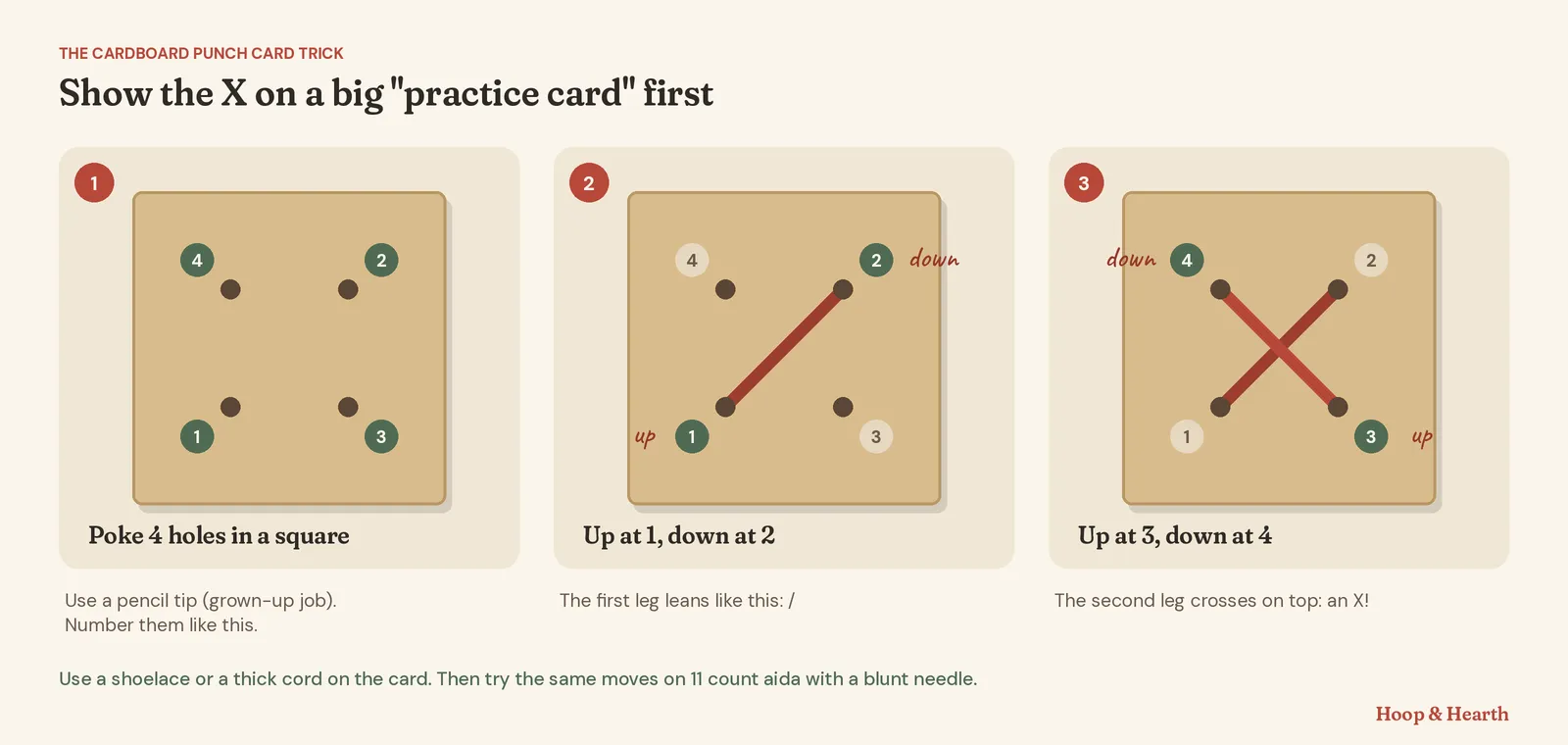
- Take a piece of cereal-box cardboard. Draw a big square, about 2 inches across.
- Poke a hole at each corner with a pencil tip (that’s a grown-up job). Number them: 1 bottom left, 2 top right, 3 bottom right, 4 top left.
- With a shoelace or thick cord, go up at 1, down at 2. That’s the first leg.
- Then up at 3, down at 4. The second leg crosses on top. An X!
Do it a few times together, then make a row of squares so they can see how Xs sit side by side. When they move to fabric, the numbers still help: “up at 1, down at 2” becomes a little chant.
How to cross stitch for kids: a tiny first project
Kids need to see the picture appear quickly. That’s what keeps them going. A first project should be:
- small: around 20 x 20 stitches or less,
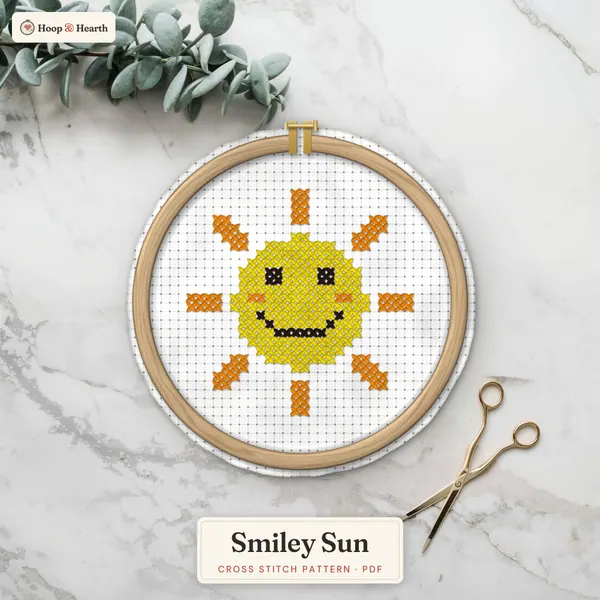
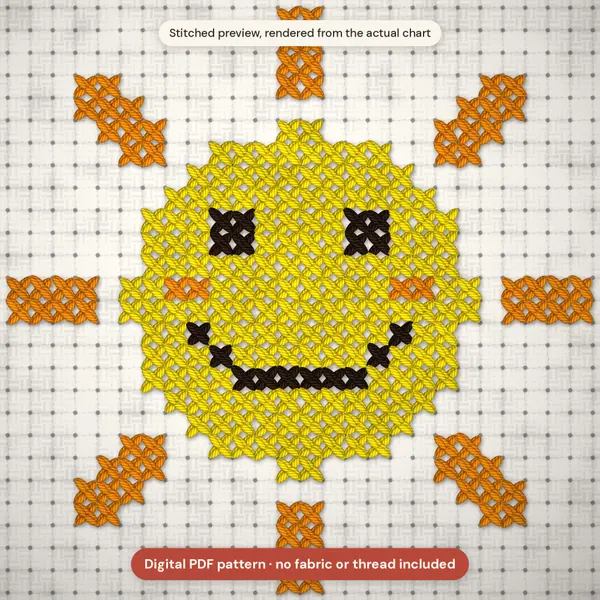
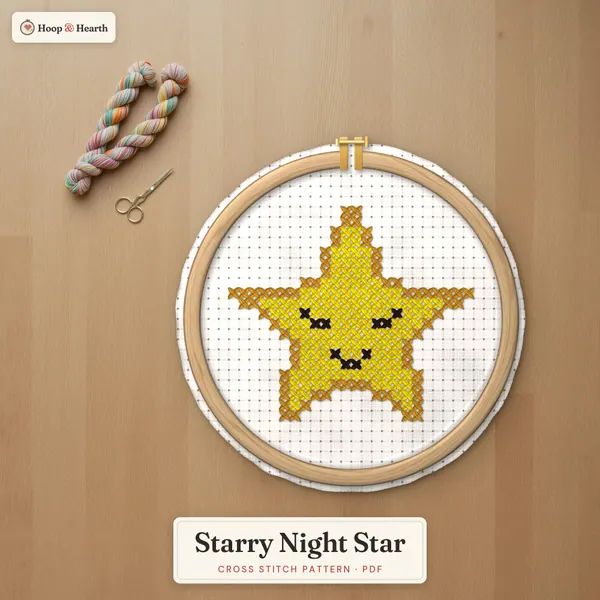
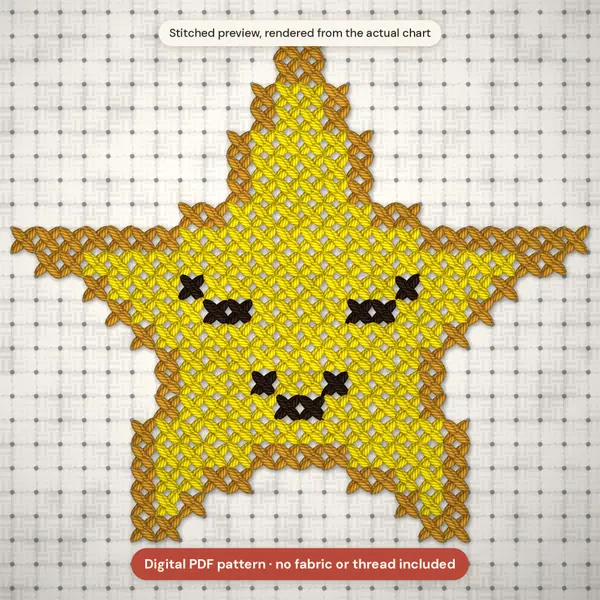
- bold: a heart, a star, a sun, a smiley face,
- two or three colors at most, in big blocks,
- no tiny details, no single stitches, no backstitch.
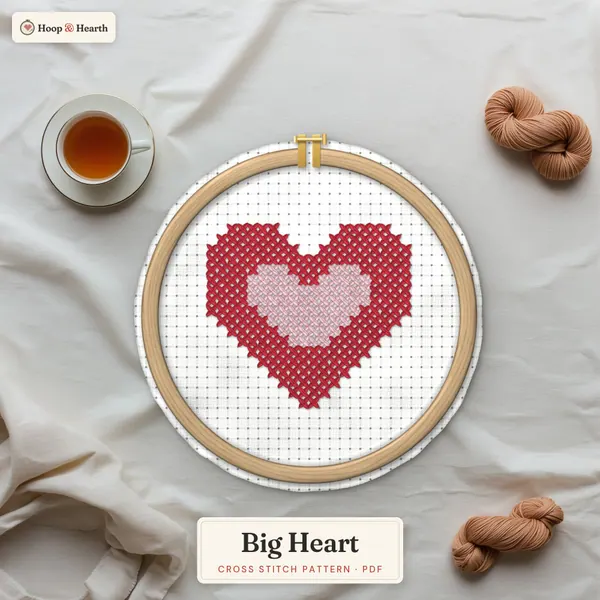
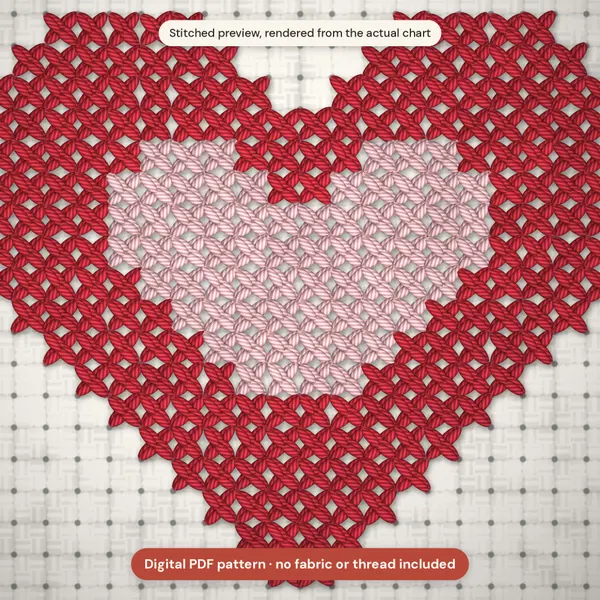
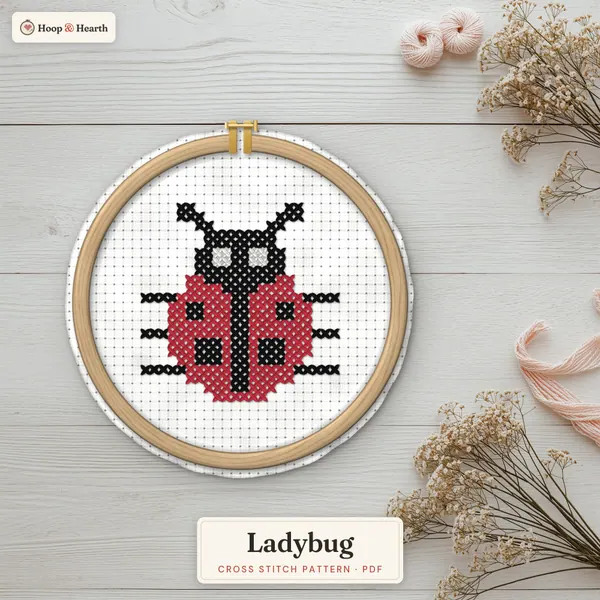
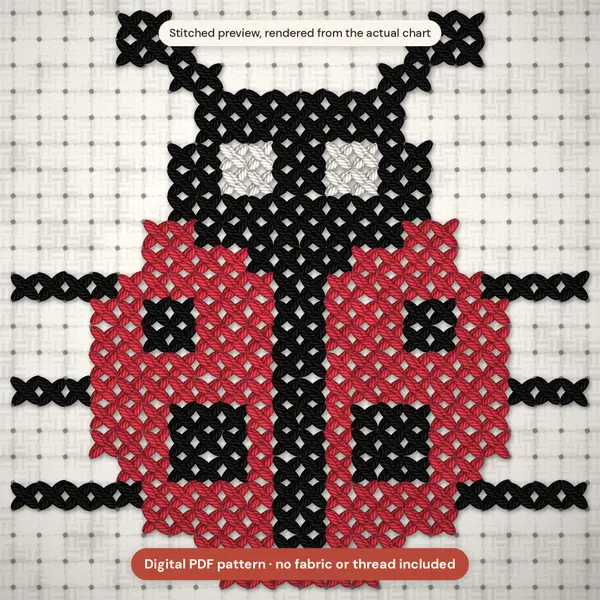
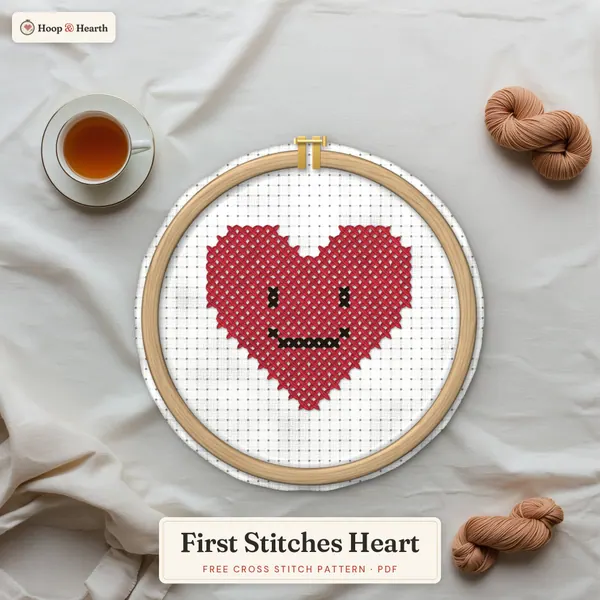
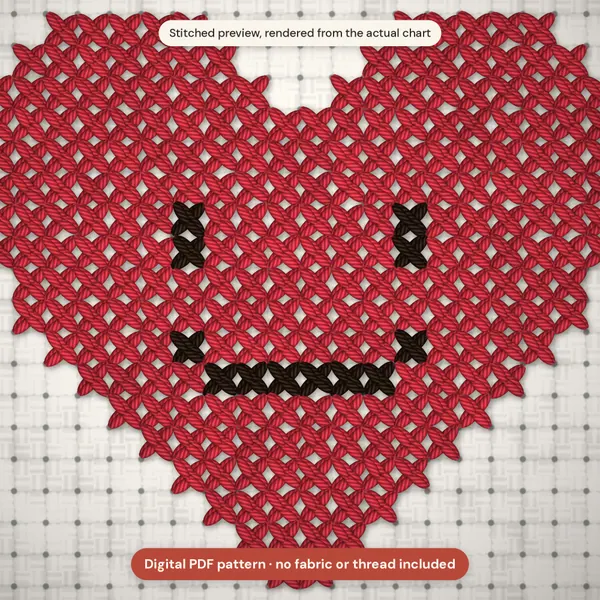
My Big Heart pattern for kids is 20 x 18 stitches and two colors. On 11 count it’s about 1.8 x 1.6 inches, and on 6-count Binca it’s a chunky 3.3 x 3 inches. A child can usually finish it in a few short sessions. In my easy cross stitch patterns for kids post I explain what makes a design kid-friendly, with pictures.
Knot or no knot for little hands?
Grown-up stitchers avoid knots because they make lumps on the back and can work loose. For a child’s first project, use a knot. Honestly. A knot means they can start on their own, and that independence matters more than a flat back.
Two little tricks that help:
- Tie the thread onto the needle. Thread the needle, then tie the short tail around the eye with a simple knot. Now the needle can’t fall off the thread every time they pull. It’s the number one frustration-saver for small kids.
- Keep the thread short: about 12 to 15 inches. Long threads tangle and knot themselves.
Once they’re hooked (usually after a finish or two), show them the loop method or a waste knot. I explain both in how to start cross stitch without a knot.
Keeping it fun (short sessions, stitching side by side, their own floss box)
What works in our house:
- Short sessions. Ten to twenty minutes. Stop while they’re still having fun.
- Stitch side by side. I work on my project, they work on theirs. They copy what I do far more than what I say.
- Their own floss box. A small box with their own colors, their own needle and their own scissors. Ownership makes it feel special.
- Let them choose colors. A purple heart with an orange outline is a perfectly good heart.
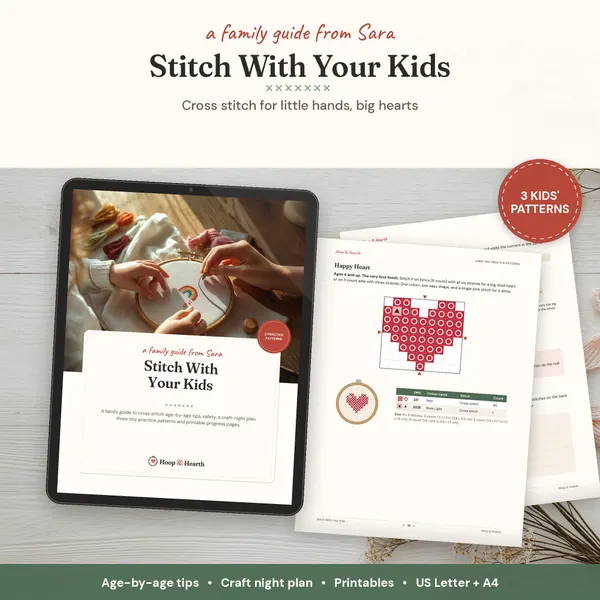
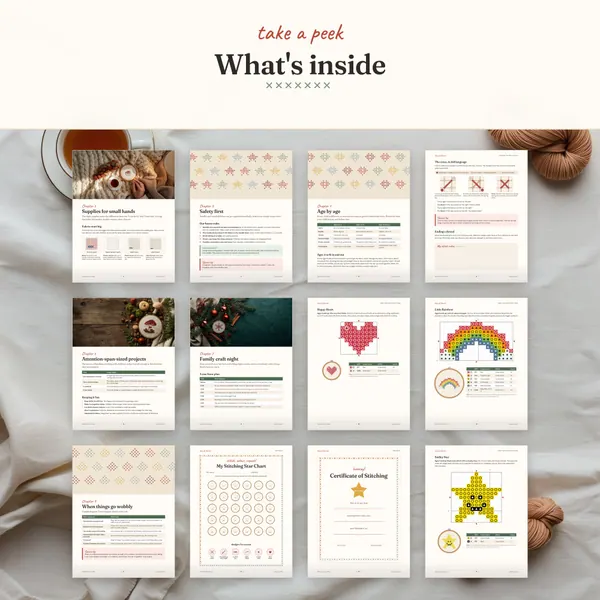
- Mark progress. A highlighter on a printed chart, or a sticker chart. The kids’ printables have a 30-star sticker chart and a little certificate for exactly this.
- Finish it into something. A hoop for their bedroom wall, a bookmark, a card for Grandma. A finish they can give away is the best motivation I know.
When they get frustrated (and when to stop)
Frustration is normal. Here’s what usually causes it, and what helps:
| Problem | What helps |
|---|---|
| Thread tangles and knots | Shorter thread. Let the needle dangle to untwist every few stitches |
| Needle keeps coming unthreaded | Tie the thread onto the eye (see above) |
| Pulling too tight, fabric puckers | Show “snug, not squeezed” with your hand over theirs |
| Losing their place on the chart | Highlight each finished row, or print the chart big |
| Wrong square | Let it go. If it really bothers them, unpick it together |
| “This is taking forever” | The project’s too big. Switch to something smaller |
And when to stop: if they’re tired, if every stitch is a fight, or if it’s just not their thing. Put it away with no fuss. Some kids come back to it months later. Some don’t, and that’s fine too. You can find gentle tips for fixing mistakes, for kids and grown-ups, in how to fix cross stitch mistakes.
Left-handed parent, right-handed child (and vice versa)
Cross stitch doesn’t really have a “right” hand. What matters is that all the top legs of the Xs lean the same way. Which way doesn’t matter.
If you and your child use different hands:
- Sit facing each other instead of side by side, so your movements look like a mirror image of theirs.
- Let a left-handed child stitch rows from right to left if that feels natural.
- Don’t correct the direction of their Xs as long as they’re consistent. If they cross the other way, it still looks right.
Free kids’ patterns
You don’t have to buy anything to get started. My free First Stitches Heart is a 20 x 18 kids’ starter heart in two colors, made for 11 count aida or 6-count Binca, with a one-page parent guide. It’s on the free patterns page when you join The Hearth Letter.
When they want more, the Stitch Together: Kids’ First Stitches collection has big, bold designs with a parent guide in each pattern, and the My First Stitches printables add practice cards, simple charts, a stitching diary and a certificate. For a bigger list of ideas, read easy cross stitch patterns for kids, and for small projects to stitch alongside them, try small cross stitch projects for busy evenings.
Most of all, enjoy it. One small X at a time is exactly how my grandmother taught me, and it still works.
a little gift for you
Get the free First Stitches Heart
Join The Hearth Letter and download the kids' starter heart and parent guide instantly.
We send about two letters a month. Unsubscribe with one click.
Frequently asked questions
What age can a child start cross stitch?
Many children can start around 5 or 6 with plastic canvas and a plastic or blunt needle, and move to 11 count aida around 7 or 8. Readiness matters more than age: can they sit with a craft for 10 minutes, count to ten and follow a simple pattern?
What is the best fabric for kids to cross stitch on?
7-count plastic canvas for the very first tries, because it is stiff and the holes are big. Then 6-count Binca or 11 count aida in a hoop. 14 count is fine for older children with good eyesight and patience.
What needle should a child use for cross stitch?
A blunt tapestry needle with a big eye: size 18 or 20 for plastic canvas and Binca, size 22 for 11 count aida. Plastic needles are great for small children on plastic canvas.
Should kids use a knot when cross stitching?
For young kids, yes. A simple knot at the end of the thread is fine on a first project. You can teach neater starts later, once they love it.
How long should a kids' stitching session be?
Short. Ten to twenty minutes is plenty for younger children. Stop while they're still enjoying it, so they want to come back.
Patterns to try
Stitch along with this post
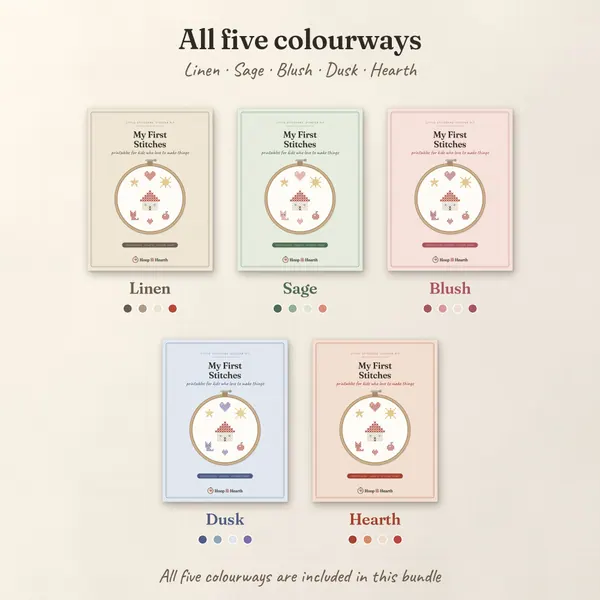
My First Stitches: Kids' Cross Stitch Starter Printables – All 5 Colorways Bundle
5 colorways
Big Heart
Keep reading
More from the blog
Welcome to Hoop & Hearth: Cozy Cross Stitch for Slow Evenings
Hi, I'm Sara. Here's what Hoop & Hearth is, what you'll find in the shop and on the blog, and how to grab your first free cross stitch pattern.
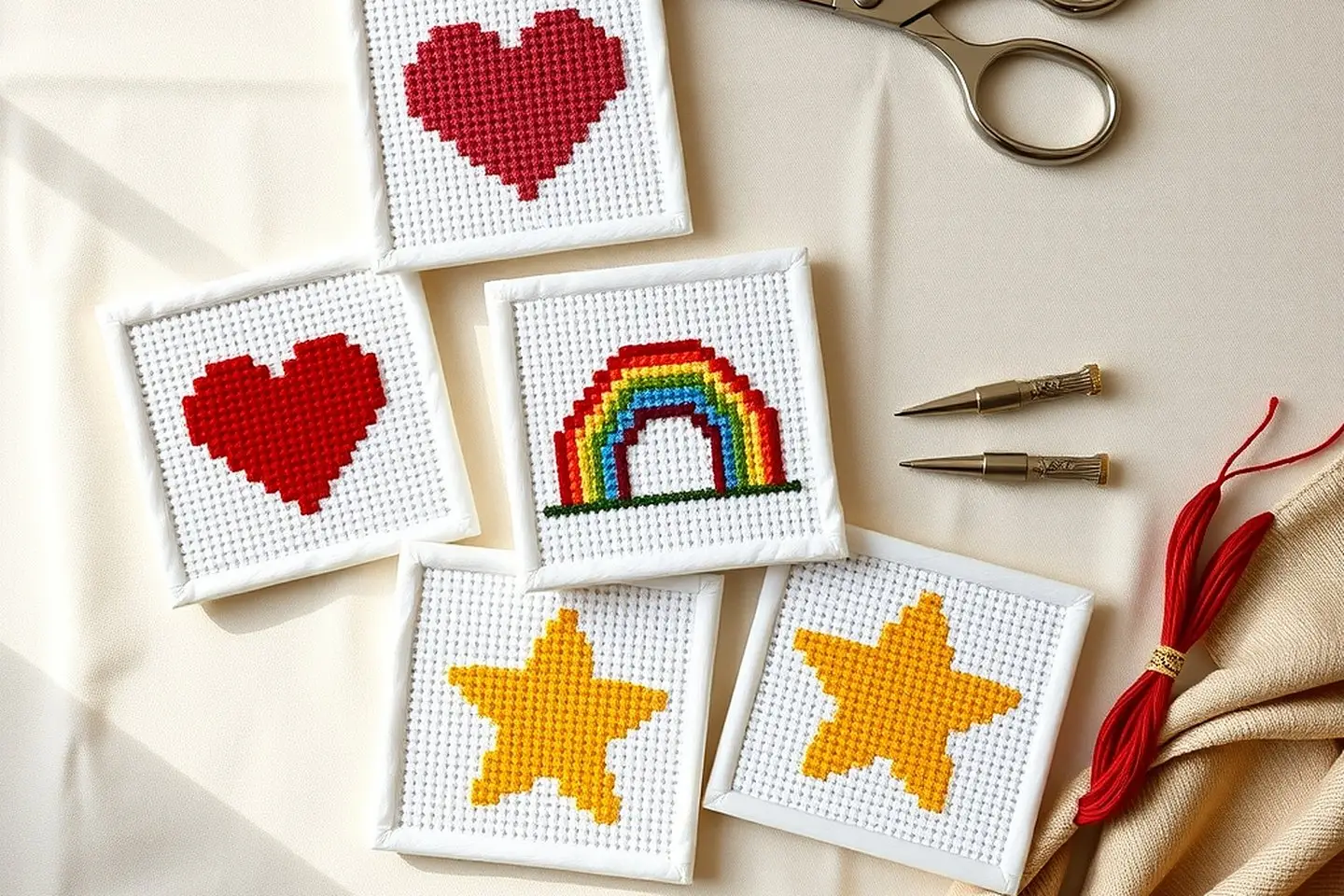
Easy Cross Stitch Patterns for Kids (Free PDF + Star Chart)
Free easy cross stitch patterns for kids: big squares, 2 to 5 colors and quick wins. Perfect first projects on plastic canvas or 11-count aida.
My Cozy Evening Stitching Routine (In 20 Minutes or Less)
How I fit cross stitch into busy evenings as a mom of two: a simple setup, small projects and a few habits that make twenty quiet minutes feel like a treat.